Your cart (0)
Your cart is empty
Tax included and shipping calculated at checkout

Drawer menu
Tax included and shipping calculated at checkout

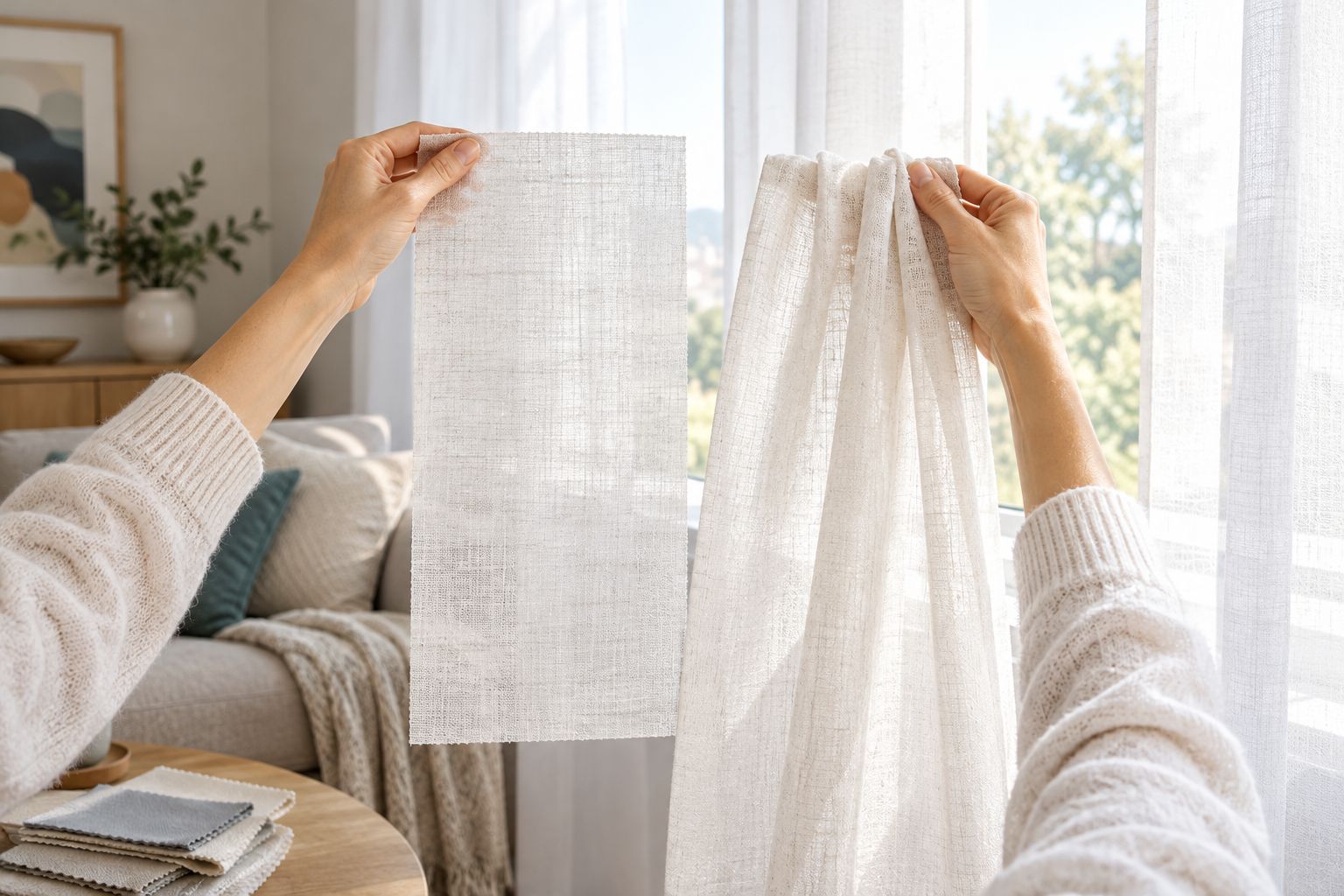
If your room feels exposed or harshly lit, test sheer curtain fabric at the actual window, both hanging flat and loosely gathered, in daylight and after dark. Check its colour beside your walls, how it softens the light and what someone outside can see; a small sample helps you shortlist, but it cannot show the full effect of a finished curtain.
A sheer that looks lovely against a showroom display still needs to work with your window, wall colour and everyday lighting. Your room is the useful test setting—not a photograph on your phone.
Think about the problem first. Are you softening a bright living area, screening a street-facing window or adding a gentle fabric layer over an existing blind? If you are planning expert help, this guide to preparing for a custom curtain consultation in Sydney explains what to have ready.
Follow the same sequence for each sample so you compare the fabrics fairly. Keep a short written note rather than relying on memory.
Hold or temporarily secure the fabric safely in front of the intended window. Keep it away from flames, heaters and anything that could damage it, and avoid putting pins or adhesive into borrowed samples.
Start with the fabric hanging vertically. Looking down at a swatch on a table shows its surface, but not the effect of light passing through it.
Check from your usual seat as well as close up. A weave that catches your attention in your hand might look quite subtle across the room.
Place each sample beside the wall, window frame, flooring and larger furniture pieces. Look for whether it feels comfortable with the finishes you are keeping, rather than whether it matches everything exactly.
Check the fabric both against a solid surface and against the glass. Light passing through a sheer changes its appearance, so the window view deserves as much attention as the colour in your hand.
Choose the colour in the room where you will use it. A favourite swatch elsewhere in the house is not a reliable substitute.
Hold the sample flat, then bring it into soft folds without stretching or creasing it. This helps you see how overlapping fabric changes the apparent depth of colour and the visibility of the weave.
Use these views for different questions:
| Sample arrangement | Best for | What it helps you see | Limitation |
|---|---|---|---|
| Flat fabric | Comparing colour and weave | Surface detail and the view through a single layer | Does not represent curtain folds |
| Loosely gathered fabric | Exploring drape and softness | How folds affect texture and transparency | A small swatch cannot reproduce a full curtain |
Neither view replaces advice about the finished heading and amount of fabric. Use the sample to shortlist, not to predict every detail of the installation.
Look at the same samples in morning light, afternoon light and after dark. These are different viewing conditions, not a requirement to choose a fabric that looks identical throughout the day.
Use your normal lamps and ceiling lights for the evening check. Notice whether the colour still works with your room, whether reflections distract you and whether the fabric gives the softer look you wanted.
If the window receives direct sun during your test, compare that with a shaded period too. Record the conditions alongside your observations so you know what you actually compared.
Arrange for someone to stand inside while you look towards the sample from a safe, permitted position outside. Repeat after dark with the room lights on, and use the viewing angles that matter—such as a footpath or neighbouring outlook.
Do not treat sheer curtains as guaranteed night-time privacy. Visibility depends on the fabric and the lighting on each side of the window.
A small swatch only tests the area it covers. If privacy is essential, discuss a larger sample or demonstration and a separate blockout curtain or blind rather than making a decision from a hand-sized piece.
Your sample has not changed when it looks different from another angle. The setting has changed.
Keep these conditions consistent when comparing finalists. Swapping the lighting and position between fabrics makes the choice harder than it needs to be.
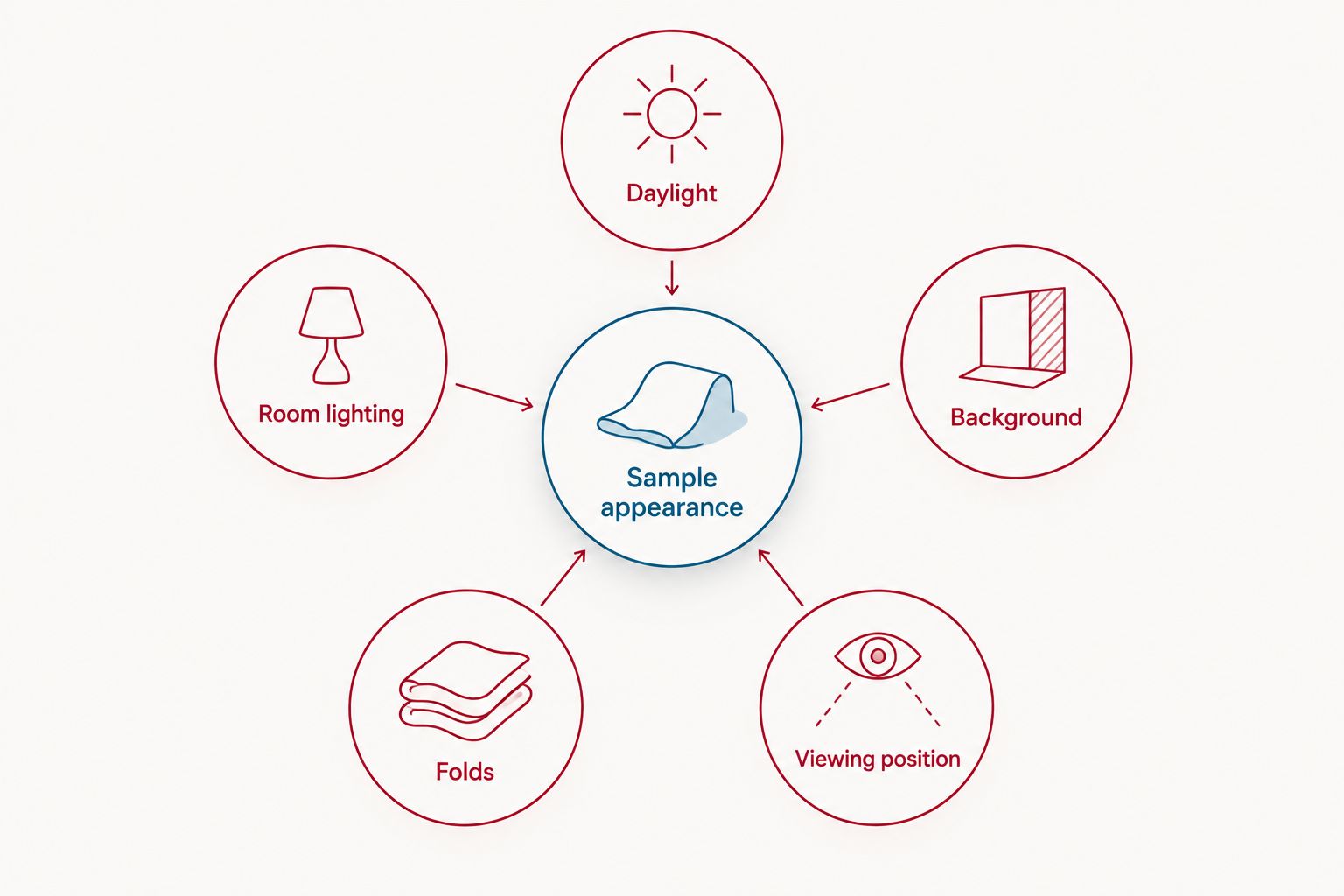
Give each sample its own note using the fabric name and colour shown on its label. Keep that label attached so there is no confusion when you discuss your choice.
Use a simple checklist:
Photographs are useful reminders of which fabric you tested where. They are not a substitute for looking in person: phone exposure and screen settings affect how colour and brightness appear.
A sheer sample cannot establish whole-window blockout, insulation or noise reduction. It lets you assess appearance and visibility over the area it covers, not the performance of a complete window furnishing.
If your room needs darkness for sleep, better temperature comfort or help with traffic noise, explain that before choosing the decorative layer. Discuss the complete curtain or blind arrangement, including fit, rather than expecting the sheer alone to solve every problem.
An in-home consultation is useful when your preferred fabric looks right but you still need help with privacy, curtain headings or fitting around the window. Those decisions belong together.
Material World is best for homeowners who want custom-made curtains with in-home design advice in Sydney or Orange. The business offers a large premium fabric selection and genuinely custom-made workmanship rather than factory mass production, backed by 25+ years of experience.
The practical benefit is help choosing a solution tailored to your home. The limitation remains the same: a small sample cannot demonstrate the entire finished curtain, so ask your consultant what further checks your room needs.
How do I test sheer curtain fabric at home?
Hang sheer curtain fabric at the intended window, compare it flat and gathered, and check it in daylight and after dark. Assess colour, softness and visibility from the places you actually use.
Can people see through sheer curtains at night?
People can see through sheer curtains at night depending on the fabric and the lighting inside and outside. Test from a safe outside position with your usual room lights on, and discuss a separate privacy layer if needed.
Should I hold a sheer sample against the wall or the window?
Check a sheer sample against both the wall and the window. The wall helps you compare colour with your finishes, while the window shows how the fabric looks with light passing through it.
Is a gathered sample better than a flat sample?
A gathered sample is better for exploring folds, while a flat sample helps you compare weave and colour. Use both views because neither small arrangement reproduces a complete curtain.
Can I choose sheer fabric from a phone photograph?
Use a phone photograph as a reminder, not as the final colour test. Check the physical sample in your room because exposure and screen settings affect its appearance.
Can Material World help me choose sheer curtain fabric at home?
Material World offers expert in-home design consultations and free quotes for custom-made window furnishings in Sydney and Orange. Discuss your room’s privacy, light and style needs alongside the fabric selection.
Before settling on your favourite, test it while sitting where you normally relax—not only while standing beside the glass. That is the view you will live with.
Let Material World bring the showroom to you with an in-home design consultation and a free quote for custom curtains tailored to your home.


