Your cart (0)
Your cart is empty
Tax included and shipping calculated at checkout

Drawer menu
Tax included and shipping calculated at checkout

If dawn light is slipping around your bedroom blind, the solution is to address the edges as well as the fabric. For Sydney bedrooms, a well-planned roller blind combines suitable blockout material, the right fitting position and, where needed, a curtain layer to cover remaining light gaps.
A bedroom can feel bright even when its blind fabric blocks light. Daylight travelling beside the fabric, above the roller or beneath the bottom rail can remain noticeable, particularly when you are trying to sleep after sunrise.
Blockout describes the fabric, not a promise of a completely dark room. Your window frame, mounting surface and blind position all affect the finished result. An apartment bedroom with limited wall space needs a different approach from a room with clear wall space around the window.
Material World offers custom-made window furnishings and in-home design consultations in Sydney and Orange. Its 25+ years of experience and large premium fabric selection support a practical starting point: choose around the room you actually have, rather than a standard size that almost fits.
Before shopping, close your existing blind when the unwanted light is strongest. Look separately at the fabric and its edges. A glowing fabric panel suggests a different problem from a narrow, bright strip beside an otherwise dark blind.
Check from the bed, not just directly in front of the window. The light that reaches your pillow is the issue you need to solve. For a designer specifying several bedrooms, record each room separately rather than assuming matching windows behave alike.
Decide what a successful result looks like before choosing colours. A bedroom used for daytime sleep needs closer attention to perimeter light than a guest room where privacy is the main concern. Neither brief should be reduced to choosing the darkest-looking sample.
Also consider how you use the room during the day. Lowering a blockout blind gives privacy but removes the view through that window. If you want daylight and privacy together, discuss a separate daytime layer rather than expecting one fabric to perform every task.
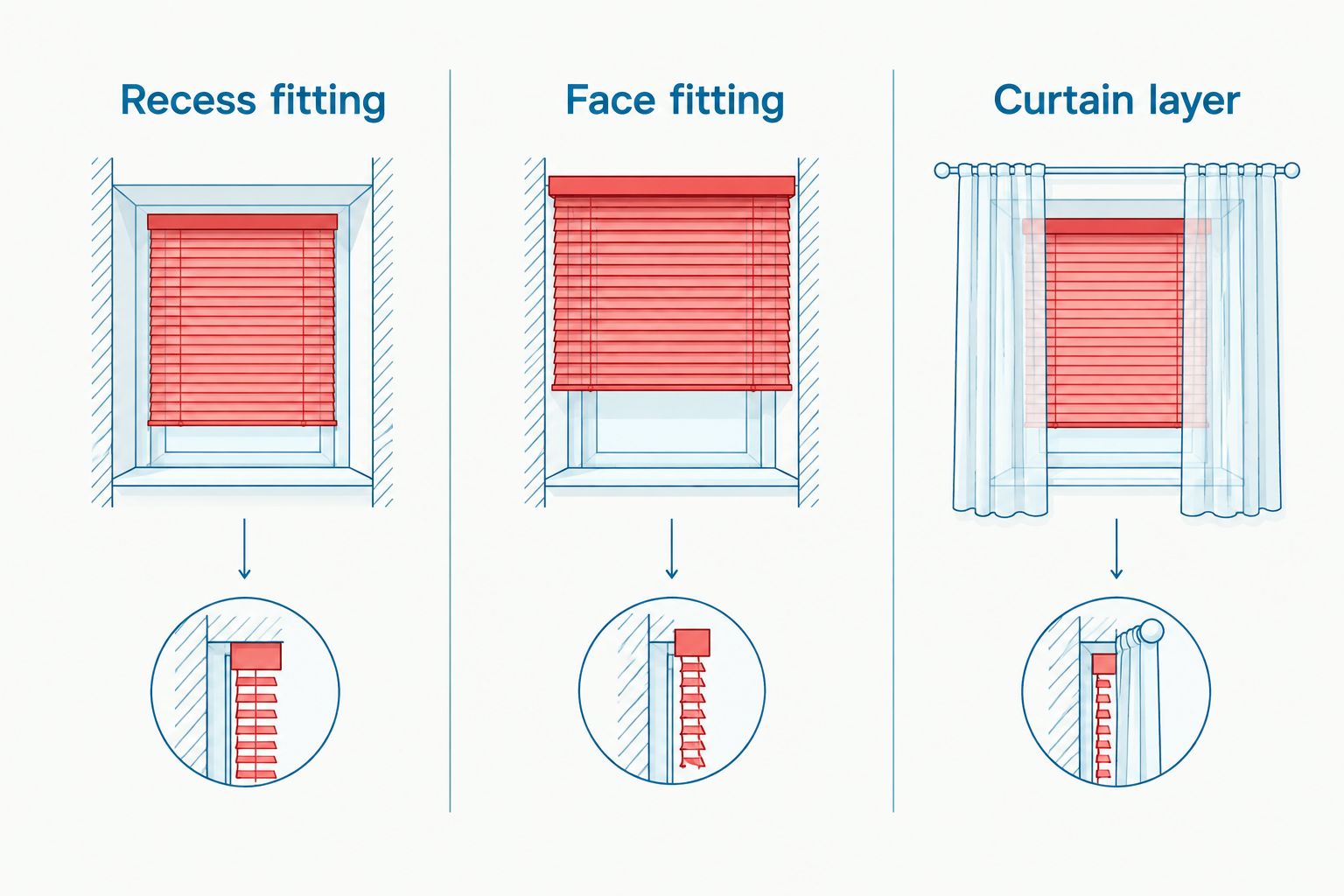
Start by looking at the available space yourself. A recess-fitted blind sits within the window opening for a contained look, but the working blind requires clearance. That means the fabric does not form a continuous seal against the frame.
A face-fitted blind sits outside the opening and can overlap it, provided the surrounding surface allows secure fixing. More overlap can reduce direct light paths, but face fitting does not automatically eliminate every gap. Material World’s in-home design consultation helps you compare these positions against your actual window rather than guessing from a photograph.
Ask to see suitable blockout samples in the bedroom. Colour and texture affect the look, while the fabric’s specified performance determines whether it blocks light through the material. A dark colour alone is not evidence of blockout performance.
If edge light remains the main concern, consider curtains over the blind. A curtain that extends beyond the opening can cover light paths left beside the roller fabric. The trade-off is extra wall space, another furnishing to operate and a fuller appearance around the window.
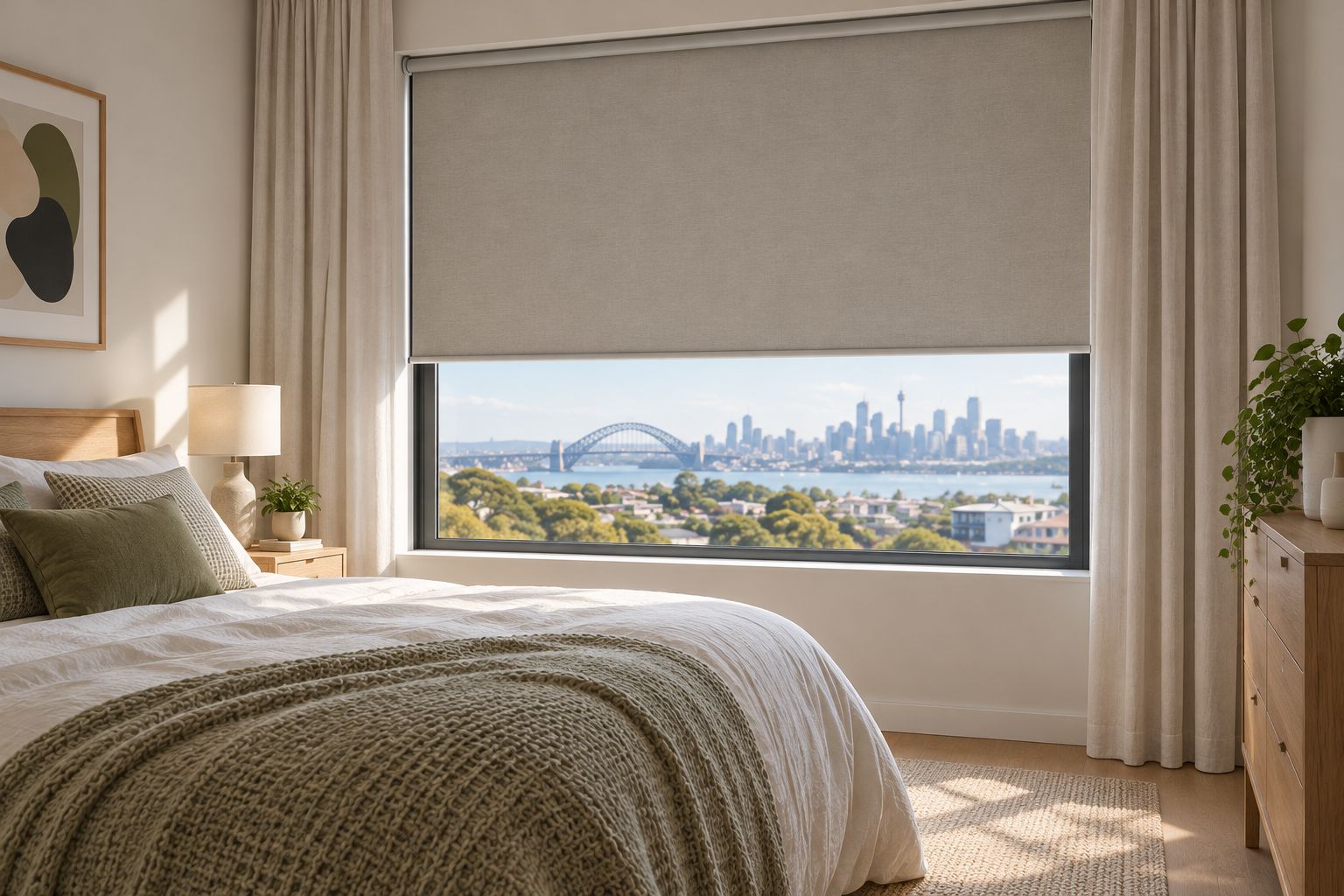
Bring your bedding and wall colours into the decision. Material World’s premium fabric selection lets you consider a softer finish alongside the practical brief, with advice tailored to your home rather than a factory-standard size.
Once you have a preferred approach, check how it will work every day. A blind that clears the glass can still catch a projecting handle or sit awkwardly behind a bedside table. The roller position also affects where the fabric hangs relative to the window.
Ask the person measuring to explain the proposed arrangement, including the top and bottom edges. Keep expectations specific: reducing side light, improving privacy and softening the room are separate outcomes, even when the same treatment helps with several of them.
Your own photos and observations are enough to start the conversation; you do not need to finalise manufacturing measurements yourself. Record what bothers you, what you like about the room and any existing furnishings you want to retain.
Material World can “bring the showroom to you” through an expert in-home design consultation. This is the point to compare genuinely custom-made workmanship, fabric choices and fitting details together, rather than choosing a fabric first and treating installation as an afterthought.
There is no single fitting that suits every bedroom. Use the comparison below to narrow your brief, then confirm the details against the window itself.
| Option | Best for | Main benefit | Key limitation |
|---|---|---|---|
| Recess fitting | Bedrooms where a contained window treatment matters | Keeps the blind within the opening | Clearance beside the fabric leaves paths for light |
| Face fitting | Windows with suitable fixing space around the opening | Allows overlap beyond the opening | Needs surrounding space and does not create a complete seal |
| Curtain layer | Bedrooms needing more coverage and a softer finish | Can cover light paths beside the blind | Requires curtain space and adds another layer to operate |
A layered treatment is not automatically the right answer. If your bedroom has little spare wall space, discuss whether the extra coverage justifies the room it occupies. If your existing blind already blocks light through its fabric, focus the discussion on fitting and perimeter coverage before replacing it with a similar blind.
A blockout fabric cannot cover space where no fabric is present. Ask about side clearance, the roller area and the bottom edge, not just the sample’s light-blocking properties.
A recess fit looks tidy, but appearance and darkness are different priorities. If early light is the problem, compare the proposed recess arrangement with an overlapping face fit before approving the order.
An empty-window measurement does not explain how a curtain will sit beside a wardrobe or how you will reach a control behind a bedside table. Keep furniture in the brief, especially in compact bedrooms.
Light control and noise reduction require different expectations. Curtains can soften a room, but a roller blind is not a soundproofing treatment. Raise traffic noise separately so it does not become an assumed benefit of a blockout specification.
Will blockout roller blinds make my Sydney bedroom completely dark?
Blockout roller blinds do not automatically make a bedroom completely dark. The fabric blocks light through its surface, while gaps around the sides, roller and bottom can still admit light.
Is face fitting better than recess fitting for bedroom light gaps?
Face fitting allows overlap beyond the window opening, which can reduce direct light paths. Recess fitting keeps the blind within the opening, so compare both against the available fixing space and your darkness needs.
Can I keep my roller blind and add curtains?
You can consider curtains over an existing roller blind when there is suitable fixing and stacking space. Check the condition of the blind and whether the curtain coverage addresses the light gaps that bother you.
Does a darker roller blind fabric provide better blockout?
A darker colour does not establish that a fabric has blockout performance. Ask for the fabric’s stated light-control properties and view an appropriate sample before choosing.
What should I prepare for an in-home blind consultation?
Prepare photos of the light gaps, notes about when the bedroom needs darkness and details of furniture near the window. Explain your priorities for privacy, appearance and everyday operation.
Can roller blinds reduce traffic noise in a bedroom?
Do not choose roller blinds as a soundproofing solution. Discuss noise separately from light control so the proposed window furnishing is not expected to solve a different problem.
Who is Material World best suited to for bedroom blinds?
Material World is best for Sydney homeowners seeking custom-made roller blinds and expert in-home design advice. It also serves homeowners and designers in Orange, with a wide fabric selection and custom-made window furnishings.
The brightest strip is often the most useful part of your consultation photo. It shows where the current treatment falls short more clearly than a photograph of the fabric alone. Keep that image alongside your room inspiration so practical comfort stays part of the design conversation.
Ready to make the bedroom more comfortable? Let us help you choose: book an in-home design consultation and request a free quote for a solution tailored to your home.


