Your cart (0)
Your cart is empty
Tax included and shipping calculated at checkout

Drawer menu
Tax included and shipping calculated at checkout

Best overall for strong sun and darkness: blockout roller fabric. Best for daytime views: sunscreen mesh. Best for softly filtered light: translucent fabric. If your room becomes uncomfortable in summer, choose by heat performance, light and privacy together—not by fabric colour alone.
A blind that makes your bedroom dark is not automatically the best thermal performer. Blockout describes light passing through the fabric; heat control also depends on how the fabric reflects, absorbs and transmits solar energy, plus the window and installation.
Start with the problem you notice: afternoon glare, an overheated sitting area or a bedroom that needs darkness. Material World offers custom-made window furnishings and in-home design consultations in Sydney and Orange, so you can consider the fabric against the actual window rather than a showroom display.
Choose the fabric for the room’s daily use, then check its heat-performance information. A darker room and a cooler room are different outcomes.
Use these criteria before comparing colours or textures:
A beautiful sample still needs to work when the sun reaches your sofa or desk. Keep that moment in mind throughout the selection.
| Fabric type | Best for | Standout feature | Key limitation |
|---|---|---|---|
| Blockout | Bedrooms and rooms needing darkness | Stops light passing through the fabric itself | Removes the view when lowered; edges still need attention |
| Sunscreen mesh | Living rooms needing a daytime outlook | Filters sunlight while retaining a view through the mesh | Does not provide dependable night-time privacy |
| Translucent | Rooms prioritising soft daylight | Diffuses incoming light without an open mesh view | Does not provide blockout or prove strong heat control |
These are functional choices, not a thermal test ranking. Compare individual fabric specifications before deciding which option best addresses summer heat at your window.
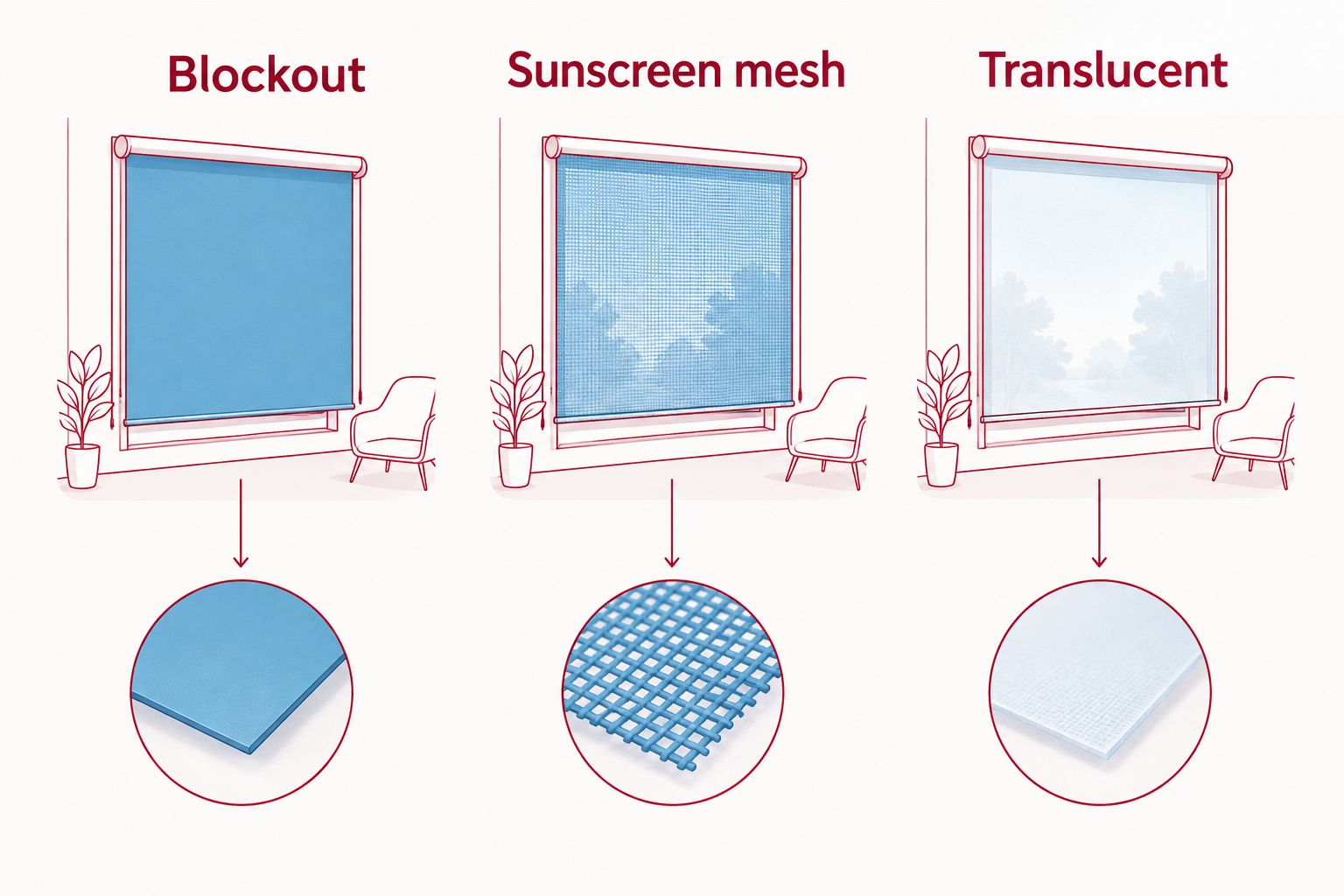
Blockout fabric stops light passing through the material. That makes it the clearest starting point when you want a dark bedroom or need to remove direct glare from a room while the blind is lowered.
For summer comfort, ask about the window-facing backing and the fabric’s solar-performance data. Do not treat the word “blockout” as a promise of insulation or a particular temperature reduction.
Blockout pros:
Blockout cons:
Best for: Bedrooms, media rooms and strongly lit spaces you are happy to darken.
Verdict: Buy blockout for darkness and privacy; select its thermal performance separately.
Sunscreen mesh filters sunlight through an open weave, allowing you to retain a view outside during the day. It suits living areas where closing an opaque blind would make the room feel cut off from the garden or street.
Ask about openness as well as solar performance. A more open fabric gives a different balance of view, light and glare control, so compare samples at the window rather than choosing from a small colour swatch alone.
Sunscreen mesh pros:
Sunscreen mesh cons:
Best for: Living rooms and home offices where you want filtered daylight and an outside view.
Verdict: Buy sunscreen mesh for daytime use; pair it with an opaque layer where night-time privacy matters.
Translucent roller fabric allows diffused light through without the open view of sunscreen mesh. It is a useful middle ground when you dislike harsh light but do not want to sit behind a fully lowered blockout blind.
Check privacy with a sample, particularly if the window faces neighbours. Translucent fabrics differ in how clearly shadows and silhouettes show through, and their soft appearance does not establish thermal performance.
Translucent pros:
Translucent cons:
Best for: Dining areas and other rooms where gentle light matters more than darkness or a clear view.
Verdict: Hold if summer heat is your main problem; choose translucent fabric when filtered light is the priority.
Struggling to visualise your new room? Place samples against the window when the troublesome sun arrives, then look again from your usual seat. Compare the decorative face, the window-facing reverse and the effect on the room’s light.
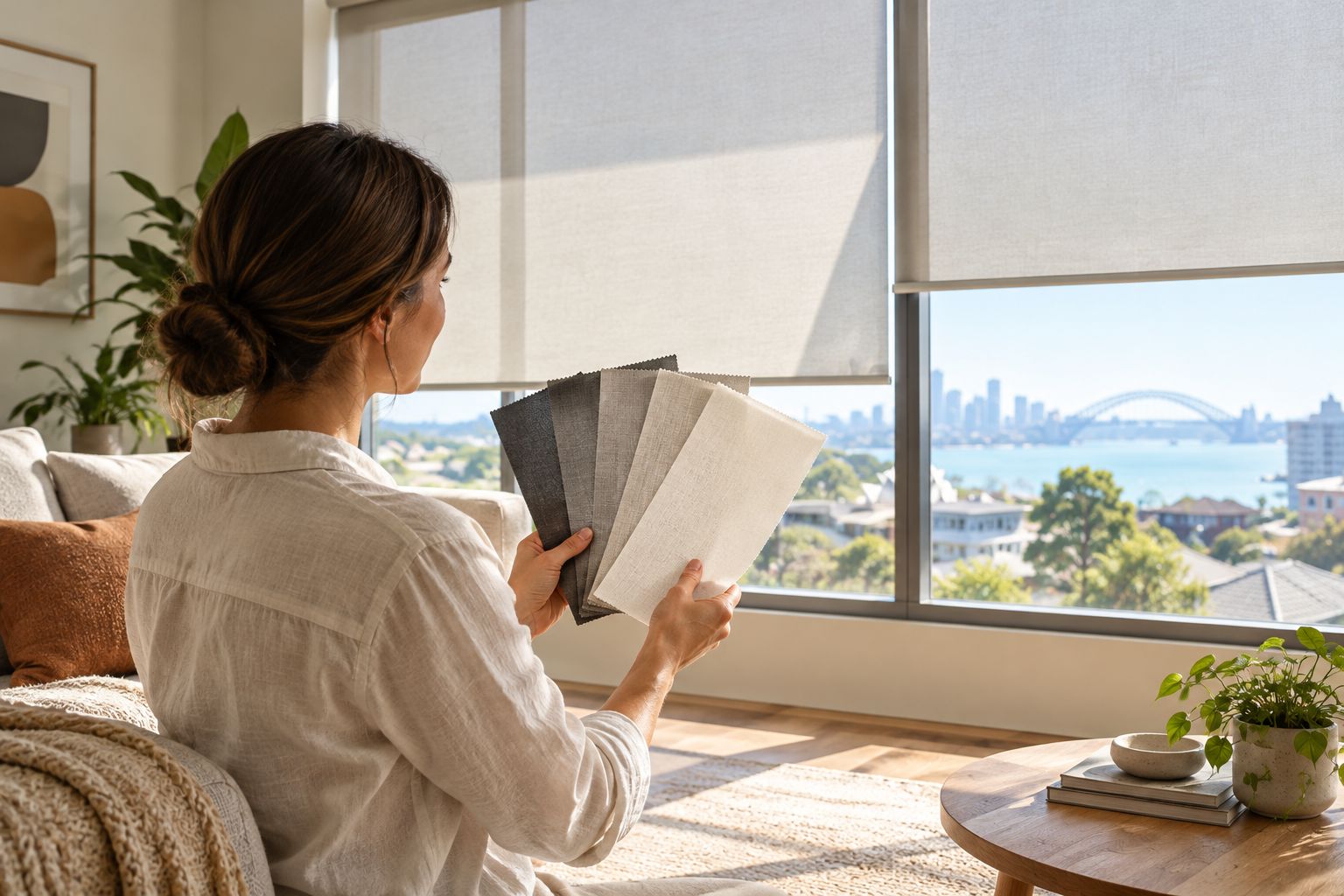
For roller blinds in Sydney, Material World combines a large premium fabric selection with expert in-home advice and 25+ years of experience. The custom-made approach lets you discuss the covering and fit together, rather than trying to adapt a factory mass-produced size to your window.
Bring these questions to the consultation:
The order prioritises distinct room needs: darkness first, a daytime outlook second and diffused light third. The criteria are light control, privacy, solar-performance evidence and fit—not an unsupported claim that one fabric category always blocks more heat than another.
Start with blockout if you need darkness; start with sunscreen mesh if you want to keep the daytime view. Choose translucent fabric when soft light is the main goal, then assess its suitability for the sun exposure separately.
Material World is best for homeowners seeking custom-made roller blinds with in-home fabric advice. For a bedroom that also needs pleasant daytime light, discuss separate sunscreen and blockout layers rather than expecting one fabric to do both jobs.
What is the best roller blind fabric for blocking summer heat?
Choose a fabric with documented solar performance suited to your window, rather than relying on the blockout label. Blockout is the starting point for darkness; sunscreen mesh suits rooms where retaining a daytime view matters.
Do blockout roller blinds stop heat as well as light?
Blockout fabric stops light passing through the material, but the label alone does not establish heat performance. Check the fabric’s solar data, backing and proposed installation.
Are white roller blinds better than dark roller blinds in summer?
Colour alone is not enough to choose a roller blind for summer heat. Compare the window-facing surface and the specific fabric’s solar-performance information, not just its room-facing colour.
Can people see through sunscreen roller blinds at night?
Sunscreen mesh does not provide dependable night-time privacy when indoor lights are on. Use an opaque covering as well if the window overlooks neighbours or a public area.
Should I choose single or double roller blinds for a bedroom?
Choose separate sunscreen and blockout layers if you want a daytime outlook and darkness at different times. A single blockout blind suits a room where you are comfortable raising it for daylight.
Will custom-made roller blinds remove every light gap?
Custom-made roller blinds still need clearance to operate, so edge light requires attention during planning. Discuss the mounting position and any additional treatments if bedroom darkness is essential.
A fabric sample tells you about the material, not the finished window. Before approving your choice, ask where the blind will sit and where light will enter: those details deserve as much attention as the colour.
Ready to bring the showroom to you? Contact Material World to arrange an in-home design consultation and free quote for a solution tailored to your home in Sydney or Orange.


