Your cart (0)
Your cart is empty
Tax included and shipping calculated at checkout

Drawer menu
Tax included and shipping calculated at checkout

Blinds for builders and renovators need to solve the room’s privacy, light and comfort problems while fitting around the building work. A custom-made solution starts with how each space will be used, then accounts for finished window dimensions, handles, doors and the look you want.
A new window can look straightforward on a drawing but become awkward once handles, architraves and nearby cabinetry are installed. Renovations add another challenge: existing openings need checking individually rather than assuming they match.
Choose the blind type early; confirm manufacturing measurements against the agreed finished opening. This separates design decisions from final sizing and gives everyone a clear point for approval.
Material World provides genuinely custom-made window furnishings rather than factory mass-produced options, with in-home design consultations in Sydney and Orange. For homeowners and designers, that means you can discuss the window alongside the flooring, wall colour and furniture instead of choosing everything in isolation.
Start with a simple spreadsheet or marked-up floor plan. Give each window an identifier and describe what the room needs, not just which blind you like.
A bedroom needs a different conversation from a living room facing the street. In a home office, glare on the desk matters; beside a sliding door, keeping the opening usable matters. Record the priorities before comparing fabrics so a consistent look does not come at the expense of daily comfort.
Use your own measurements to understand the project, but agree who will take and approve the final manufacturing measurements. Do not treat a rough opening or an early drawing as the finished size.
An inside-mounted blind sits within the recess; an outside-mounted blind covers the opening from the wall or surrounding trim. Neither is automatically better. The decision depends on recess depth, obstructions, light control and the finish you want to retain.
Check these details with the builder before plastering or joinery makes changes harder:
Gather a small shortlist and hold the samples beside the window, wall paint and flooring. Look at them in daylight and under the room’s lights. A colour that looks calm on a sample table can look quite different against a bright window.
Use 3 sample positions: against the glass, beside the wall and beside the main furnishing fabric. This is a practical way to judge contrast without collecting an overwhelming pile of options.
Material World can bring the showroom to you through an in-home design consultation. Its large premium fabric selection and 25+ years of experience support the choice, but your room’s light and privacy requirements should still lead the decision.
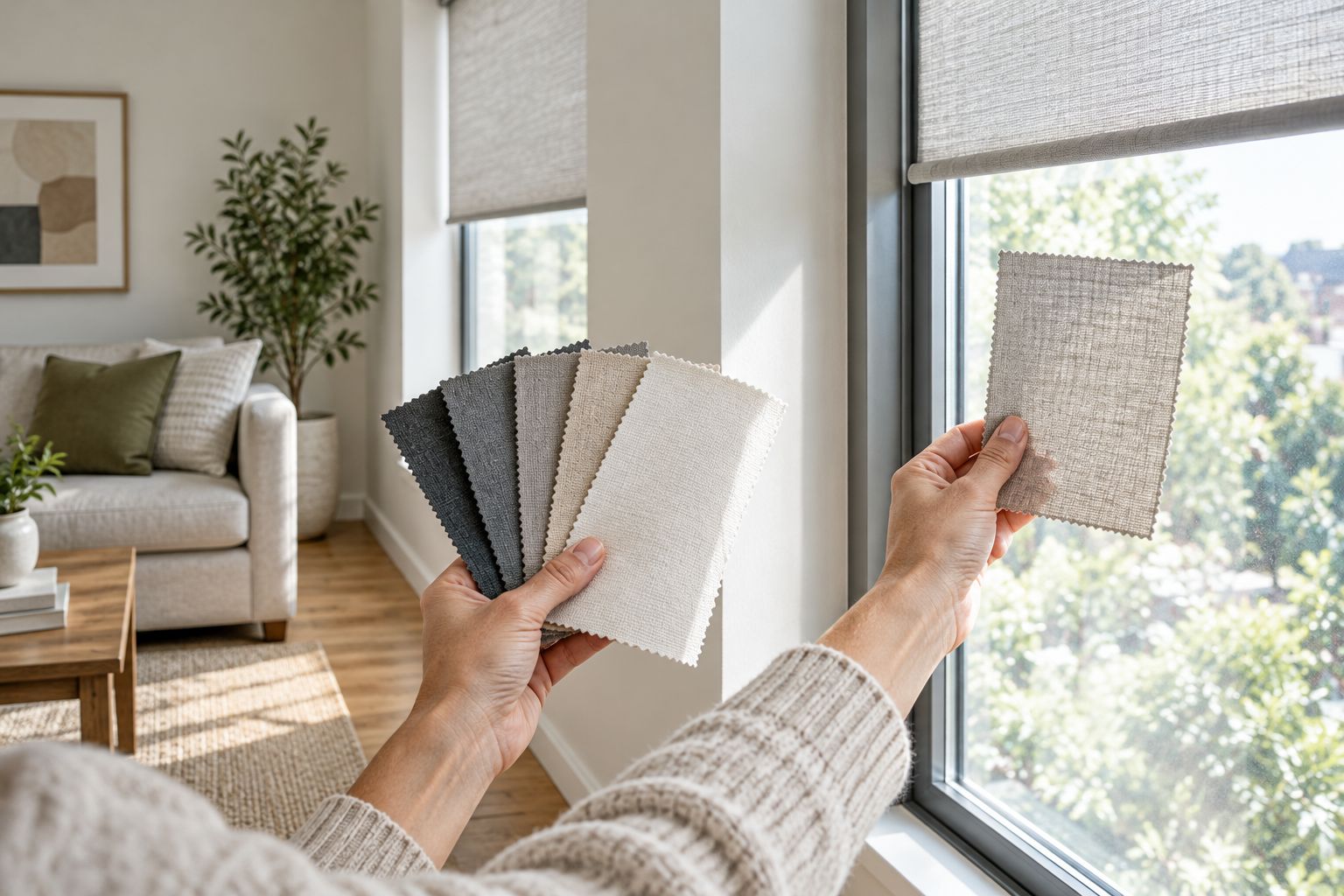
Do not choose by colour alone. Ask what the selected fabric does, how it should be cleaned and whether the finished blind suits the room’s use.
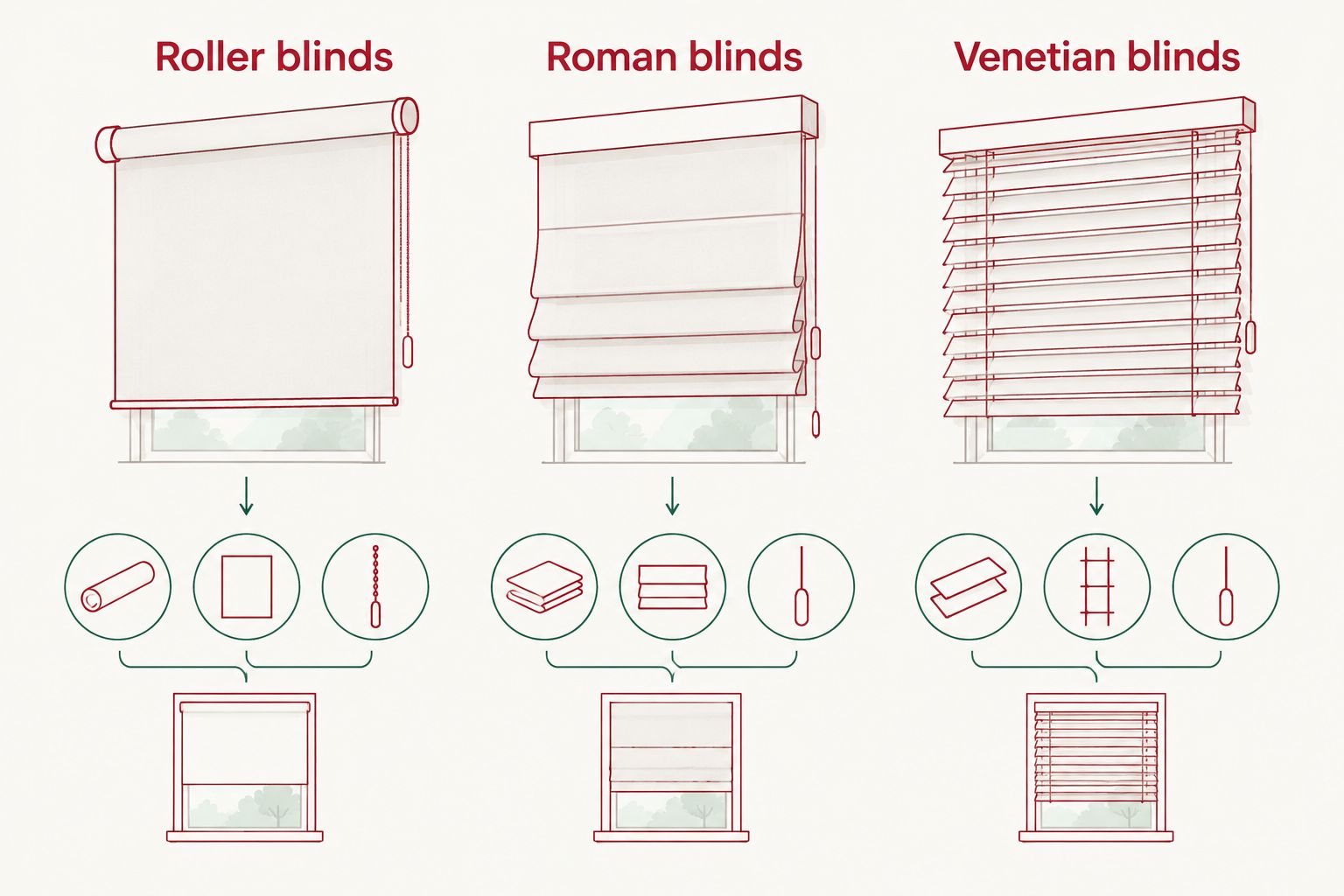
Choose the function first, then refine the appearance. Roller blinds give a simple finish, soft Roman blinds introduce fabric folds, and Venetian blinds let you adjust the angle of the slats.
Softness is not the same as soundproofing, and a blockout fabric does not automatically eliminate light around the blind. If noise reduction or insulation is a priority, discuss the complete window treatment rather than relying on a fabric name or appearance.
Use this shortlist to focus the conversation:
These options serve different room needs. The best choice is the one that fits the opening and your daily routine, not the one repeated across every window.
| Option | Best for | Main benefit | Key limitation to check |
|---|---|---|---|
| Roller Blinds by Hunter Douglas | Rooms needing a simple window finish | A straightforward roller-blind format | Fabric choice and installation position need checking for privacy and edge light |
| Soft Roman Blinds By Material World | Rooms needing a softer, tailored look | Fabric folds, with lining options stated in the product information | Check the space occupied by the raised folds |
| Timber Venetian Blinds by Hunter Douglas | Rooms needing adjustable light and privacy | Slats let you change the light entering the room | Slats need regular cleaning; check clearance when raised |
A matching colour does not require an identical blind style. You can coordinate the palette while choosing a different treatment for a bedroom, office or door.
Put the blind selection into the wider room plan before approving it. A blind that works on its own can clash with a nearby curtain track, obscure a decorative architrave or interrupt access to a door.
This is where planning custom window treatments belongs alongside joinery, lighting and furniture decisions: the mounting position affects both the finished appearance and how comfortably the room works. Show the proposed treatment on the same elevation as nearby cabinetry rather than leaving it as a separate note.
Ask the relevant trades to resolve conflicts before ordering. If powered operation is being considered, confirm the selected system’s requirements with the supplier and electrician rather than assuming an electrical provision will suit.
Bring the decisions together in 1 signed window schedule. A collection of emails, sample photographs and verbal changes is harder to check than a single agreed record.
Material World’s custom-made blinds service suits homeowners and designers who want advice tailored to the home. Custom work still needs clear approvals: confirm the scope, site readiness and responsibilities rather than assuming every task is included.
Before handover, operate each blind and make 2 privacy checks: one in daylight and one after dark with the room lights on. These checks help you assess the treatment in the conditions that matter to the occupants.
What are the best blinds for builders and renovators?
The best blinds match each room’s light, privacy and access needs. Roller blinds suit a simple finish, Roman blinds add softness, and Venetian blinds offer adjustable slat angles.
When should I choose blinds during a renovation?
Choose the blind type before finalising surrounding mounting details. Agree when final manufacturing measurements will be taken against the finished opening.
Should blinds fit inside or outside the window frame?
The right fit depends on recess depth, handles, surrounding trim and light-control needs. Check both positions at the actual window before approving the mount.
Will blockout roller blinds make a bedroom completely dark?
Blockout fabric alone does not guarantee a completely dark bedroom. Light can enter around the edges, so assess the mounting position and the complete window treatment.
Can I use different blinds throughout the same house?
Yes, different blind styles can share a coordinated colour palette. Choose each treatment around the room’s function rather than repeating a style that does not suit every opening.
Does Material World help with custom blinds in Sydney and Orange?
Material World offers custom-made blinds, in-home design consultations and free quotes for homeowners and designers in Sydney and Orange. Confirm the project scope and site details when arranging the consultation.
Check where the blind sits when it is open, not just how it looks when closed. Raised folds, stacked slats and the roller position all deserve a place in the room plan.
Ready to bring the showroom to you? Request an in-home design consultation and free quote, and let us help you choose blinds tailored to your home.


