Your cart (0)
Your cart is empty
Tax included and shipping calculated at checkout

Drawer menu
Tax included and shipping calculated at checkout

Order the number of linear metres your upholsterer confirms for your sofa and chosen upholstery fabric, rather than a standard amount based on seat count. The total needs to cover every upholstered section, plus seams, pattern matching and any piping or other agreed details—not just the visible seat and back.
A sofa can look straightforward until you count the separate pieces: cushion tops and bottoms, arm panels, outside backs and narrow strips around the edges. Measuring the overall length does not tell you how those pieces will fit across a roll of fabric.
Choose the fabric and confirm the cutting plan together. Material World offers a wide fabric selection for homeowners and designers in Sydney and Orange, but your upholsterer should confirm the quantity needed for the actual sofa before you order.
The right quantity is the length needed to cut all the agreed pieces from your selected fabric’s usable width. Your upholsterer works this out from the sofa’s construction, measurements and the fabric’s pattern or direction.
Use this sequence before placing an order:
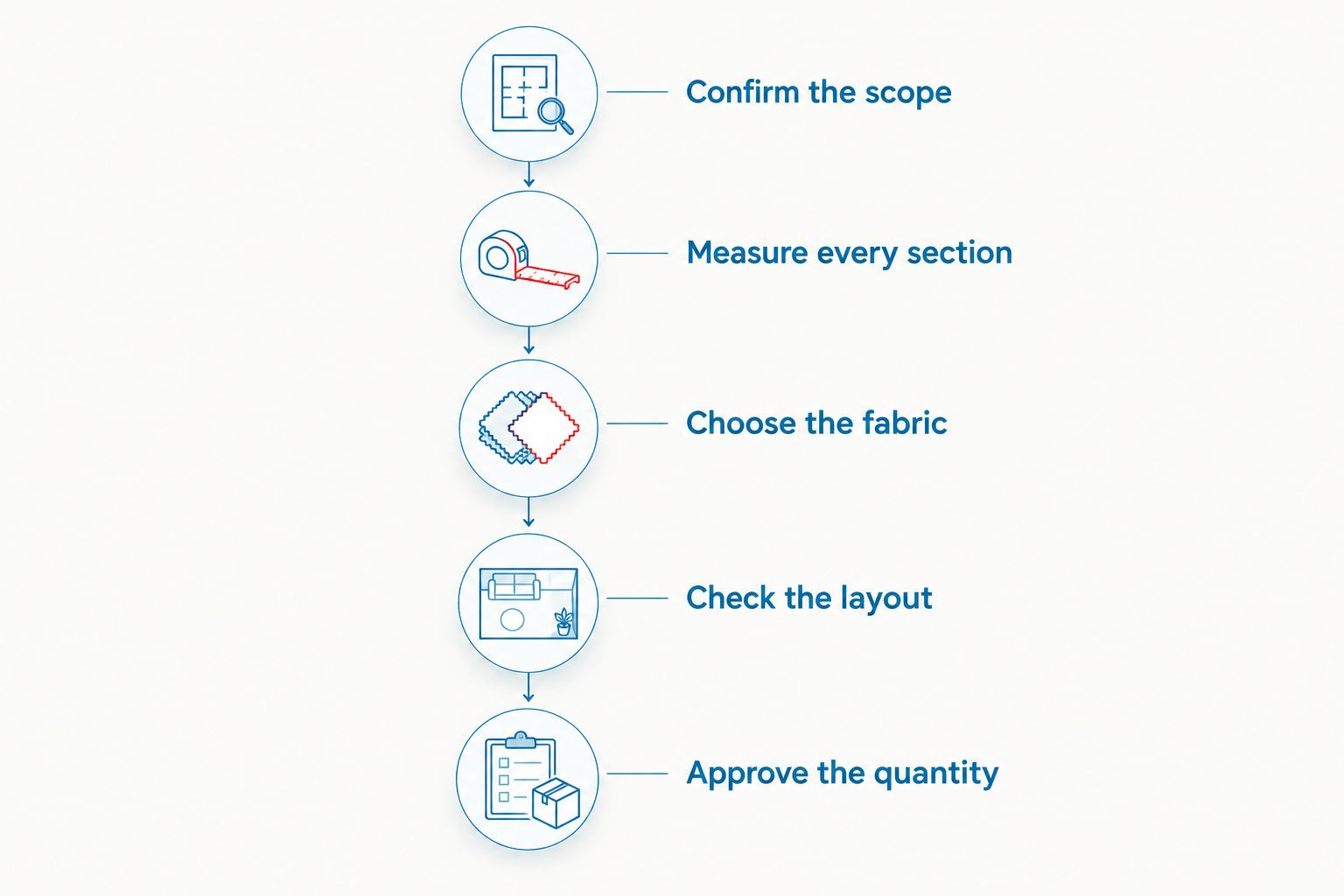
A linear metre describes length along the roll; it does not describe a fixed amount of usable coverage without the width. A wider fabric can accommodate a different arrangement of pieces, but width alone does not guarantee that less length is needed. The pieces still have to fit in the correct direction.
Two sofas with similar outside dimensions can require different cutting layouts. These are the details to discuss with your upholsterer:
Do not add a general spare-fabric allowance yourself and assume the job is covered. Ask whether the confirmed quantity already includes cutting allowances, matching and the agreed finishing details. That keeps the order clear without adding fabric for the same purpose twice.
A plain fabric, a patterned fabric and a fabric with a directional pile present different layout considerations. Choose the look you want, then have the quantity calculated around it—not the other way round.
| Fabric option | Best for | What helps | What needs care |
|---|---|---|---|
| Plain, non-directional fabric | A quiet look without motif matching | No printed pattern to align | Piece size, seams and usable width still matter |
| Patterned fabric | Making the sofa a feature | Motifs can be placed deliberately | Matching and centring constrain the cutting layout |
| Directional-pile fabric | A soft, textured finish | Consistent direction gives a considered result | Turning pieces to fill gaps can change their appearance |
These categories can overlap. A patterned fabric can also have a direction, and a fabric that looks plain in a small sample can show a noticeable change when turned.
For Material World upholstery fabric enquiries, share a photograph of the sofa and explain the look you want. Then ask your upholsterer to confirm that the selected fabric suits the intended use and construction. Appearance and suitability are separate decisions.
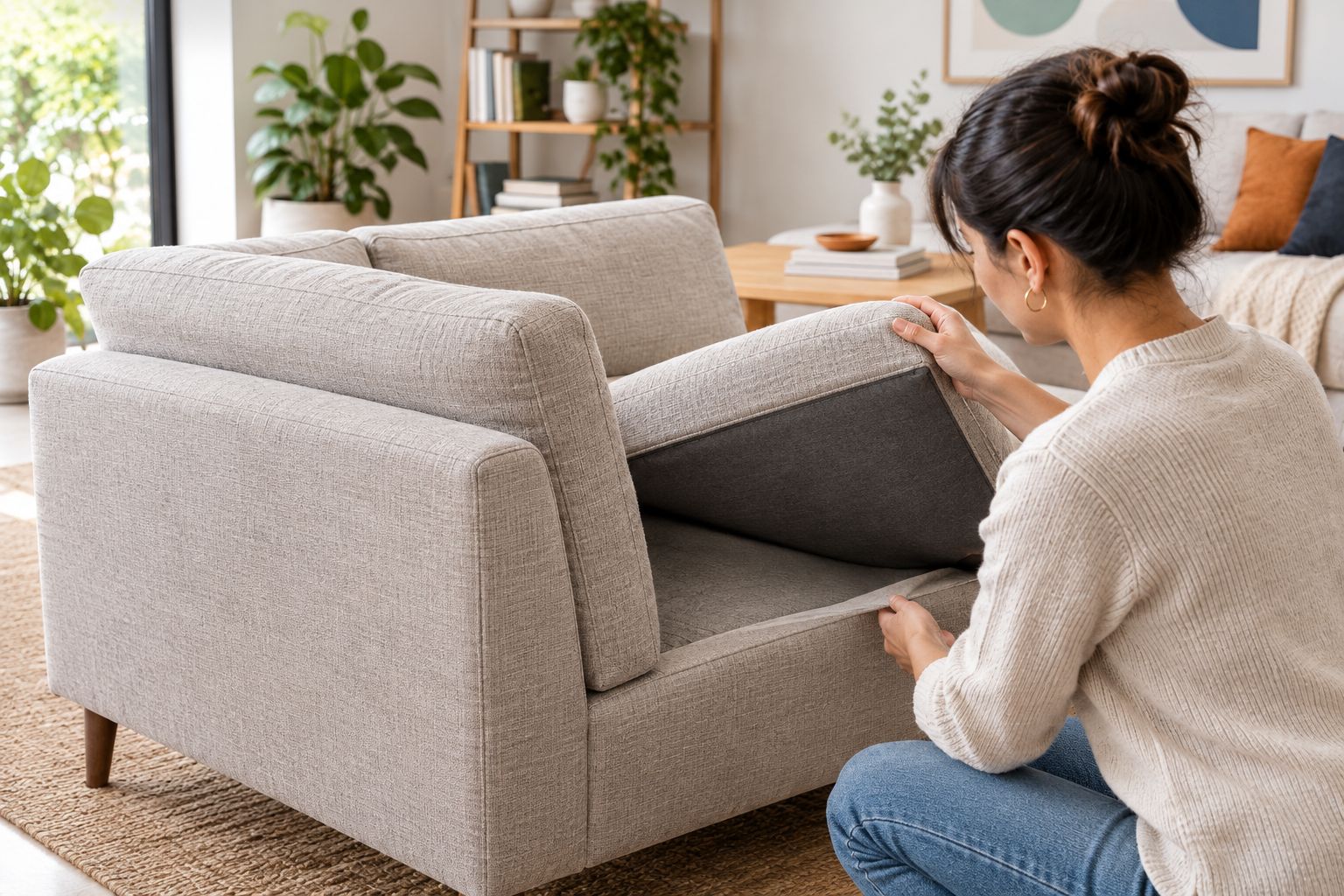
The front of the sofa is only part of the job. Outside arms, the rear panel and cushion boxing—the strips around cushion edges—also need to be accounted for.
Before the cutting plan is finalised, check:
Do not assume hidden areas will use the same fabric, or that they will use a different one. Ask your upholsterer to specify what goes where. This is particularly useful when you are changing the original finish or simplifying decorative details.
Ask to see enough fabric to understand the scale and direction of the design. A small cutting helps with colour and texture, but it does not always show the complete repeat or how a large motif will sit on a cushion.
Discuss where you want the pattern centred: the back, the seat cushions or both. Ask how the design will meet across neighbouring cushions and whether seams will interrupt a feature you particularly like.
This is also the moment to consider the rest of the room. Bring photographs of the flooring, curtains and nearby furniture when asking for fabric advice. You are choosing something that needs to work across the whole sofa, not simply look attractive in your hand.
Seat count alone is not enough to confirm an upholstery fabric order. It leaves out arm shape, cushion depth, separate panels and the way pieces fit across the chosen fabric.
Use a seat-count estimate only for an early conversation, not as an instruction to purchase. Before ordering, replace it with a quantity approved for your particular sofa and fabric.
Extra upholstery fabric is useful when it has an agreed purpose, such as matching scatter cushions or keeping material for a future repair. It should be separate from the fabric already allowed for construction and pattern matching.
Ask your upholsterer how much extra that purpose requires and whether leftover pieces would be useful. Offcuts are not automatically large enough for a replacement cushion panel, and their pattern placement matters too.
How do I work out how much upholstery fabric my sofa needs?
Have your upholsterer calculate the linear metres from the sofa’s individual sections and your chosen fabric. Confirm the usable width, pattern repeat, direction and finishing details before ordering.
Does a wider upholstery fabric always mean I need less?
A wider upholstery fabric does not automatically mean you need less length. The required pieces still need to fit across the width in the correct orientation, with matching and seam allowances included.
Do I need more fabric for a patterned sofa?
Pattern matching can increase the fabric required because motifs need to align or sit in particular positions. Ask your upholsterer to calculate the order using the actual repeat rather than a plain-fabric estimate.
Can I use my sofa’s old covers as a measuring guide?
Old covers can help your upholsterer understand the existing construction, but they should not be your only ordering guide. The new fabric’s width, pattern and direction still need a separate cutting plan.
Should I buy upholstery fabric before choosing an upholsterer?
Choose an upholsterer before committing to the fabric quantity. You can shortlist colours and textures first, then have suitability and the required metres confirmed before purchase.
Can leftover sofa fabric be used for scatter cushions?
Leftover sofa fabric works for scatter cushions only if the pieces are large enough and the pattern can be placed appropriately. Include matching cushions in the original scope if they are part of your room plan.
A change of fabric can change the required quantity, even when the sofa stays the same. If you switch your selection after receiving an estimate, have the cutting plan checked again before approving the order.
Ready to find a fabric that feels right in your room? Let Material World help you choose from its upholstery fabric selection, then take the final choice to your upholsterer for quantity confirmation.


