Your cart (0)
Your cart is empty
Tax included and shipping calculated at checkout

Drawer menu
Tax included and shipping calculated at checkout

If your outdoor cushions slide, sag or leave awkward gaps, measure the furniture before replacing the covers. To fit outdoor fabric cushions to existing furniture, match the seat shape, check the cushion filling and trial the finished size before anyone cuts fabric.
An old cushion is not always a reliable pattern. Its filling might have flattened, its cover might have stretched, or it might never have fitted the chair properly.
Use the furniture as your starting point, then check the cushion against it. A good fit keeps the cushion supported without jamming it between the arms or pushing you too far forward.
Material World offers a large selection of premium fabrics and personal advice backed by 25+ years of experience. For outdoor cushions, separate the fabric decision from the making: confirm who will measure, supply the filling and sew the covers before ordering material.
You do not need sewing equipment to prepare a useful brief. If someone else is making the cushions, ask which measurements and templates they need before you begin.
Expected result: you have a labelled measurement sheet and any necessary templates, rather than a single width copied from an old cover.
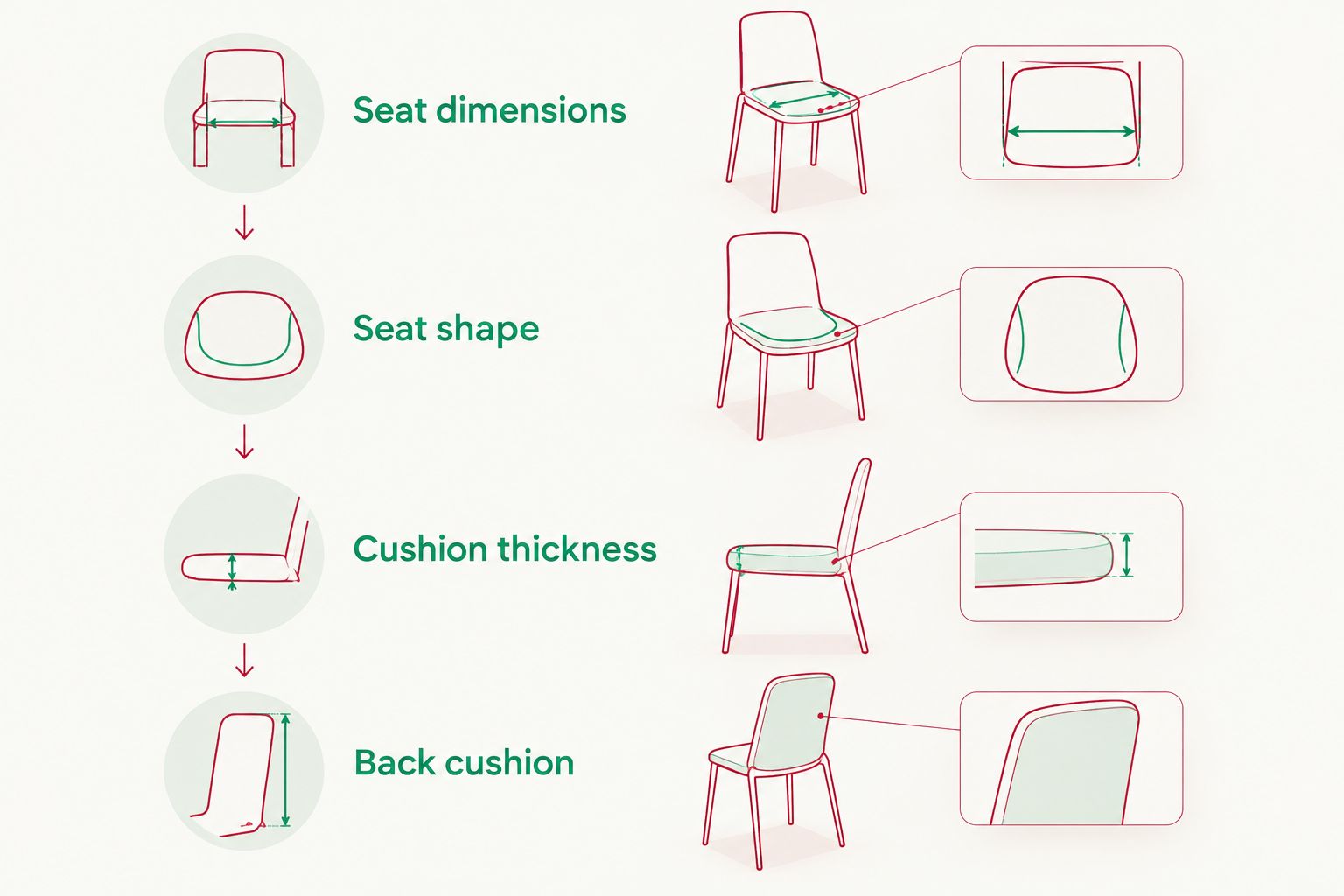
A deeper back cushion reduces usable seat depth. A thicker seat cushion raises your sitting position and changes the relationship between your elbows and the armrests.
Try the proposed arrangement before approving it. On dining chairs, also check that your thighs fit comfortably beneath the table; on a lounge, make sure the front edge does not press behind your knees.
You do not always need a complete replacement. Unzip the old cover, inspect the insert and choose the work that solves the actual problem.
| Approach | Best for | Main benefit | Limitation |
|---|---|---|---|
| New covers only | Inserts that remain supportive and correctly shaped | Updates the fabric while keeping usable filling | Cannot correct collapsed or poorly fitting inserts |
| New inserts and covers | Sagging, misshapen or uncomfortable cushions | Lets you reconsider shape, thickness and support together | Requires a new fit check rather than simply copying the old cover |
| Adjusted layout | Bench seats with inconvenient cushion divisions | Lets joins suit the seating positions | Larger cushions are more awkward to move and store |
Keep an insert because it performs well, not simply because it fits inside a cover. Check for persistent dampness, crumbling material and areas that stay compressed after use. Ask a cushion maker to assess questionable filling before enclosing it in new fabric.
Expected result: the maker has a clear brief covering fit, exposure, cleaning, pattern direction and construction—not just a fabric colour.
Material World’s outdoor fabric selection gives you scope to explore botanical designs, quieter patterns and colours that connect with your interior. The trade-off is that appearance alone cannot establish suitability: check each shortlisted fabric against the conditions on your balcony or terrace.
Place your template on the seat and check every corner. If you are changing the filling or cushion thickness, ask the maker about a trial fitting with the proposed insert and a temporary cover before committing the selected fabric.
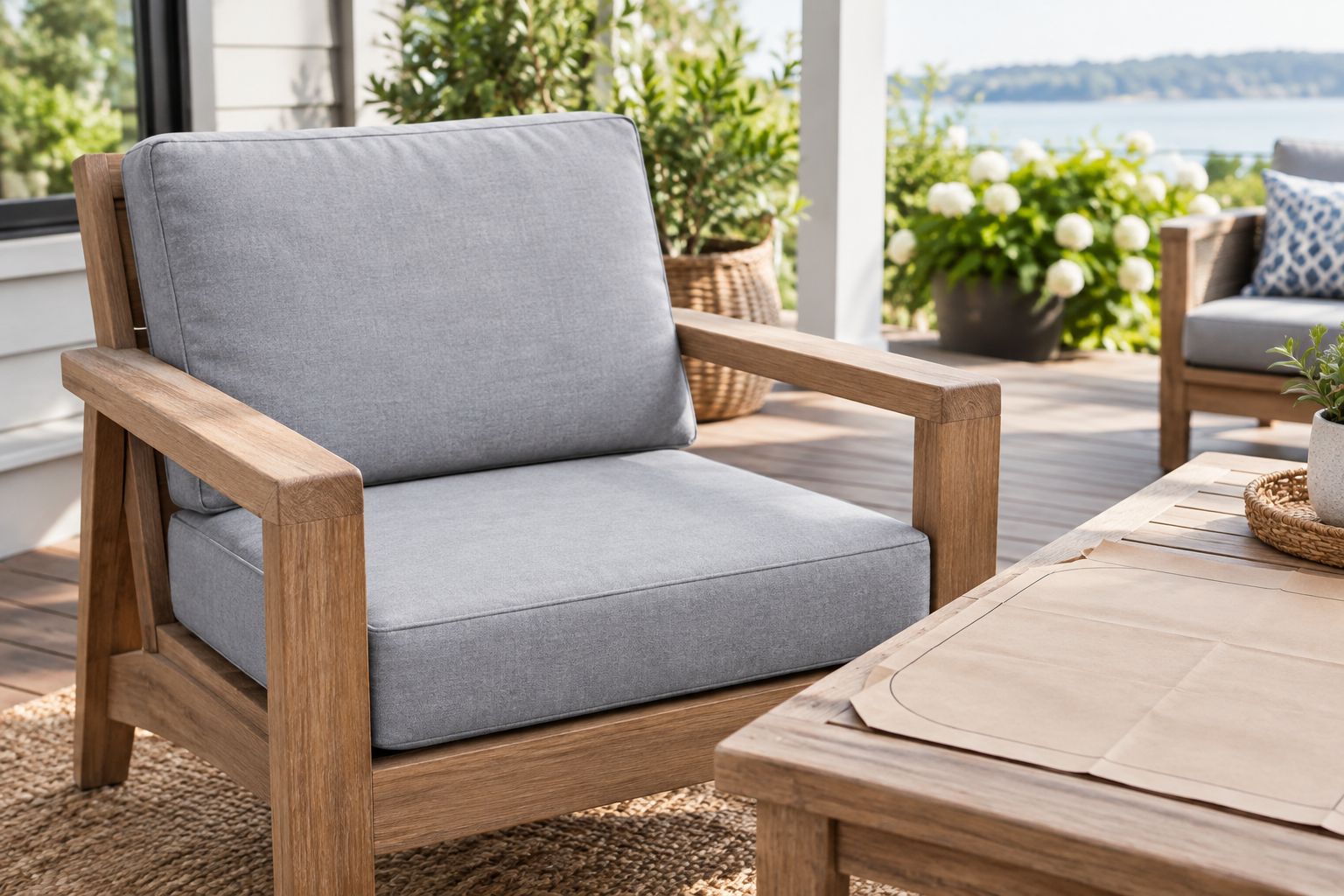
Sit back, stand up and move the cushion as you would during everyday use. Check that the front edge stays supported and that the back cushion does not crowd the seat. Approve the fit while changes are still straightforward.
For outdoor dining chairs, start with the same frame measurements but pay particular attention to the back posts and table clearance. A cushion that looks right from above can still push you too high beneath the tabletop.
When choosing chair cushion covers, seat shape and attachment points matter as much as colour: ties need somewhere secure to fasten without crossing a sharp edge. Keep them clear of folding mechanisms and moving joints.
Check every chair rather than assuming the set is identical. If you want interchangeable cushions, confirm that a shared template fits all the seats before the maker cuts the full batch.
Can I put new outdoor covers over my existing cushions?
Yes, if the inserts remain supportive, dry and correctly sized for the furniture. Inspect the filling before using the old cover as a pattern.
Should I measure the chair or the old cushion?
Measure both, but use the furniture to establish the required fit. Old cushions can flatten or stretch, so their dimensions need checking against the frame.
How thick should replacement outdoor cushions be?
Choose thickness by testing comfort, seat height and clearance rather than copying a generic measurement. Check how the seat and back cushions work together before approving the final size.
Does outdoor fabric make a cushion waterproof?
No, an outdoor fabric label does not establish that the complete cushion is waterproof. Check the fabric specification, seams, filling and care instructions for the conditions where it will be used.
Can I wash outdoor cushion covers in the washing machine?
Only if the individual fabric and finished cover care instructions permit machine washing. Removable covers are not automatically machine washable.
Can Material World help me choose outdoor cushion fabric?
Material World sells outdoor fabrics and offers personal fabric advice. Bring photographs, measurements and details of sun and rain exposure, and confirm cushion-making arrangements separately.
A cushion can fit the furniture and still not fit the person. Before approving the final version, have the people who use the seat try it with the back cushion in place. That simple check catches comfort problems a measurement sheet cannot show.
Ready to narrow down the fabric? Contact the team with your photographs and measurements, and let us help you choose a fabric suited to your furniture and outdoor setting.


