Your cart (0)
Your cart is empty
Tax included and shipping calculated at checkout

Drawer menu
Tax included and shipping calculated at checkout

If your outdoor cushions are looking dusty or heading into storage, care for outdoor fabric by removing loose dirt, cleaning according to its care instructions and letting every layer dry completely before packing it away. Check the cushion filling as well as the cover: a dry surface does not mean the inside is ready for storage. Keep clean furnishings somewhere dry and ventilated, then inspect them before bringing them out next season.
A sheltered verandah can still collect dust, pollen and wind-blown rain. Putting cushions away with that dirt or moisture trapped inside creates a problem you will discover when you want to use them again.
Seasonal care is about cleaning, drying and storage—not simply covering everything up. At Material World, outdoor fabric forms part of a large premium fabric selection, with advice for homeowners and designers in Sydney and Orange. Keep the fabric name and care information together so you can check the right instructions later.
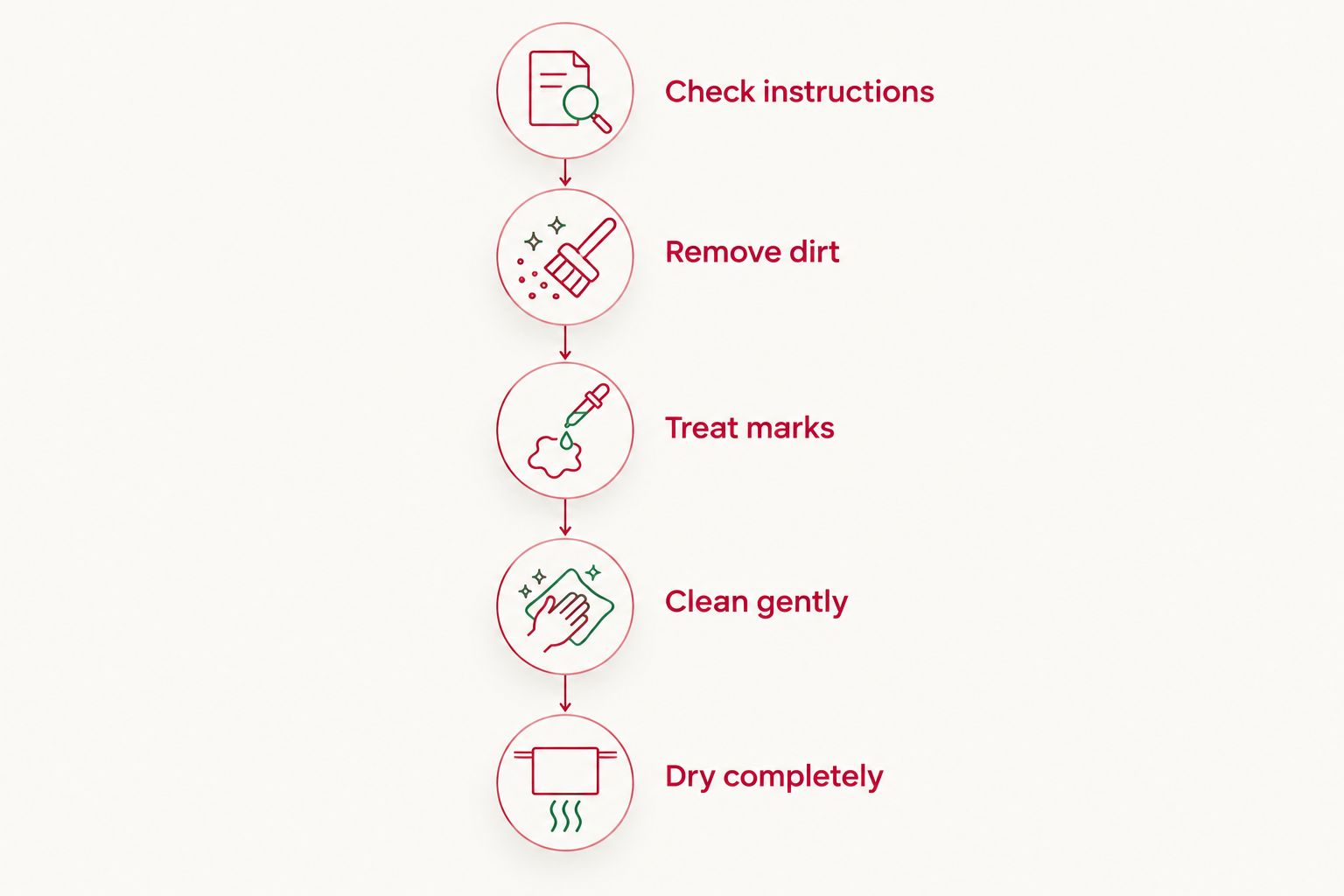
Work through the following steps before a long break from using your outdoor area. Start while you can still leave cushions somewhere sheltered with good airflow; cleaning them immediately before packing leaves no room for thorough drying.
Check the fabric label, cushion label and any instructions supplied with the finished furniture. A removable cover is not automatically machine washable, and an outdoor fabric is not automatically suitable for bleach.
Look for permitted cleaning products, washing methods and drying restrictions. If the instructions are unclear, identify the fabric and ask its supplier before treating a stain. Keep a photo of the label with your furnishing records.
Use a soft brush to remove leaves, crumbs and surface dust before adding water. Work gently around seams, piping and folds, where debris collects.
For fabric that permits vacuuming, use an upholstery attachment without dragging a rough nozzle across the surface. Removing loose dirt first helps prevent it being worked deeper into the weave during cleaning. Avoid stiff scrubbing brushes that can roughen the fabric.
Identify spills, bird droppings and other marks rather than treating every stain the same way. Blot fresh liquid with a clean absorbent cloth instead of rubbing it across a larger area.
Follow the approved stain-treatment instructions and test any permitted cleaner on an inconspicuous area first. Check the result once it has dried. Do not mix cleaning products or assume a household upholstery spray suits an outdoor finish.
Use the method specified for the fabric and the finished cushion. Some covers permit washing; others need cleaning in place. Follow any directions for dilution, water temperature and rinsing rather than choosing a stronger solution for a stubborn mark.
Where rinsing is required, remove cleaning residue thoroughly. Avoid soaking a cushion simply because its outer fabric is intended for outdoor use: the filling and internal construction need consideration too.
Let air reach all sides of the cushion, following its drying instructions. Turn or reposition it as needed, and pay attention to seams, corners and the underside.
Do not pack cushions away while any part still feels damp. Avoid a tumble dryer, heater or other direct heat source unless the care instructions specifically allow it. Thick fillings need their own drying time, even when the cover feels ready.
Once everything is clean and dry, look for loose stitching, damaged zips and worn areas. Check protective furniture covers too, including places where water can collect.
Arrange repairs before storage where practical. A protective cover cannot compensate for damaged fabric or a cushion already holding moisture. If you remove covers from their fillings, keep matching pieces together so refitting them is straightforward.
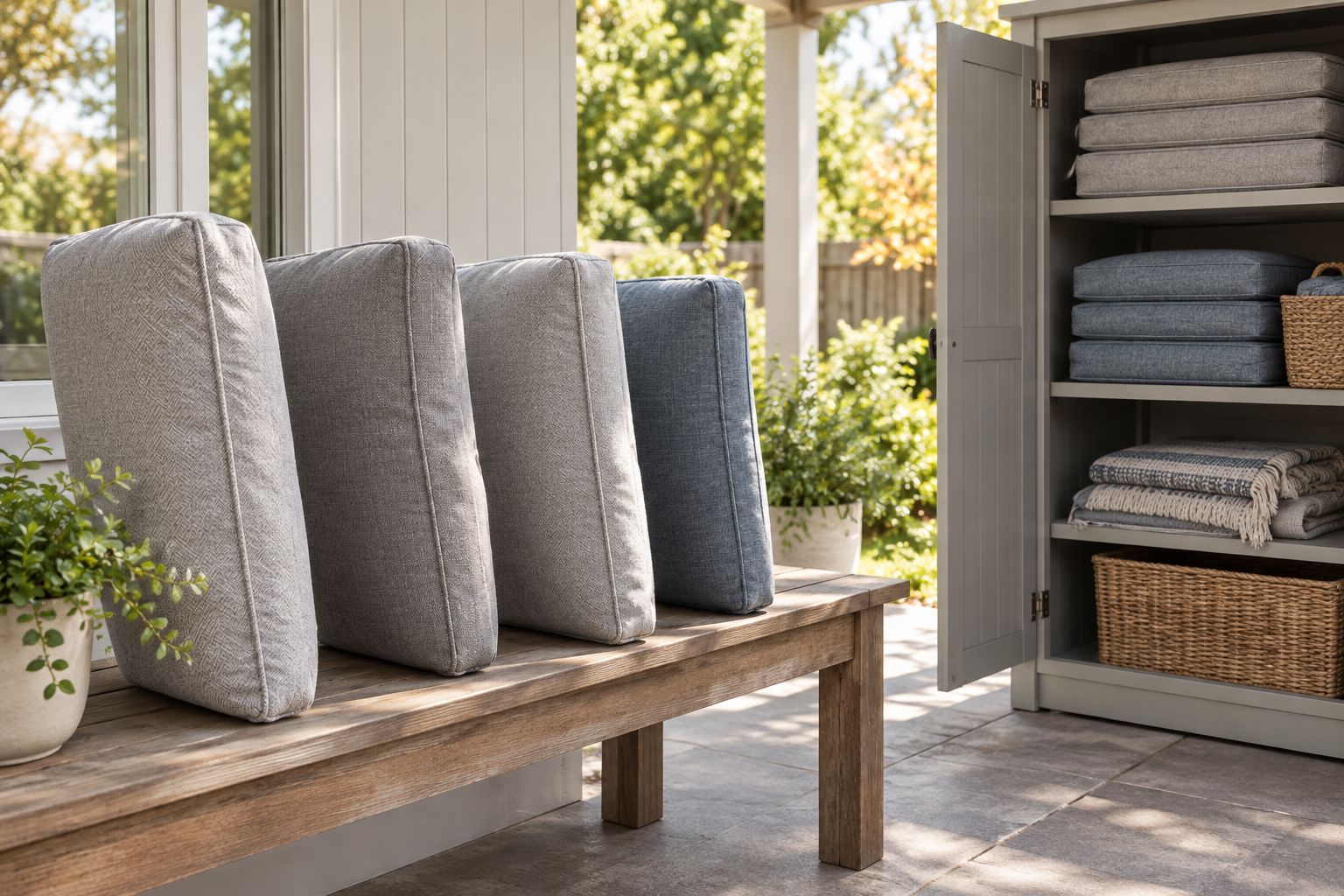
Choose a clean, sheltered space away from leaks and damp surfaces. Do not compress cushions into a container before checking that both the container and its contents are dry.
Keep stored pieces accessible enough to inspect. A storage box is useful only if its condition suits the job; a closed lid does not prove that moisture cannot enter or collect inside. Check after wet weather rather than leaving everything untouched until summer.
When you bring furnishings out again, check for musty smells, visible marks, dampness and damage. Open folds and look underneath rather than judging only the top surface.
If something smells musty, investigate before putting it back into use. Follow the appropriate cleaning instructions, dry it fully and check the storage space for moisture. Do not hide the problem beneath a fresh cover or fragranced spray.
Dry indoor storage is the better choice when you have a suitable space and will not use the cushions for an extended period. Covered outdoor storage keeps furnishings closer to hand, but you still need to check for trapped moisture and water entry.
| Approach | Best for | Benefit | Limitation |
|---|---|---|---|
| Dry indoor storage | Cushions not needed between seasons | Removes direct exposure to outdoor weather | Needs clean, dry space and fully dried cushions |
| Covered outdoor storage | Furnishings that need to remain outside | Keeps the setting together and ready to access | Requires checks for leaks, condensation and dampness |
Choose according to the space you actually have, not just the storage product's description. Neither approach makes it safe to pack away wet cushions.
There is no single cleaning recipe for every outdoor textile. These details change what your furnishings need:
When choosing replacement outdoor fabric, ask about care alongside colour and pattern. A fabric should suit how you use the space and how you can realistically maintain it.
Outdoor fabric can remain outside only where the fabric, finished furnishing and conditions suit that use. The word “outdoor” does not mean every cushion can stay exposed indefinitely.
Check the manufacturer's guidance, shelter and drainage. If you will not use removable cushions for a long period, clean, dry storage avoids leaving them exposed unnecessarily.
Machine wash outdoor cushion covers only when their care instructions permit it. A zip tells you the cover is removable, not which cleaning method is safe.
Check whether the instructions apply to the cover alone or the whole cushion. Follow the stated drying method as carefully as the washing method.
Apply a fabric protector only if the fabric supplier recommends a compatible treatment. Adding an unapproved spray is not a substitute for routine cleaning or dry storage.
Ask whether retreatment is needed at all. Keep the product instructions with your fabric records so the next seasonal clean follows the same guidance.
What is the best way to care for outdoor fabric between seasons?
Remove loose dirt, follow the fabric’s cleaning instructions and dry the cover and filling completely before storage. Choose a dry, ventilated location and inspect stored furnishings periodically.
Can I put outdoor cushions away if they feel dry on top?
A dry top surface is not enough to confirm that an outdoor cushion is ready for storage. Check the underside, seams and filling, and allow further drying if any part remains damp.
Can I use bleach on outdoor fabric?
Use bleach on outdoor fabric only when its specific care instructions permit it. Follow the approved dilution and method rather than applying a general household cleaning recipe.
Does outdoor fabric need cleaning if it looks clean?
Outdoor fabric still needs inspection and removal of loose dirt before seasonal storage, even when it looks clean. Wash or spot-clean according to its condition and care instructions rather than automatically soaking it.
What should I do if stored cushions smell musty?
Take musty cushions out of storage and check both the cushions and storage space for dampness or visible mould. Follow the appropriate cleaning guidance and dry everything fully before storing it again.
Can Material World help me choose outdoor fabric?
Material World offers outdoor fabric within its wider fabric selection and provides advice to homeowners and designers in Sydney and Orange. Discuss where the fabric will be used and confirm the care requirements before choosing.
Photograph the fabric label before it fades or becomes difficult to reach. A cushion's colour or pattern is not enough to identify its cleaning instructions later.
Keep that photo with the fabric name and order details. It is a small step that makes future stain advice and replacement enquiries much easier.
Planning an indoor refresh as well? Material World brings 25+ years of experience to genuinely custom-made curtains and blinds, with expert in-home design consultations in Sydney and Orange. Request a free quote and let us help you choose furnishings tailored to your home.


