Your cart (0)
Your cart is empty
Tax included and shipping calculated at checkout

Drawer menu
Tax included and shipping calculated at checkout

Plan sliding-door curtain tracks around the door you actually use, the space needed for the open curtain and a secure fixing point. Keep the handle and walkway clear, then choose a track position and fabric that suit your privacy and blockout needs.
Start with the working door, not the centre of the glass. Use this order before settling on the fabric or curtain heading:
Material World is best for Sydney homeowners seeking custom curtains with in-home design advice. The practical starting point is a plan that shows how your curtain and door work together, rather than a fabric choice made in isolation.
A sliding door is both a window and a thoroughfare. A curtain that looks balanced when closed can become awkward when its gathered fabric sits across the opening or catches on the handle.
Planning the track first also protects your fabric choice. A fuller curtain needs room to gather; a second layer needs its own clear path. Neither should become an obstacle whenever you step outside.
Choose the opening direction around everyday access. Stand inside the room and use the door as you normally would, including reaching for the latch and carrying something through the opening.
Then look at the available wall beside the glass. That is potential curtain parking space, but furniture, switches and adjoining corners can limit how much of it you can use.
| Opening arrangement | Best for | Practical benefit | Limitation to check |
|---|---|---|---|
| Single-sided draw | Doors with a regular access route at one end | Gathers the curtain away from the main passage | The full curtain stack needs space at the other end |
| Centre-opening pair | Rooms where balanced curtains suit the layout | Divides the gathered fabric between both ends | A stack at the access end can obstruct the opening |
Do not assume a centre-opening pair is right simply because the glass is symmetrical. If you always enter through one end, a single-sided draw towards the opposite end deserves consideration first.
Ask to see the proposed curtain in both positions: fully closed and fully gathered. The open position reveals access problems that a front-on drawing can hide.
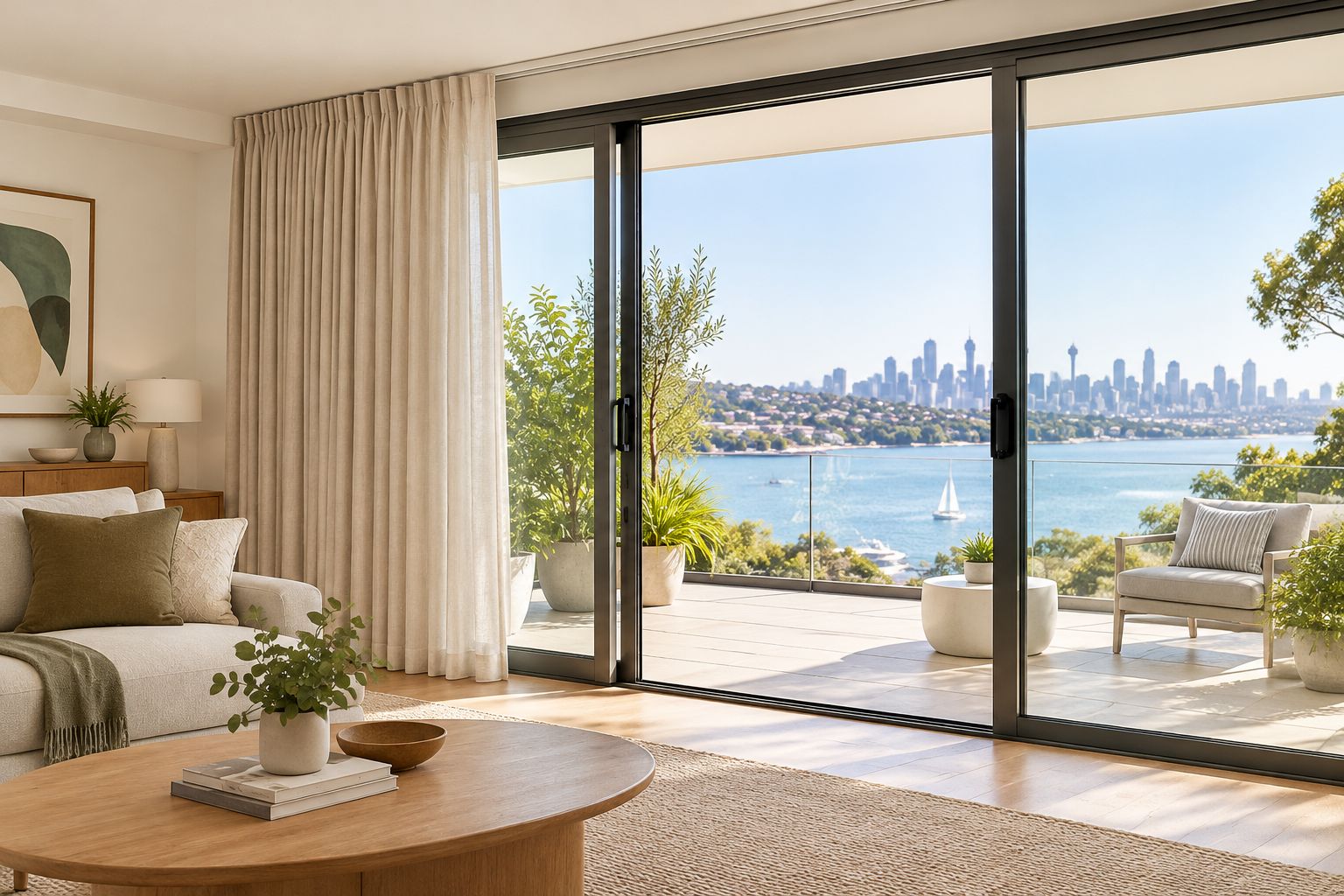
Neither position wins automatically. The suitable choice depends on the fixing surface, the space above the door and how far the curtain must sit in front of handles or existing window furnishings.
| Track position | Best for | Practical benefit | Limitation to check |
|---|---|---|---|
| Ceiling-mounted | Rooms where you want curtains to start at ceiling level | Creates a continuous curtain line above the door | Requires suitable overhead fixing and clearance from ceiling features |
| Wall-mounted | Rooms with a suitable fixing position above the door | Lets you position the track below the ceiling | Brackets and projection must clear the frame and handle |
Confirm the fixing before committing to the look. Ceiling-mounted curtains do not remove the need to assess the supporting structure. Wall-mounted tracks also need more than a convenient strip of wall above the frame.
For an apartment, check the relevant building requirements before arranging drilling. Identify nearby services and existing fittings rather than assuming every part of the ceiling or wall is suitable.
There is no universal stack-back measurement that suits every sliding door. The gathered width depends on the fabric, curtain heading, fullness and finished curtain size.
Ask for the stack-back to be worked out using your proposed curtain, then mark its position on the room plan. If wall space allows, extending the track beyond the glass gives the gathered curtain somewhere to sit without covering as much of the doorway.
Check these points together:
A narrow wall beside the door is a design constraint, not a reason to guess. Adjust the opening arrangement, fabric or heading before accepting a curtain that permanently narrows the passage.
Layered curtains need separate paths so you can move each layer independently. Decide what each layer should do before choosing the track layout: soften daylight, provide privacy or darken the room.
Sheers suit softened daylight, but they are not a substitute for dependable night-time privacy. Blockout fabric helps control light through the curtain itself; gaps above, below and beside the curtain still affect the result.
Check the layout in this order:
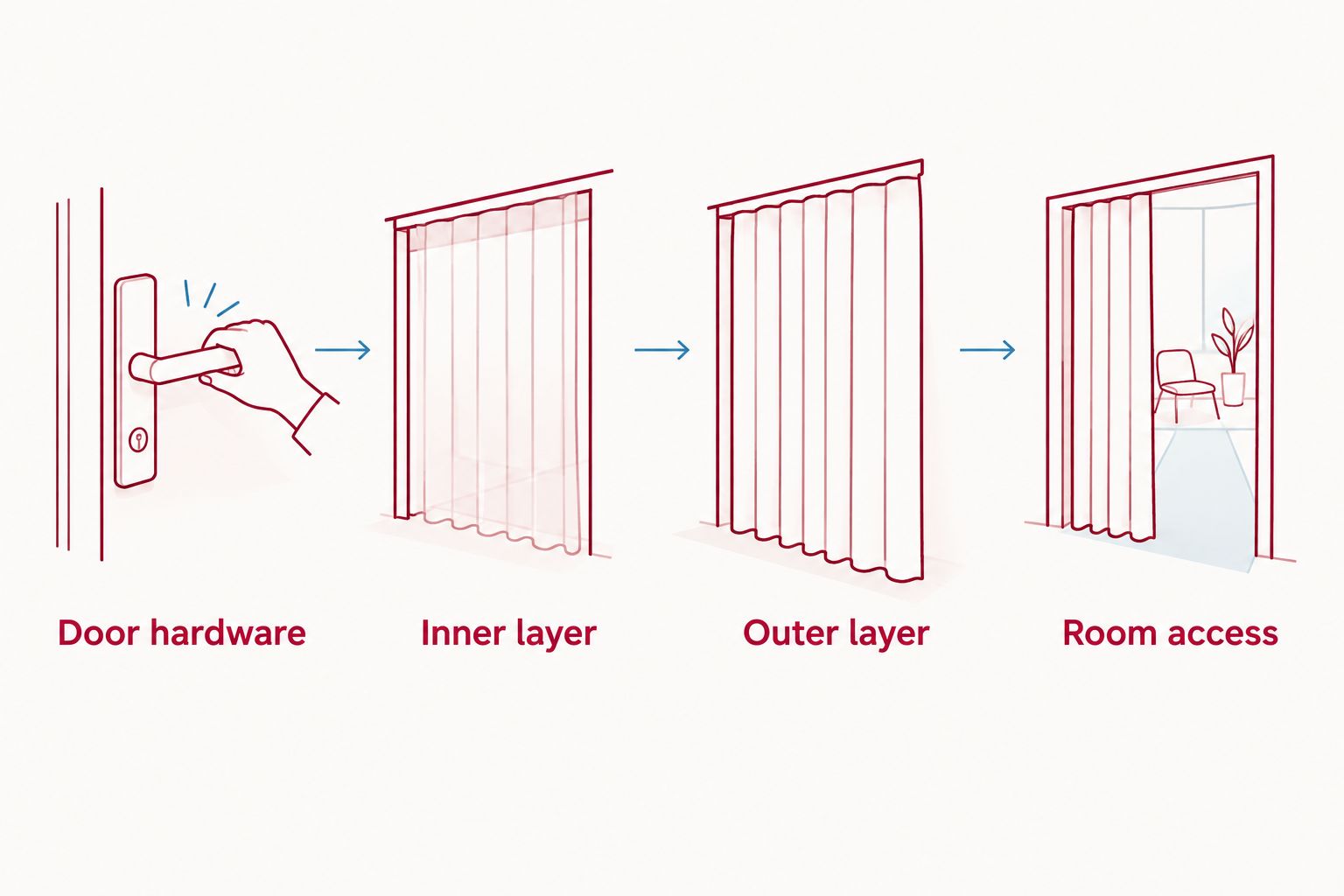
If you already have blinds, include their brackets, controls and operating space in the assessment. Adding curtains should not make the existing blind difficult to use or leave the fabric rubbing against it.
The same sliding-door width can need different curtain arrangements in different homes. These factors determine the layout:
Treat privacy, blockout, insulation and noise reduction as separate priorities during the consultation. A track layout alone does not establish how much a finished curtain will change temperature or sound.
Bring the room problem to the appointment, not just a favourite fabric photograph. Show the usual path through the door, explain when glare or privacy causes trouble, and identify furniture that will stay.
Material World offers a large premium fabric selection, in-home design consultations and genuinely custom-made window furnishings rather than factory mass production. Seeing fabric in your room helps you compare its colour, texture and weight alongside the practical track layout.
Ask for the proposed opening direction, fixing position and curtain parking space to be explained together. A useful curtain plan should make sense when the door is in use, not only when the curtains are closed.
Should my sliding-door curtains open from the centre?
Centre-opening curtains suit some rooms, but the door's access position should decide the arrangement. A single-sided draw can keep gathered fabric away from the panel you use most.
Can I put a curtain track on the ceiling above a sliding door?
A ceiling-mounted track is an option when the overhead structure provides suitable fixing. Check the supporting surface, nearby services and clearance before choosing the position.
How far should a track extend past my sliding door?
The extension should accommodate the proposed curtain stack and available wall space. Fabric, heading and fullness determine the gathered width, so use the actual curtain specification rather than a standard allowance.
Can sheer and blockout curtains share the same track?
Independently moving sheer and blockout curtains need separate track paths. Check that both layers clear the door hardware and have room to gather without blocking access.
Will blockout curtains make my sliding-door room completely dark?
Blockout fabric does not guarantee complete darkness around a sliding door. Light can enter through gaps around the curtain, so discuss coverage and track placement as well as fabric.
Should curtains touch the floor beside a sliding door?
The finished hem should avoid dragging or catching in the doorway. Choose the length with the floor surface, daily traffic and door movement in mind.
Can I keep my roller blind and add curtains?
You can retain an existing roller blind where the proposed curtain layout leaves enough clearance. Check the blind's brackets and controls alongside the curtain folds and door handle.
Before finalising your curtains, open the sliding door and stand where the gathered fabric will sit. That simple check often makes the right opening direction easier to picture than looking at the closed glass.
Let Material World bring the showroom to you with an in-home design consultation and a free quote for custom curtains tailored to your Sydney home.


