Your cart (0)
Your cart is empty
Tax included and shipping calculated at checkout

Drawer menu
Tax included and shipping calculated at checkout

Dining-chair upholstery fabric is the material covering your chair seats and backs, chosen to make everyday meals comfortable while standing up to spills, wear and regular cleaning. If your chairs collect breakfast crumbs, host long dinners or sit in a sunny dining nook, choose for those conditions before falling for a colour.
Dining chairs face a particular mix of food, friction and frequent handling. You pull them out, slide across the seat and touch their backs during meals. The right choice balances a comfortable seat with care instructions you can realistically follow.
A dining room also brings fabric close to timber, flooring, curtains and tableware. A sample that looks lovely on its own can feel quite different beside those finishes. Material World offers a wide selection of fabrics and expert advice for homeowners and designers in Sydney and Orange, backed by 25+ years of experience.
You do not need to begin with fabric terminology. Start with the room, the people using it and the mess you expect to clean.
Write a short brief before browsing samples. An everyday kitchen-dining chair needs a different conversation from an occasional dining chair used mainly for guests. Include pets, children and whether anyone regularly works at the dining table.
Be specific about your biggest frustration. If the current seats hold crumbs, show every mark or feel uncomfortable against bare legs, make that your first selection criterion rather than repeating the same choice in another colour.
Read the fabric information yourself first, looking for an explicit upholstery application. A fabric being attractive, substantial or labelled for outdoor use does not by itself establish suitability for your dining chairs. Ask for clarification wherever the intended application is unclear.
Material World’s upholstery fabric advice gives you a way to narrow the selection with help rather than sorting through fabrics alone. Share your household brief and ask which options suit the chair shape, expected use and preferred cleaning routine.
Handle each sample instead of judging it from a screen. Examine the weave, raised threads and surface texture, then think about how the fabric will behave around food and frequent contact. Loose decorative loops deserve extra consideration where claws, jewellery or clothing can catch.
For a quieter look, compare a plain surface with a subtle texture. For a more decorative dining area, try a pattern alongside the table rather than assuming the chair must disappear into the room.
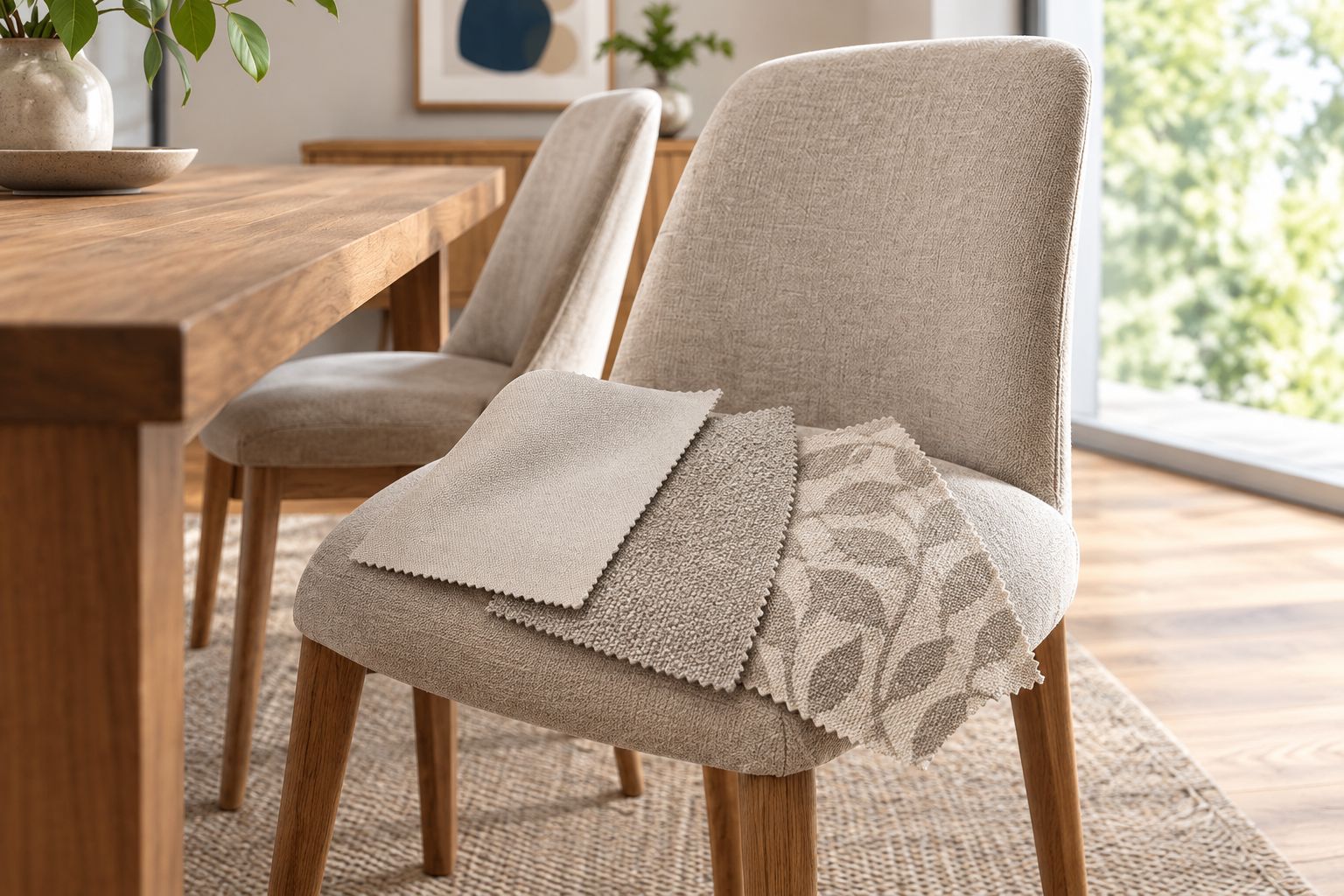
Comfort matters as much as appearance. Hold the sample against your forearm, then check whether the surface feels right for the way you use the room.
Do not treat an upholstery sample as washable unless its care instructions say so. Water, detergent and spot-cleaning products are not interchangeable solutions. The fabric covering is also only part of the chair: liquid can reach padding and other materials underneath.
Ask for the recommended response to your likely spills, such as coffee, sauces or oily food. If you want to test a sample, obtain permission and follow the supplier’s instructions. A home test is a useful observation, not proof that every future stain will come out.
Place samples beside the table during daylight and under your usual evening lighting. Pale plains, dark plains and patterns make different visual statements; none removes the need to clean spills promptly. Choose a finish you enjoy looking at, not just one you hope will hide everything.
Pattern also needs planning around the chair’s shape. A large motif can look quite different on a small seat from how it appears across a full sample. Ask your upholsterer to explain placement before fabric quantities are finalised.
Have the person doing the upholstery inspect the chairs before you order fabric. Seat construction, padding condition, fabric width and pattern placement all affect the work. Do not estimate the order from a photograph or another household’s chair project.
A new covering will not repair a loose frame or tired padding. Agree on what needs attention so the finished chair feels right as well as looking refreshed. For designers specifying several chairs, record the chosen fabric and placement instructions in one brief.
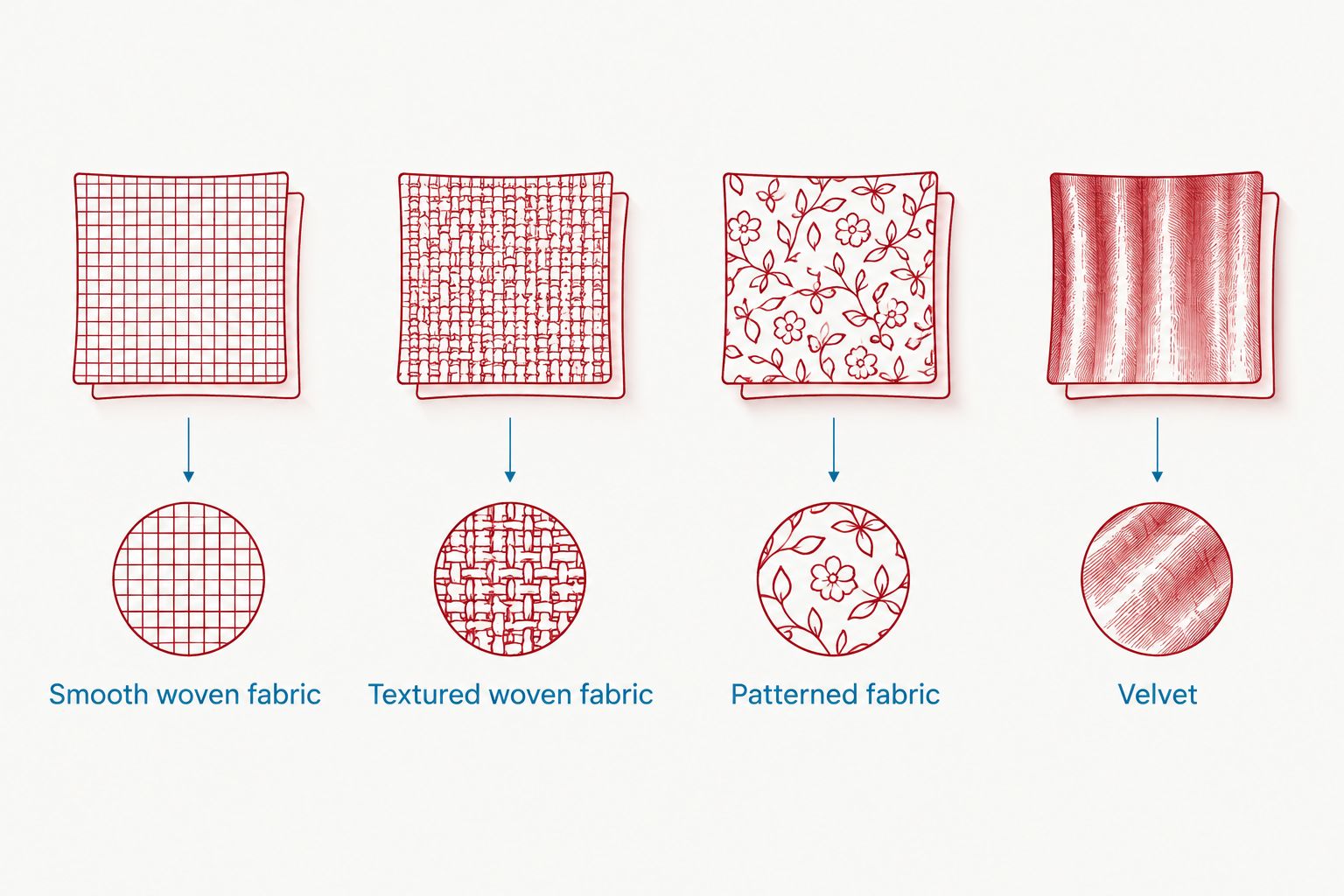
These are selection approaches, not guarantees about a particular fabric. The individual fabric’s suitability and care instructions take priority over its general appearance. Use the table to decide what you want to investigate, then check the details of your shortlisted samples.
| Option | Best for | Main benefit | Key limitation |
|---|---|---|---|
| Smooth woven fabric | Households wanting a relatively even surface | Keeps the surface visually simple | Smoothness does not establish stain resistance |
| Textured woven fabric | Rooms needing a softer, more layered look | Adds visible surface interest | Raised or open texture needs a closer snagging and cleaning check |
| Patterned fabric | Homeowners making dining chairs a feature | Introduces colour and a repeated design | Motif placement needs planning on small seats |
| Velvet | Dining rooms where a soft, plush feel is the priority | Provides a distinctive pile texture | Pile direction and care requirements need attention |
A beautiful fabric can still be the wrong choice for a particular chair. Avoid these shortcuts before committing to an entire dining setting.
What’s the best upholstery fabric for dining chairs?
The best upholstery fabric is one explicitly suited to your chairs and everyday use, with care instructions you can follow. Compare the actual fabric’s documentation, texture and comfort rather than choosing by fibre name alone.
Is textured fabric a good choice for family dining chairs?
Textured fabric is an option when its construction and cleaning requirements suit your household. Inspect raised threads and open areas carefully, especially where pets or frequent food spills are part of daily life.
Can I use curtain fabric to cover dining chairs?
Use curtain fabric on dining chairs only if the supplier confirms that the particular fabric is also suitable for upholstery. A curtain application alone does not establish suitability for repeated seating use.
Does a high abrasion result mean the fabric is stain-resistant?
No, an abrasion result does not establish stain resistance. Check cleaning guidance and any documented stain-related properties separately from wear information.
How do I clean a spill on an upholstered dining chair?
Follow the specific fabric’s care instructions before applying water or cleaning products. Remove loose food carefully and seek the supplier’s advice if the permitted treatment is unclear.
How much fabric do I need to re-cover dining chairs?
Ask your upholsterer to calculate the fabric requirement from the actual chairs and chosen fabric. Fabric width, pattern placement, upholstered areas and chair construction affect the quantity.
Can I get help choosing dining-chair fabric in Sydney or Orange?
Material World offers fabric selection and expert advice for homeowners and designers in Sydney and Orange. Explain that your project involves dining-chair upholstery so the advice stays focused on suitable fabrics and care.
Check the chair you sit in most often, not just the one that looks best in a photograph. Its front edge, seat and back will help you explain where your current fabric disappoints.
Ready to narrow the samples down? Ask Material World for help choosing upholstery fabric tailored to your home, with photos of your dining chairs and a short description of everyday use.


