Your cart (0)
Your cart is empty
Tax included and shipping calculated at checkout

Drawer menu
Tax included and shipping calculated at checkout

Interior designers choosing upholstery fabric need a shortlist that suits the room’s daily use, furniture shape and overall scheme—not just a beautiful swatch. If your client loves the look but worries about upkeep, start with those practical concerns, then narrow the colour, texture and pattern choices.
An upholstery fabric shortlist connects your design concept to something a client will live with and maintain. A dining chair, occasional armchair and everyday sofa need different conversations about spills, comfort and wear. Appearance alone does not answer those questions.
Material World suits interior designers seeking upholstery fabric alongside coordinated custom curtains and blinds. Its premium fabric selection and genuinely custom-made window furnishings help you consider the room together, rather than treating every finish as a separate decision.
Explore Material World with a written brief beside you. The useful starting point is not every fabric you like; it is the selection that answers your client’s needs.
Start with a simple project sheet rather than a supplier catalogue. Record what the furniture does, who uses it and which concerns matter most. For a homeowner, that might mean a comfortable reading chair; for a designer managing several rooms, it means keeping each furniture item’s requirements separate.
Keep the brief to 1 page per furniture item. This is a practical organising rule, not a performance standard. Include a photograph so the supplier and upholsterer can see the shape you are discussing.
Ask the supplier for the intended application and care information for each candidate. A fabric’s appearance or category name does not establish whether it suits the furniture. Pass that information to the upholsterer before asking your client to choose.
If performance testing is supplied, read the test method and stated result together. Do not turn an isolated figure into a promise about lifespan, stain resistance or suitability for a particular household.
Begin with your own sample board and photographs of the furniture. Then use supplier guidance to narrow uncertain choices. Material World offers a broad fabric selection and expert in-home design consultations for homeowners and designers in Sydney and Orange, helping bring the showroom to you when coordinating a room.
View samples beside the actual flooring, wall finish and window furnishings. Use 2 lighting checks: daylight and the room’s usual evening lighting. These are viewing conditions, not a substitute for checking the fabric’s documented properties.
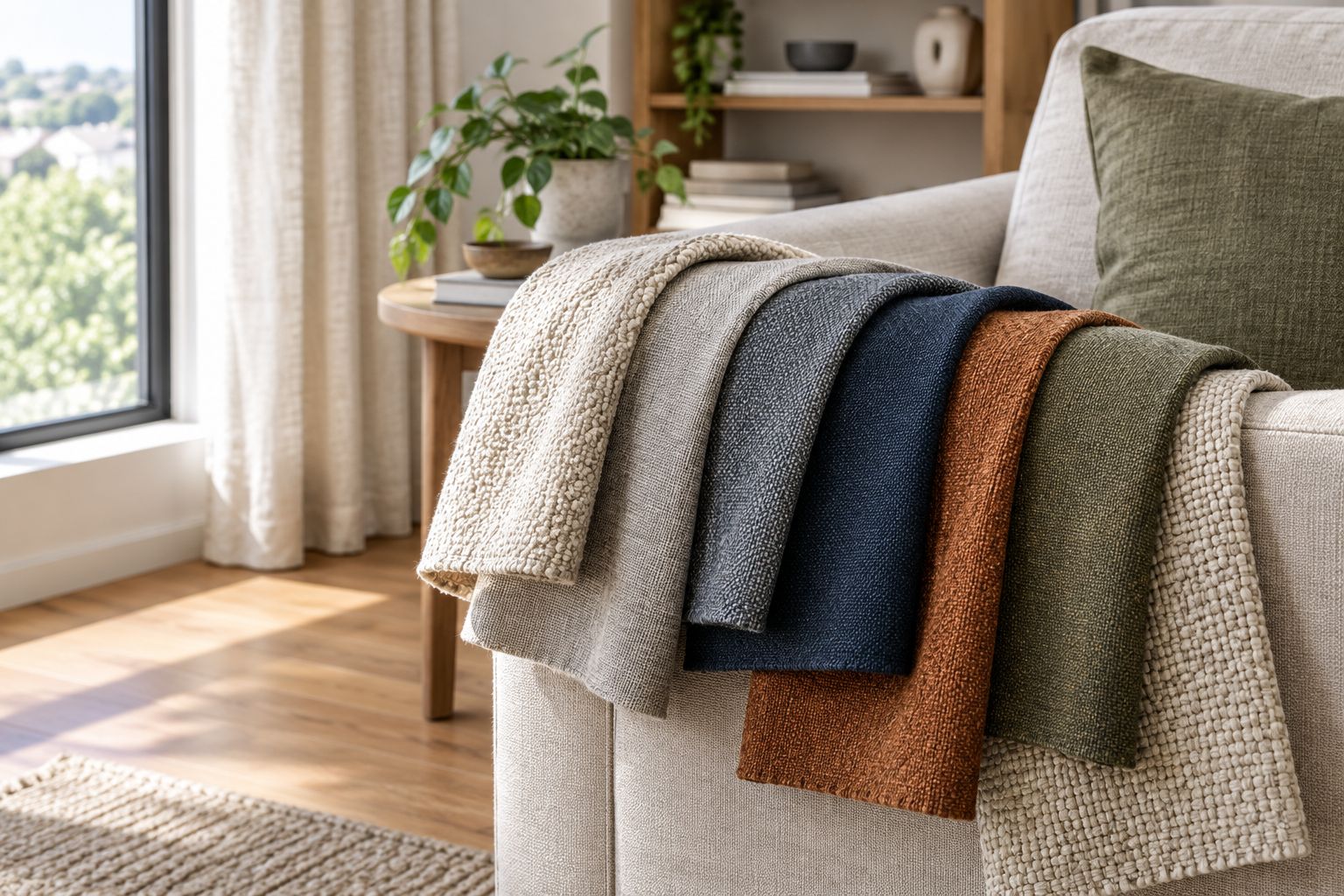
A sample looks different when you hold it vertically, lay it flat or curve it over an arm. Give your client those views before discussing a favourite.
A fabric that works on a broad sofa seat can read differently across a small curved chair. Ask the upholsterer how seams, piping, buttons and separate cushions will affect the finished appearance. Pattern placement belongs in the decision, not in a later correction.
Compare the upholstery with the curtains and blinds too. If the windows already carry a strong pattern, a quieter upholstery choice gives you a different balance from repeating a statement across both surfaces.
Keep 3 final samples, each with a distinct role: the closest match to the brief, an alternative texture and a different visual direction. This gives your client meaningful choices without presenting several nearly identical options.
Write one benefit and one limitation beside each sample. A strong pattern might provide the focal point your room needs, but require more discussion about placement. A quiet plain might coordinate easily, but not deliver the statement the client expected.
Recommend a fabric for a stated reason, not because it is your personal favourite. Your client should understand what each choice contributes to the room.
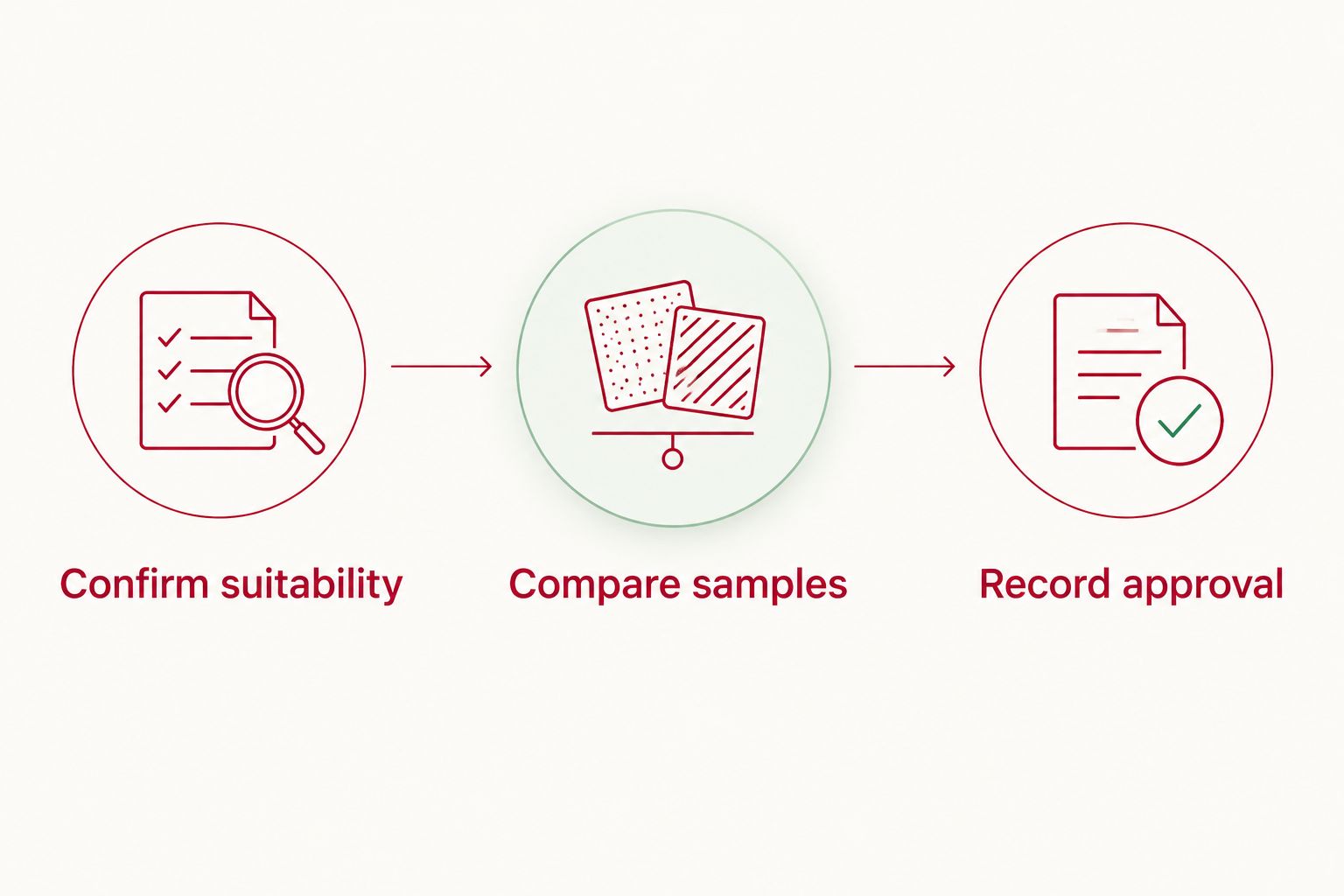
Finish with a written selection record and the upholsterer’s confirmation. Keep the approved fabric reference, colour and intended furniture item together so the decision survives handover between client, designer and maker.
Ask the upholsterer to calculate the required quantity from the furniture and chosen fabric. Do not estimate from a photograph: pattern placement, usable width and construction all belong in that calculation.
Choose your starting method around the decision you need to make. Each approach helps with a different part of the brief; none replaces checking the chosen fabric’s suitability.
| Option | Best for | Main benefit | Key limitation |
|---|---|---|---|
| Existing sample library | Designers defining an initial direction | Lets you compare familiar materials quickly | References and supporting information need checking |
| Supplier-guided selection | Projects with specific use or care requirements | Focuses questions on documented fabric properties | Samples still need checking in the room |
| In-home design consultation | Homeowners and designers coordinating fabrics with window furnishings | Brings room context into the discussion | Does not replace the upholsterer’s construction and quantity advice |
| Joint review with the upholsterer | Shaped furniture and detailed pattern placement | Connects the fabric choice to how the piece will be made | Requires the shortlist and furniture information to be ready |
What's the best upholstery fabric for a busy family sofa?
The best choice is a fabric confirmed as suitable for the sofa’s use and the household’s care needs. Ask for application and cleaning information, then have the upholsterer review the candidate before approval.
How many upholstery fabric samples should I show my client?
Three final samples make a practical shortlist. Give each a distinct role and explain its benefit and limitation rather than presenting near-identical choices.
Can I choose upholstery fabric from an online photograph?
Use online photographs to establish a direction, not to approve the final fabric. Check a physical sample in the room and feel its texture before deciding.
Should upholstery match the curtains exactly?
Upholstery does not need to match the curtains exactly. Compare colour, texture and pattern together, then decide whether the furniture or windows should provide the stronger visual focus.
Who should calculate how much upholstery fabric I need?
Your upholsterer should calculate the required quantity for the furniture and selected fabric. Ask them to account for construction, usable width and any pattern placement requirements.
Can Material World help coordinate upholstery fabric and window furnishings?
Material World offers upholstery fabrics, custom-made curtains and blinds, and in-home design consultations in Sydney and Orange. Discuss the room as a whole while keeping upholstery construction and quantity decisions with your upholsterer.
Keep the rejected samples out of the final approval pack. A clear record should show what was approved, where it will be used and which details the maker must follow—not the entire selection journey.
Planning upholstery alongside new window furnishings? Request an in-home design consultation and free quote for custom curtains and blinds in Sydney or Orange, and let us help you choose a coordinated scheme tailored to your home.


