Your cart (0)
Your cart is empty
Tax included and shipping calculated at checkout

Drawer menu
Tax included and shipping calculated at checkout

If your room needs more warmth or character, choose designer wallpaper by checking the wall, the pattern layout and the installation requirements before committing to a design. Look at samples beside your curtains and furniture, then confirm surface preparation, quantities and hanging instructions with the installer. A beautiful sample is only part of the decision: the finished result also depends on how the paper fits your actual room.
A wallpaper sample cannot show you how a motif will land above a doorway or where a join will sit beside a window. Those details belong in the selection conversation, not as last-minute decisions when hanging begins.
If you are also updating window furnishings, Material World offers custom-made curtains, blinds and a large premium fabric selection. Consider the wallpaper and furnishings together so the room feels connected rather than assembled from separate decisions.
Material World is best for homeowners seeking designer wallpaper supply and installation alongside custom window furnishings. Confirm the wallpaper service coverage for your address and the installation scope before booking; do not assume it follows the same arrangements as a curtain consultation.
Start with the room and work towards the design. This order helps you avoid choosing a paper whose care requirements, pattern placement or installation needs do not suit the space.
Tell the installer what is already on the surface: paint, existing wallpaper, repairs or visible damage. Point out peeling areas, staining and any signs of damp rather than assuming new wallpaper will cover them.
Ask what needs removing, repairing, drying or priming before installation. Wallpaper is a decorative finish, not a repair for an underlying wall problem. If the surface needs attention, settle that work before confirming the hanging date.
Explain how you use the space. A dining room, busy hallway and bathroom present different conditions, so check the selected paper’s manufacturer guidance for its intended location and cleaning method.
Bring photographs showing the whole wall, corners, windows, switches and nearby furniture. These give the selection conversation context, although photographs do not replace a site assessment or accurate measurements.
Look beyond the sample’s colours. Ask where the main motif will sit, how the pattern will meet at corners and whether important details will disappear behind a bedhead, cabinet or curtain.
A large design deserves a layout discussion before ordering. Ask the installer to confirm the pattern match and quantity from the actual wall dimensions and the selected wallpaper’s specifications, rather than estimating from wall area alone.
Treat wallpaper as a supply-and-installation project. Ask who checks measurements, confirms quantities, supplies the specified adhesive and prepares the surface.
Have any exclusions recorded clearly, including removal of existing coverings, wall repairs and moving furniture. This is also the point to confirm access arrangements and how the room needs to be left before work begins.
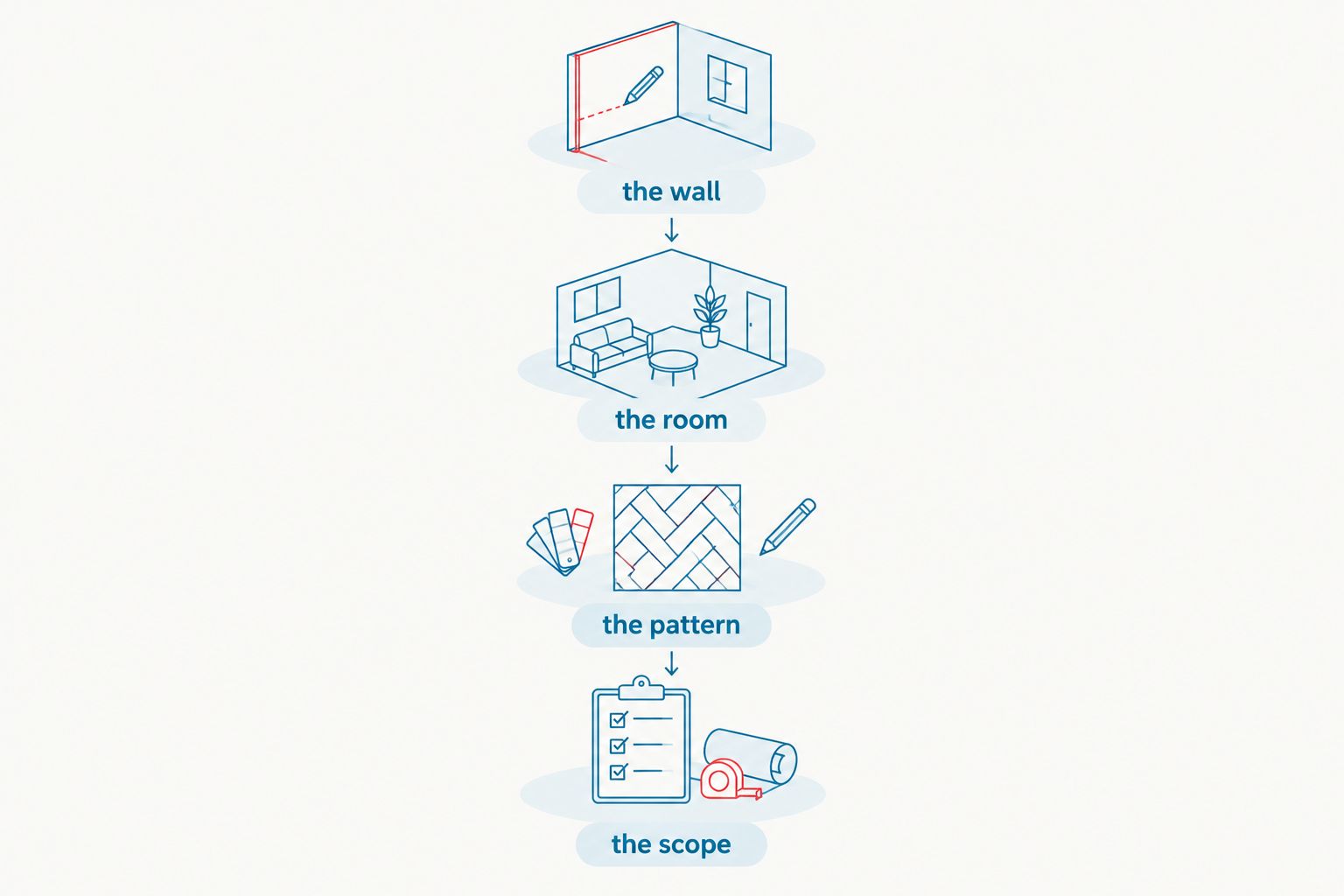
Neither approach is automatically better. Choose according to the effect you want and the wall layout, then consider the installation implications alongside the appearance.
| Approach | Best for | Main benefit | What to resolve |
|---|---|---|---|
| Feature wall | Giving one area a clear focal point | Concentrates the design behind a bed, sofa or dining setting | Confirm the boundaries and where the pattern starts and finishes |
| Whole room | Creating a continuous decorative setting | Carries the design around the space | Plan corners, openings and how the pattern continues between walls |
A feature wall still needs careful setting out. Positioning a motif behind the bed is a different decision from simply starting at the nearest corner.
For a whole room, look at each wall rather than treating the space as one uninterrupted surface. Doors, built-in cabinetry and windows all affect how much of the design you actually see.
Two designs that look equally straightforward in a sample book can need different preparation and hanging methods. The selected wallpaper’s instructions and the condition of your room should guide the work.
Compare the proposed work, not just the wallpaper design. A useful written scope makes responsibilities clear without leaving you to guess which preparation tasks sit outside the installation.
Match wallpaper with curtains and blinds by viewing the actual samples together in the room. Start with the elements staying in place, such as flooring, upholstery and cabinetry, then decide which new surface should draw attention.
If the wallpaper has a strong pattern, a quieter curtain fabric can give it breathing space. If the wallpaper is subtle, fabric texture can add interest without introducing another busy motif. Neither is a rule: the aim is a balance you enjoy living with.
Check the samples in daylight and under your usual evening lighting. Hold them near the window and against the intended wall rather than judging everything flat on a table.
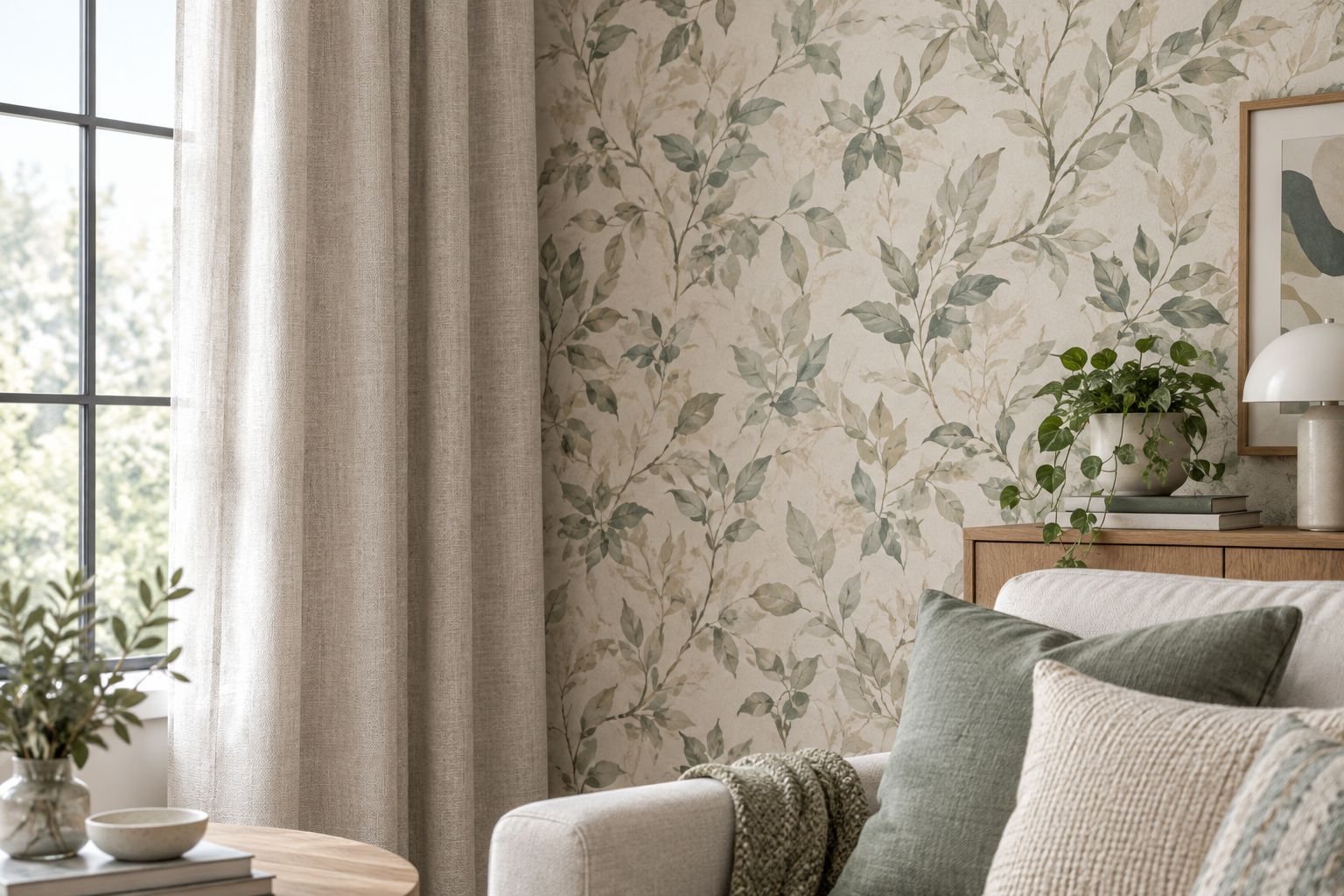
Wallpaper does not replace the practical role of window furnishings. If privacy or blockout matters, choose the curtain or blind construction for that need, then coordinate its appearance with the wall finish. Do not expect a decorative wallpaper choice to solve light control.
Before approving wallpaper installation, ask for the selected design, preparation requirements and installation responsibilities to be recorded together. A verbal agreement about the look of the room is not a substitute for an agreed scope.
Use this short checklist:
Keep the product information with the project details. It gives everyone the same reference when discussing application, cleaning or any later replacement work.
Can I choose designer wallpaper before an installer sees the wall?
You can shortlist designer wallpaper before a wall assessment, but confirm suitability, preparation and quantities before ordering. Take room photographs and the selected wallpaper’s product information into the discussion.
Does designer wallpaper hide damaged walls?
Designer wallpaper is not a repair for damaged walls. Have peeling surfaces, uneven repairs and signs of damp assessed before installation.
Is a feature wall better than wallpapering the whole room?
A feature wall is better when you want one clear focal point; whole-room wallpaper suits a continuous decorative setting. Both need planning around corners, openings and furniture.
How much wallpaper should I order?
Have the installer confirm the quantity using the wall measurements and the selected wallpaper’s specifications. Pattern matching and the room layout belong in that calculation, not just total wall area.
Can I use the same designer wallpaper in a bathroom and bedroom?
Use the same designer wallpaper in both rooms only when the manufacturer confirms it suits each location. Check moisture exposure and cleaning guidance before committing.
Does Material World offer wallpaper supply and installation?
Material World presents designer wallpaper as a supply-and-installation service. Confirm coverage for your address and agree on preparation, materials and installation responsibilities before booking.
Before approving the layout, mark where your bedhead, sofa or sideboard will sit. A favourite part of the pattern can disappear behind furniture, even when the wallpaper itself looks right.
For a coordinated room, ask Material World to help you choose wallpaper alongside your window furnishings and confirm wallpaper installation coverage for your address. An in-home design consultation can bring the showroom to you, making it easier to judge fabric and colour choices against the room you already have.


