Your cart (0)
Your cart is empty
Tax included and shipping calculated at checkout

Drawer menu
Tax included and shipping calculated at checkout

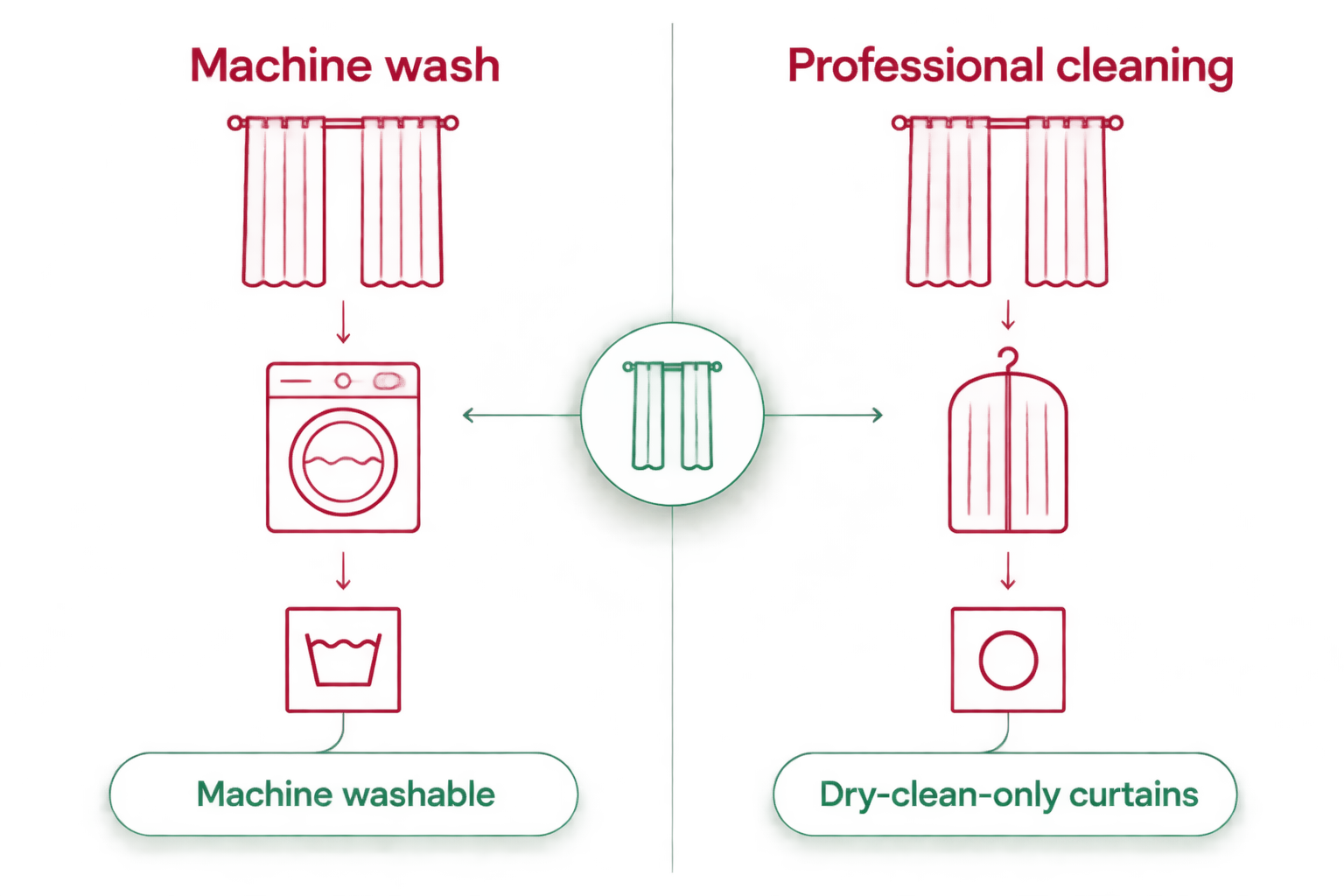
Yes, you can machine wash sheer curtains only when the care label permits it; a sheer appearance does not tell you whether the fabric is washable. Follow the specified wash cycle, temperature and drying instructions, including any restrictions for the finished curtain. If the label is missing, says dry clean only, or conflicts with the curtain maker’s advice, leave the curtains out of the machine until you have confirmed the right method.
The care instructions for your finished curtains decide—not the colour, softness or fibre name. Before you take them down, work through these checks:
Choosing new sheers instead? Start with how to test sheer curtain fabric samples in your room, then ask for the care instructions before settling on a fabric.
Sheers soften a room without the visual weight of heavier curtains, but their open or delicate construction needs considered handling. A wash that changes the fabric’s dimensions or damages the heading can affect how the curtains meet, stack and sit above the floor.
Gentle washing is still washing. Water, detergent, movement and drying all form part of the cleaning process; choosing a delicate programme does not cancel a restriction on the label.
Use this table to interpret the instructions you already have, not to replace them. If the instructions are unclear, ask the curtain supplier or a professional curtain cleaner before proceeding.
| Method | Best for | Advantage | Limitation |
|---|---|---|---|
| Machine wash | Curtains explicitly labelled machine washable | Cleans washable curtains at home | Requires the specified cycle, suitable machine space and approved drying method |
| Hand wash | Curtains whose instructions permit hand washing | Allows careful handling without a machine cycle | Wet curtains are awkward to support; hand washing is not automatically safe |
| Professional cleaning | Dry-clean-only curtains or curtains needing specialist assessment | Lets a cleaner assess the fabric and construction | The cleaner still needs accurate fabric and care information |
| Dust removal | Routine upkeep where the care instructions permit it | Removes loose surface dust between cleans | Does not replace cleaning for stains or embedded dirt |
A curtain labelled hand wash only belongs in the hand-wash category, even if your machine has a programme with a similar name. For professional cleaning, explain any previous shrinkage, stains or repairs before handing over the curtains.
Once the label confirms machine washing is suitable, organise the job around those instructions. Avoid adding an extra soak, stain treatment or hotter wash simply because the curtains look grey.
Photograph the curtains before removal so you can see how the folds and fittings belong together. Take them down carefully rather than pulling on the fabric, and remove detachable hardware as directed by the curtain maker.
Check hems, seams and heading tape for loose stitching. Do not put sharp hooks or damaged fittings into the drum, and seek advice about sewn-in weights or components you cannot safely remove.
Use the cycle, water temperature and detergent type stated in the care instructions. Do not substitute a general online recommendation for the requirements of your particular fabric.
The curtains need room to move without being packed tightly into the drum. If a panel is too bulky for your machine, forcing it in is not a gentler alternative to professional cleaning; check the machine’s own loading guidance as well.
Avoid bleach, fabric softener and stain removers unless the curtain’s instructions permit them. More cleaning product is not a substitute for the correct method, and an unsuitable treatment can leave a mark or change the finish.
Check the drying instructions separately from the washing instructions. A machine-washable label does not automatically permit tumble drying, ironing or rehanging while damp.
Support the fabric during handling and avoid dragging clean curtains across the floor. If rehanging while damp is permitted, confirm the track and fittings are suitable for that extra load; otherwise use the specified drying arrangement.
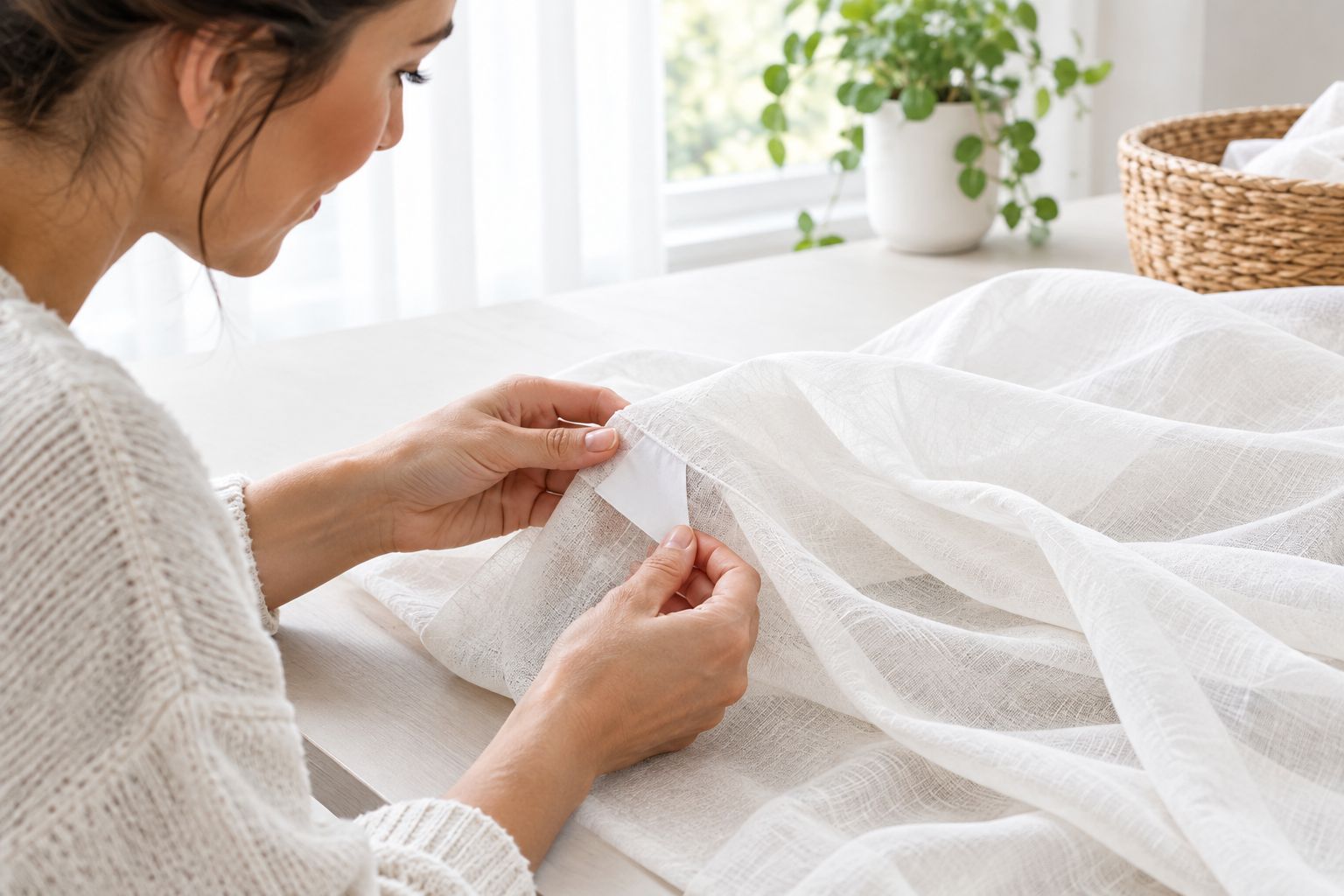
Two curtains can look almost identical at the window and need different care. These are the details to confirm with the supplier:
Do not assume that every polyester sheer is machine washable or that every linen sheer must be dry cleaned. The exact fabric and finished construction matter more than a broad fibre rule.
Do not machine wash sheer curtains with unknown care requirements. Contact the original supplier with your order details, photographs and any fabric name you have, or ask a professional curtain cleaner to assess them.
A small hidden-area test does not prove that an entire curtain will retain its length, colour and shape through a machine cycle. It also cannot confirm how heading tape or attached trims will respond.
No—a delicate cycle does not override a dry-clean-only instruction. It changes the machine’s action, not whether the curtain is suitable for washing in water.
Only rehang sheer curtains while damp if their care instructions permit it and the fittings can support them. Do not assume that hanging them wet will remove every crease or prevent shrinkage.
Material World suits Sydney and Orange homeowners who want custom-made sheer curtains and in-home fabric advice. Its large premium fabric selection and more than 25 years of experience give you a starting point for discussing both the look of your room and the upkeep you can manage.
Ask to see the care instructions alongside the samples. Material World’s genuinely custom-made curtains are tailored to your home rather than factory mass-produced, but custom workmanship does not make every fabric machine washable; the practical trade-off is choosing the appearance you love with a cleaning routine you accept.
Can you machine wash sheer curtains on a cold wash?
Only if the sheer curtain’s care instructions permit machine washing at that temperature. Cold water does not make an unsuitable fabric or finished curtain washable.
Can I machine wash linen sheer curtains?
Machine wash linen sheer curtains only when their specific care instructions allow it. The word linen alone does not establish a safe cleaning method.
Are polyester sheer curtains always machine washable?
No, polyester sheer curtains are not automatically machine washable. Check the fabric’s instructions and the finished curtain’s heading, trims and attached components.
Should I remove curtain hooks before washing sheers?
Remove detachable hooks and other hardware as directed by the curtain maker before washing. Ask for advice about sewn-in weights or fittings you cannot safely remove.
Can I tumble dry sheer curtains?
Tumble dry sheer curtains only when their drying instructions explicitly permit it. Permission to machine wash does not include permission to tumble dry.
How often should I wash sheer curtains?
Base cleaning on the curtain’s care guidance and its condition rather than a fixed calendar rule. Use only approved methods for removing loose dust between cleans.
What should I do if my sheer curtains have no care label?
Keep unlabelled sheer curtains out of the washing machine until you confirm their care requirements. Contact the original supplier or a professional curtain cleaner with the fabric and order details you have.
Photograph the care label and save it with your curtain order. Include a picture of the heading and fittings, too; keeping those details together makes the next clean easier to organise without relying on memory.
Planning new sheers in Sydney or Orange? Contact Material World to arrange an in-home design consultation and free quote—bring the showroom to you, with care requirements included in the conversation.


