Your cart (0)
Your cart is empty
Tax included and shipping calculated at checkout

Drawer menu
Tax included and shipping calculated at checkout

To clean curtains without shrinking them, follow the care instructions for the complete curtain, including its lining, and wash only when those instructions allow it. Cold water alone does not make a curtain safe to wash: agitation, drying heat and different fabrics shrinking unevenly can still spoil the fit.
Curtains that once skimmed the floor can look noticeably wrong after an unsuitable wash. Uneven shrinkage can also pull the lining against the face fabric, leaving puckered hems or twisted edges.
Protecting the fit starts before you take the curtains down. Find the care label, check the lining and look for damage before choosing a cleaning method. If you are selecting replacements, Material World offers custom-made curtains and in-home design consultations, so everyday care belongs in the fabric conversation alongside privacy, blockout and appearance.
Use this sequence before putting any curtain in water. The instructions supplied with your finished curtains take priority over general advice about linen, cotton or polyester.
Before removal, photograph the headings and hook positions. Note which panel belongs at each window; that makes rehanging easier without changing the original arrangement.
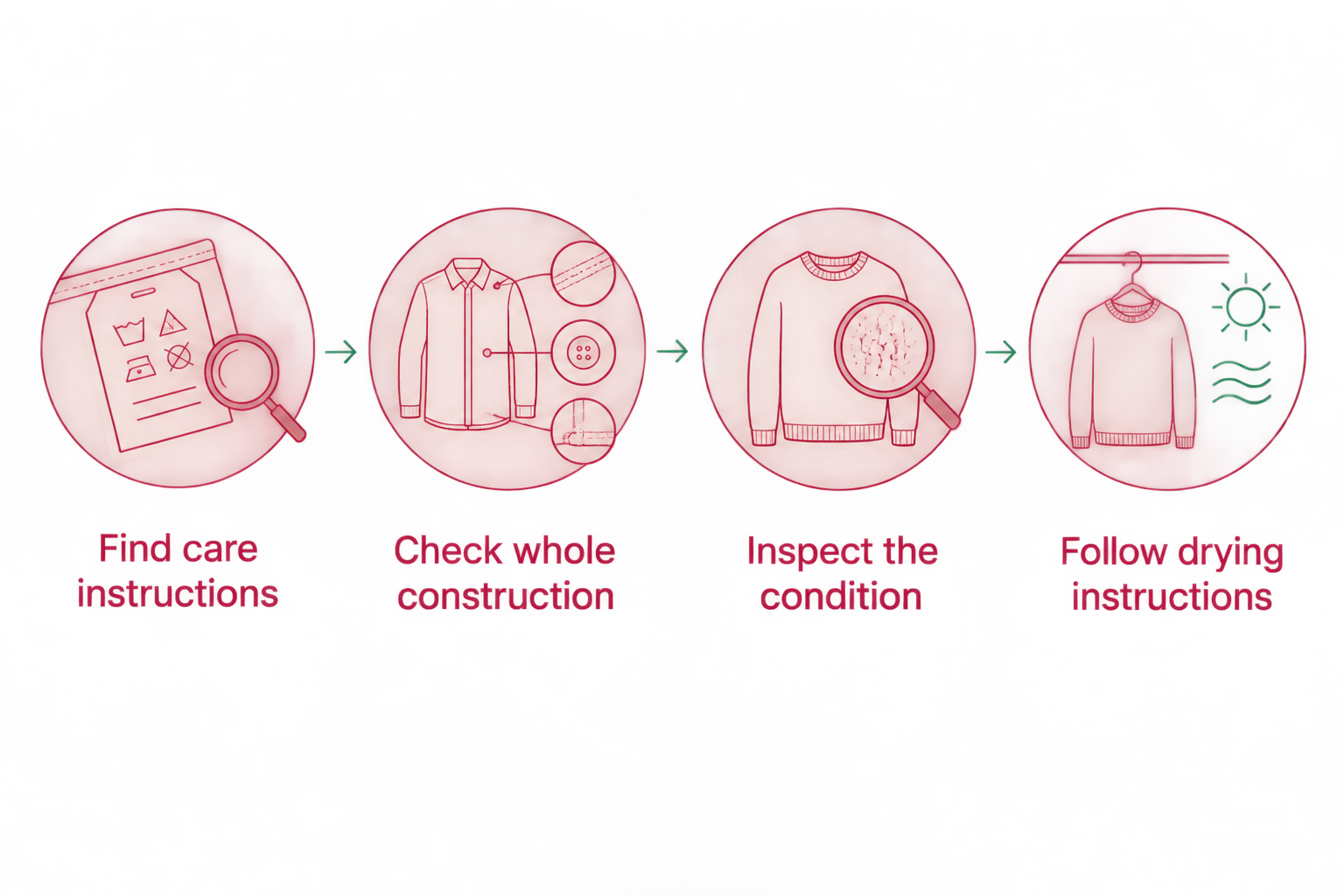
Choose by the care instructions, not by which method sounds gentlest. Each option solves a different problem, and none is suitable for every curtain.
| Method | Best for | Benefit | Limitation |
|---|---|---|---|
| Gentle dust removal | Routine surface dust on sound fabric | Avoids soaking the curtain | Does not remove embedded stains or greasy marks |
| Hand washing | Curtains explicitly labelled for hand washing | Gives you control over handling | Wet fabric is heavy; rubbing and wringing can distort it |
| Machine washing | Curtains explicitly labelled for machine washing | Cleans permitted washable panels | The wrong cycle or an overloaded drum can damage the fabric |
| Professional cleaning | Curtains whose instructions specify professional care | Allows a specialist to assess the construction | The cleaner still needs the care information and must inspect existing damage |
Tell a professional cleaner about any previous shrinkage, water marks or backing problems. Ask whether the proposed method suits the face fabric, lining and heading together, rather than requesting a particular process yourself.
If washing is permitted, use the specified temperature and washing action. Choose a detergent compatible with the instructions, and avoid bleach unless the label expressly allows it.
Give the panels room to move rather than forcing a bulky pair into a small drum. Remove detachable hooks or accessories where the curtain’s instructions require it, and never pull on wet pleats to straighten them.
A curtain can contain several materials that respond differently to cleaning. The face fabric might appear unchanged while its lining contracts, pulling the hem upwards.
Blockout curtains also need care suited to their backing or lining. Do not scrub, soak or steam a coated surface unless its instructions permit that treatment; an intact backing matters to the curtain’s light control as well as its appearance.
A lightweight sheer looks easy to rinse, but appearance does not establish washability. Fine threads, decorative finishes and fragile headings need their own care instructions.
Support delicate fabric when lifting it, particularly when wet. If the sheer has become brittle in sun-exposed areas, arrange an assessment before cleaning rather than trying a stronger wash to brighten it.
The same cleaning routine will not suit every pair. These factors explain why a successful wash elsewhere is not permission to wash your curtains the same way:
A cool wash is not a guarantee against shrinkage. It addresses temperature, but it does not settle the questions of construction, washing action or drying.
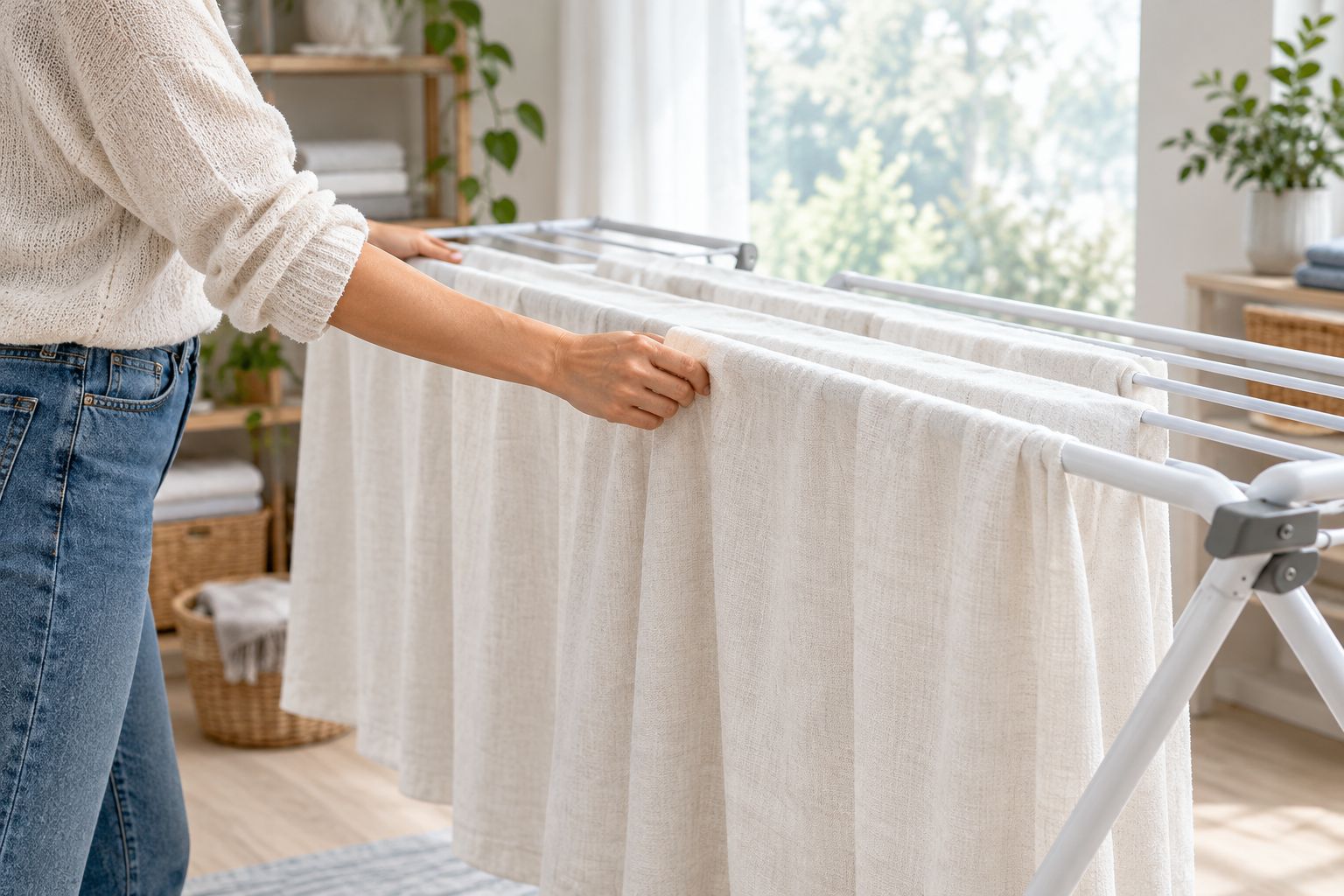
Dry curtains only as their care instructions permit. Do not assume tumble drying, direct sunlight or rehanging while damp is suitable simply because washing was allowed.
If line drying is specified, support the fabric without bunching it or placing unnecessary strain on the heading. Keep the curtain clear of dirty surfaces, and avoid folding wet layers together for longer than necessary.
Rehang damp curtains only when the supplied instructions allow it and the track can safely support the load. Otherwise, let them dry using the prescribed method before rehanging. Open the folds gently rather than tugging the hem down to recover length.
Cleaning requirements belong on your shortlist before you settle on a fabric. A finish that needs specialist care brings a different household commitment from a curtain whose finished construction allows washing.
Checking curtain fabric care instructions before ordering helps you choose a fabric whose maintenance fits your home, rather than discovering an unsuitable cleaning requirement after installation. Ask about the finished curtain, not just the sample: lining and headings are part of that decision.
For Sydney and Orange homes, Material World offers a large premium fabric selection and expert in-home design consultations. Its genuinely custom-made workmanship allows the discussion to start with your room’s needs: privacy, blockout, a softer look and a fit tailored to your home. The trade-off is that your chosen construction needs its own care routine, not a blanket washing rule.
Do not wash curtains with unknown care requirements. Ask the original supplier for the fabric and finished-curtain instructions, using an order record or fabric name if you have one.
If those details cannot be recovered, ask a curtain-cleaning specialist to assess the panels. A hidden-area test can reveal colour transfer or marking, but it cannot prove that a whole lined curtain will retain its dimensions.
Do not rely on stretching to reverse shrinkage. Pulling on wet hems or applying extra steam can damage the fabric, seams or backing without restoring the original drop.
Have the curtains assessed before trying another treatment. An alteration might be possible where the construction and remaining fabric allow it, but that is different from reversing the fabric’s shrinkage.
Can I wash curtains in cold water without shrinking them?
Cold water does not guarantee that curtains will not shrink. Wash only when the finished curtain’s care instructions permit it, and follow the specified washing and drying methods.
Is hand washing safer than machine washing curtains?
Hand washing is suitable only when the care instructions allow it. Rubbing, wringing and lifting unsupported wet fabric can still distort curtains.
Can I put curtains in the tumble dryer on low?
Use a tumble dryer only if the curtain’s care instructions permit it, at the specified setting. Low heat is not a safe substitute for a do-not-tumble-dry instruction.
Can I steam curtains instead of washing them?
Steam curtains only when their care instructions permit steaming. Heat and moisture can affect fabric, finishes and backings, and steaming does not replace stain removal or cleaning.
Should I hang curtains while they are still wet?
Rehang damp curtains only when their care instructions allow it and the track can support the load. Wet weight can strain headings and distort unsupported fabric.
How do I clean curtains with blockout backing?
Follow the care instructions for the backed curtain, not just the face fabric. Avoid scrubbing, soaking or applying heat to the backing unless those treatments are expressly permitted.
Before cleaning, record where the hem sits against a fixed point and photograph any existing unevenness. That simple reference helps distinguish a cleaning-related change from an older fitting issue.
If you are replacing curtains, let us help you choose with care requirements included from the start. Contact Material World to arrange an in-home design consultation and request a free quote for custom-made curtains in Sydney or Orange.


