Your cart (0)
Your cart is empty
Tax included and shipping calculated at checkout

Drawer menu
Tax included and shipping calculated at checkout

Street noise making your Sydney bedroom feel less restful? Best overall: dense, lined custom curtains. Best for a plush finish: curtain-suitable velvet. Best for flexible daylight: sheers with lined curtains. Best for keeping existing blinds: lined curtains over blinds. These noise reducing curtains suit different rooms, but none replaces sound insulation at the window.
Curtains absorb some sound within a room, helping reduce reflected sound and echo. Blocking traffic noise coming through a window is a different job: glass, frames, seals and ventilation paths all matter.
A softer-sounding room is not necessarily a soundproof room. If passing buses or motorbikes dominate your bedroom, assess the window as well as the furnishing before expecting curtains to solve the problem.
Material World custom curtains suit homeowners who want fabric and fit advice tailored to their room. With more than 25 years of experience, the team offers in-home design consultations in Sydney and Orange, with genuinely custom-made workmanship rather than factory mass production.
Choose the curtain construction before the colour. These criteria matter more than an acoustic-sounding product name:
A blockout label describes light control, not a guaranteed level of noise reduction. Likewise, a heavy fabric is not proof of tested acoustic performance.
These are curtain configurations, not tested product rankings. The order reflects their suitability for the stated room problem; no named fabric has been assigned an acoustic rating.
| Curtain configuration | Best for | Standout feature | Key limitation |
|---|---|---|---|
| Dense, lined custom curtains | A practical starting point for street-facing rooms | Fabric, lining and coverage planned together | Cannot seal a noisy window |
| Curtain-suitable velvet with lining | A plush, tactile finish | Substantial fabric and a soft appearance | Weight and care need checking |
| Sheers with lined curtains | Living rooms needing flexible daylight | Separate daytime and evening layers | Sheers alone offer little sound control |
| Lined curtains over existing blinds | Keeping useful blinds while softening the room | Retains the existing light-control layer | Requires clearance around the blind |
Dense, lined custom curtains bring the main decisions together: face fabric, lining, fullness and window coverage. Start here when your priority is a softer-feeling street-facing bedroom or living room without choosing the curtain solely for its texture.
Ask to see the fabric and lining together. The finished curtain needs to suit the track, hang cleanly and close without furniture obstructing it.
Dense, lined custom curtain pros:
Dense, lined custom curtain cons:
Best for: homeowners wanting a practical starting point before considering decorative alternatives.
Verdict: Buy for tailored coverage and room comfort, not guaranteed soundproofing.
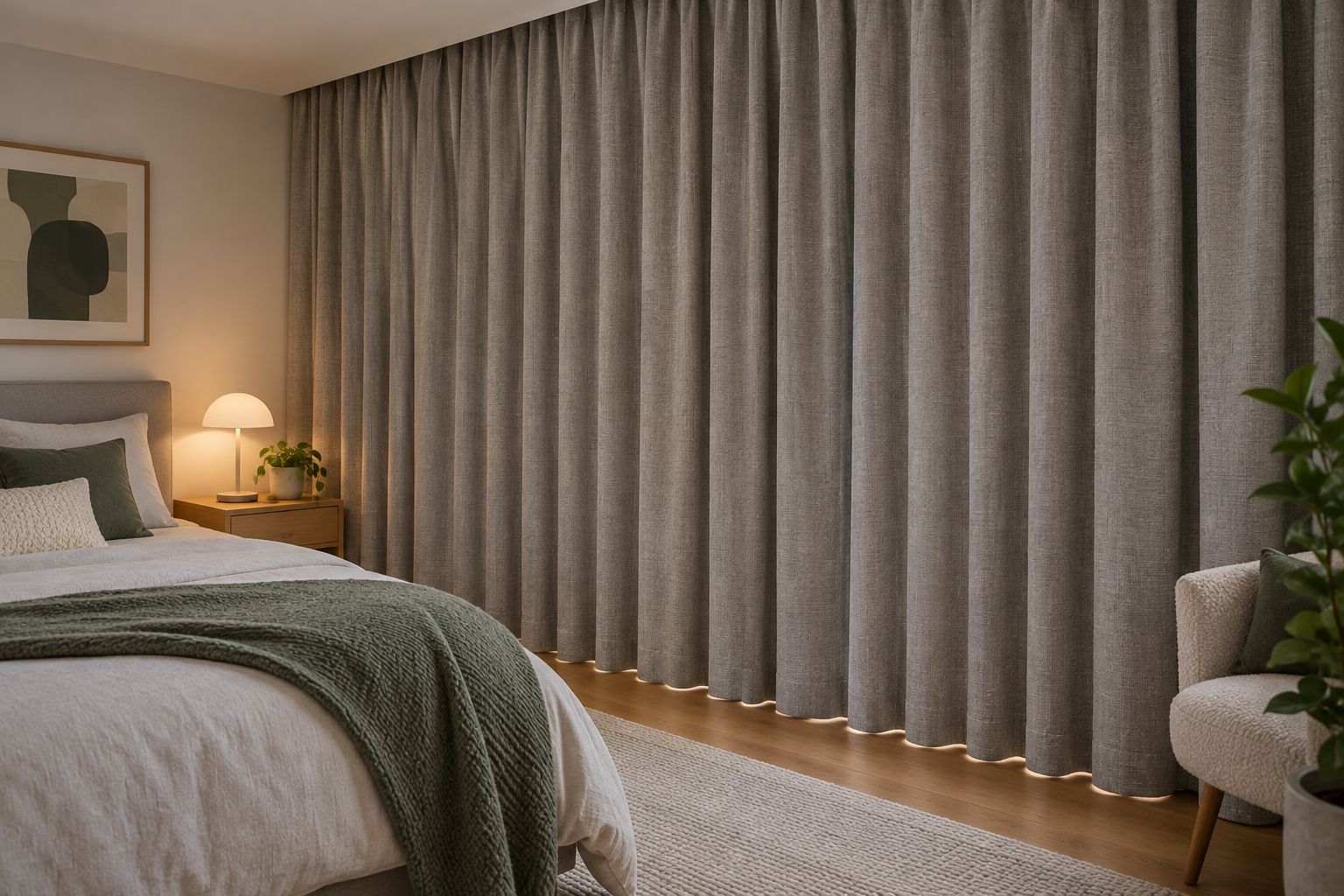
Velvet belongs on the shortlist when you want a soft, tactile finish as well as substantial curtains. Choose a velvet intended for curtains; upholstery suitability alone does not establish that a fabric will hang well at a window.
Material World carries velvet fabrics, but a fabric name does not establish its acoustic performance. Ask which options suit your curtain design, lining and track before deciding.
Curtain-suitable velvet pros:
Curtain-suitable velvet cons:
Best for: homeowners who specifically want a plush finish and are willing to plan around the fabric's handling needs.
Verdict: Buy for the finish; skip any unsupported acoustic promise.
A street-facing living room often needs daylight without feeling exposed. Sheers with a separate lined curtain let you choose a lighter daytime setting and fuller coverage later.
Treat the sheer as the daylight and daytime-privacy layer, not the noise-control layer. Check privacy from outside under different lighting conditions, especially after dark.
Sheer-and-lined curtain pros:
Sheer-and-lined curtain cons:
Best for: living rooms where daylight and privacy change throughout the day.
Verdict: Buy when flexible light control matters alongside a softer room.
If your roller blinds already manage light, you do not need to discard them simply to add softness. A separate lined curtain can sit in front, provided the track clears the blind and its controls.
This arrangement needs a careful fit check. Look at handles, window openings, blind brackets and the space beside the window before choosing where the curtain will sit.
Curtains-over-blinds pros:
Curtains-over-blinds cons:
Best for: homeowners who like their existing blinds but want a softer finish.
Verdict: Buy after checking clearance; hold if either layer cannot operate freely.
During a consultation, walk through the window rather than looking only at samples. Material World can bring the showroom to you, helping you compare its premium fabric selection against your home's light, furnishings and practical needs.
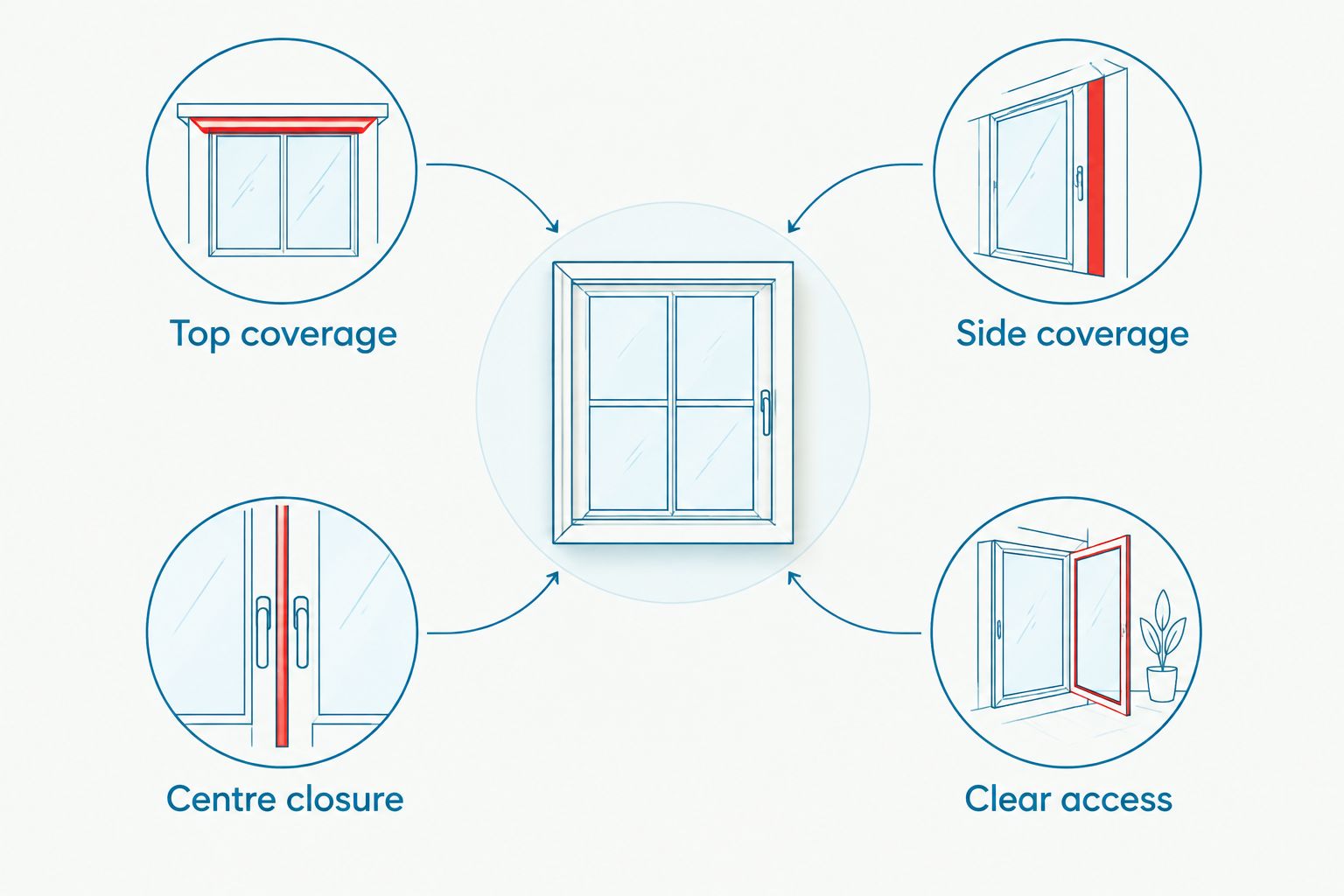
These checks improve the usefulness of the curtain; they do not create an acoustic seal. For strong external noise, seek advice on the window assembly before committing to a curtain-only solution.
Dense, lined curtains come first because they let you address fabric, lining and coverage together. The other options serve distinct priorities: velvet for texture, layered curtains for daylight, and curtains over blinds for retaining an existing furnishing.
This is a suitability guide, not a laboratory comparison. No decibel reduction, percentage improvement or named fabric performance is claimed.
Start with dense, lined custom curtains unless your room has a clear reason to choose another configuration. Bring your main concern to the consultation: sleep, daytime privacy, glare or a room that sounds echoey.
If outside noise is the dominant problem, ask what curtains can realistically address before selecting the finish. A reassuring answer separates sound absorption inside the room from sound entering through the window.
What's the best curtain option for a noisy Sydney street?
Dense, lined custom curtains are a practical starting point for combining substantial fabric with tailored window coverage. They can soften reflected sound inside the room, but they do not replace window sound insulation.
Do noise reducing curtains block traffic noise completely?
No, curtains do not block traffic noise completely. Sound can still enter through glazing, frames, seals and other openings, so persistent external noise needs a broader assessment.
Are blockout curtains also soundproof curtains?
No, blockout describes light control rather than soundproofing. Ask for acoustic test evidence before accepting a specific noise-reduction claim about a curtain.
Is velvet better than lined woven fabric for reducing noise?
Velvet is not automatically better than lined woven fabric for reducing noise. Compare the complete curtain construction and any relevant test evidence rather than relying on texture or fabric name.
Can I put noise reducing curtains over roller blinds?
You can add lined curtains over roller blinds if the track position allows both layers to operate freely. Check brackets, controls, handles and space for the curtains when open.
Does Material World offer in-home curtain advice in Sydney?
Material World offers in-home design consultations and free quotes in Sydney and Orange. The service helps homeowners choose custom-made curtains and blinds suited to their rooms.
Listen with the window closed before your consultation. Describe whether the problem is incoming traffic noise, echo within the room, or both; that distinction helps keep the recommendation focused.
Let us help you choose a solution tailored to your home: contact the team to arrange an in-home consultation and free quote.


