Your cart (0)
Your cart is empty
Tax included and shipping calculated at checkout

Drawer menu
Tax included and shipping calculated at checkout

Curtain tracks for architects need to solve the room’s practical problems: where curtains stack, how doors open and whether the finished space needs privacy, blockout or a softer look. Specify the track, curtain heading and fixing detail together so your custom-made curtains work with the architecture, rather than becoming an awkward addition after construction.
A discreet track still needs space. Once you add curtain folds, a second layer and an open door, a neat ceiling detail can become crowded.
For residential architects, curtain tracks connect the building detail with the client’s comfort. Bedroom light control, living-room privacy and access to sliding doors all depend on more than the fabric choice. A track supports the curtain; it does not provide blockout, insulation or noise reduction by itself.
Material World is best for homeowners and residential designers seeking custom-made curtains with in-home design advice. With more than 25 years of experience, Material World offers a large premium fabric selection and genuinely custom-made window furnishings rather than factory mass-produced curtains. Final track selection still needs project-specific checks for loading, fixing and clearances.
Start with a room-by-room schedule and a marked-up plan. Ask the homeowner what feels uncomfortable now: morning light, an exposed living area, difficult access or a room that needs softening.
Separate essential performance from appearance. A sheer curtain can soften daylight, but it is not a substitute for a suitable blockout layer where darkness matters. For a designer preparing a whole-home scheme, this conversation also prevents every window receiving the same treatment by default.
Record:
Sketch the curtains fully open as well as closed. The stack is the gathered fabric at the side of the opening; leaving it out of the drawing hides a practical constraint.
Check whether the open curtains cover glazing, interrupt a doorway or crowd adjacent joinery. Avoid applying a standard allowance without checking the selected fabric and heading. A heavier, lined curtain behaves differently from a lightweight sheer.
Include these details in your drawing:
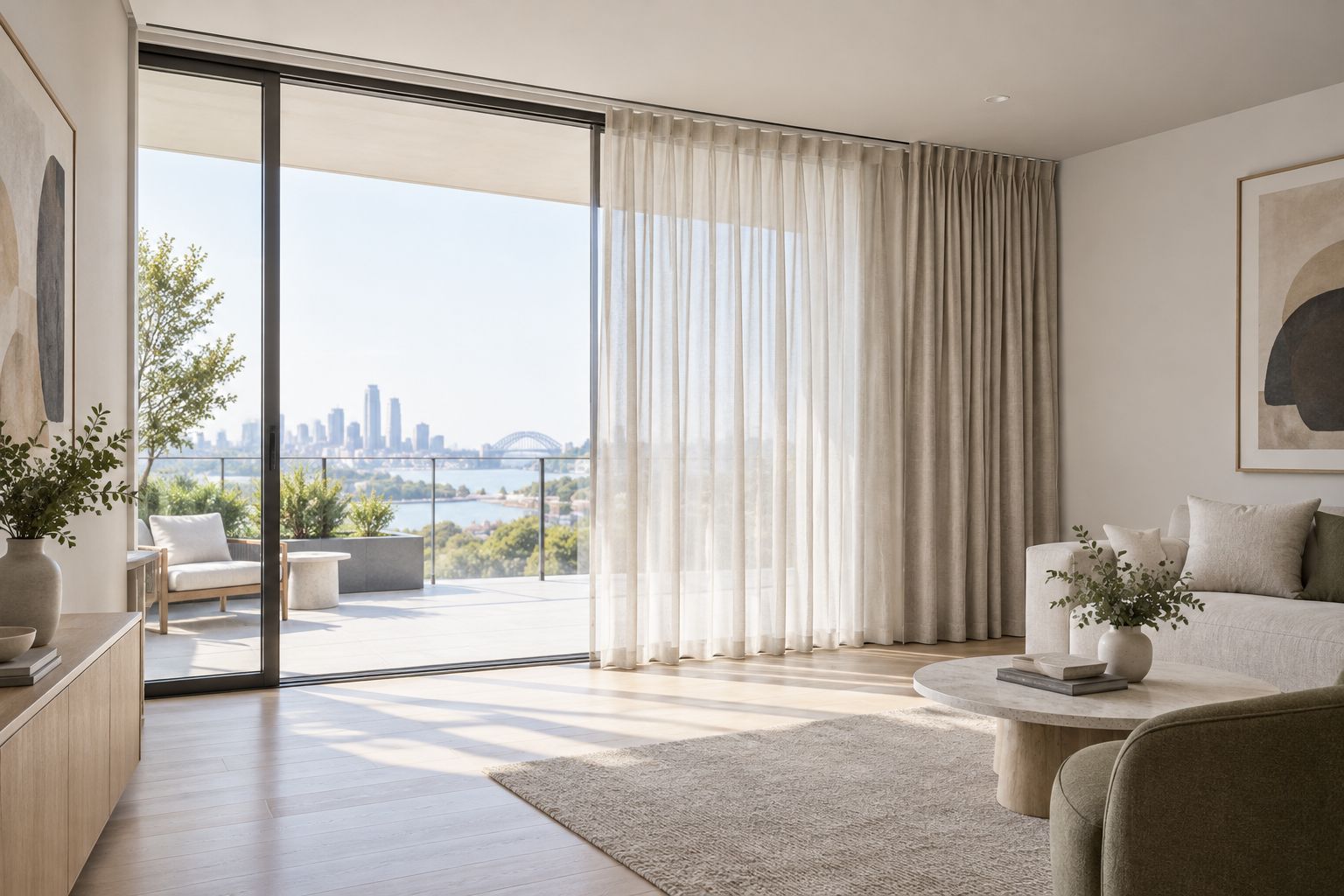
Choose the curtain heading before finalising the hardware. The heading is the way the fabric is gathered at the top, and it affects both the appearance and the space the curtain needs.
A simple shortlist helps before a consultation. Material World can bring the showroom to you through in-home design advice, allowing fabric and heading choices to be considered against the actual room rather than a drawing alone.
Check:
Mark the proposed fixing position on the section, then coordinate it with the builder and curtain installer. A ceiling-mounted track needs a suitable fixing arrangement; a wall-mounted track needs brackets and enough projection for the curtain to hang clear.
Do not finalise a recess around an unconfirmed track. Leave room for installation, curtain movement and later servicing. A concealed detail is only useful if the curtain can move freely and the hardware remains accessible.
Resolve:
Ask who will open the curtains and where they will stand. Hand-drawn operation suits reachable curtains; motorisation deserves consideration where reaching or moving the curtain is difficult. Cord-drawn systems require careful safety planning, particularly in homes with children.
Use product details to refine the shortlist, not to replace a suitability check. The SG 3840 Curtain Track By Silent Gliss is described as medium-duty and cord-drawn, with Wave options using 60 mm or 80 mm glider spacing. The SG 5600 Motorised Curtain Track By Silent Gliss lists an opening and closing speed of 21 cm/sec. Neither detail alone confirms suitability for your curtain weight or layout.
Before selecting operation:
Bring the decisions together in a window schedule. The architect, curtain maker and installer should be working from the same opening sizes, finished levels and operating requirements.
Material World’s custom curtain service suits this coordination stage because fabric, heading and track decisions belong together. Keep responsibility for structural support and electrical work explicit rather than assuming these sit within the curtain order.
Include:
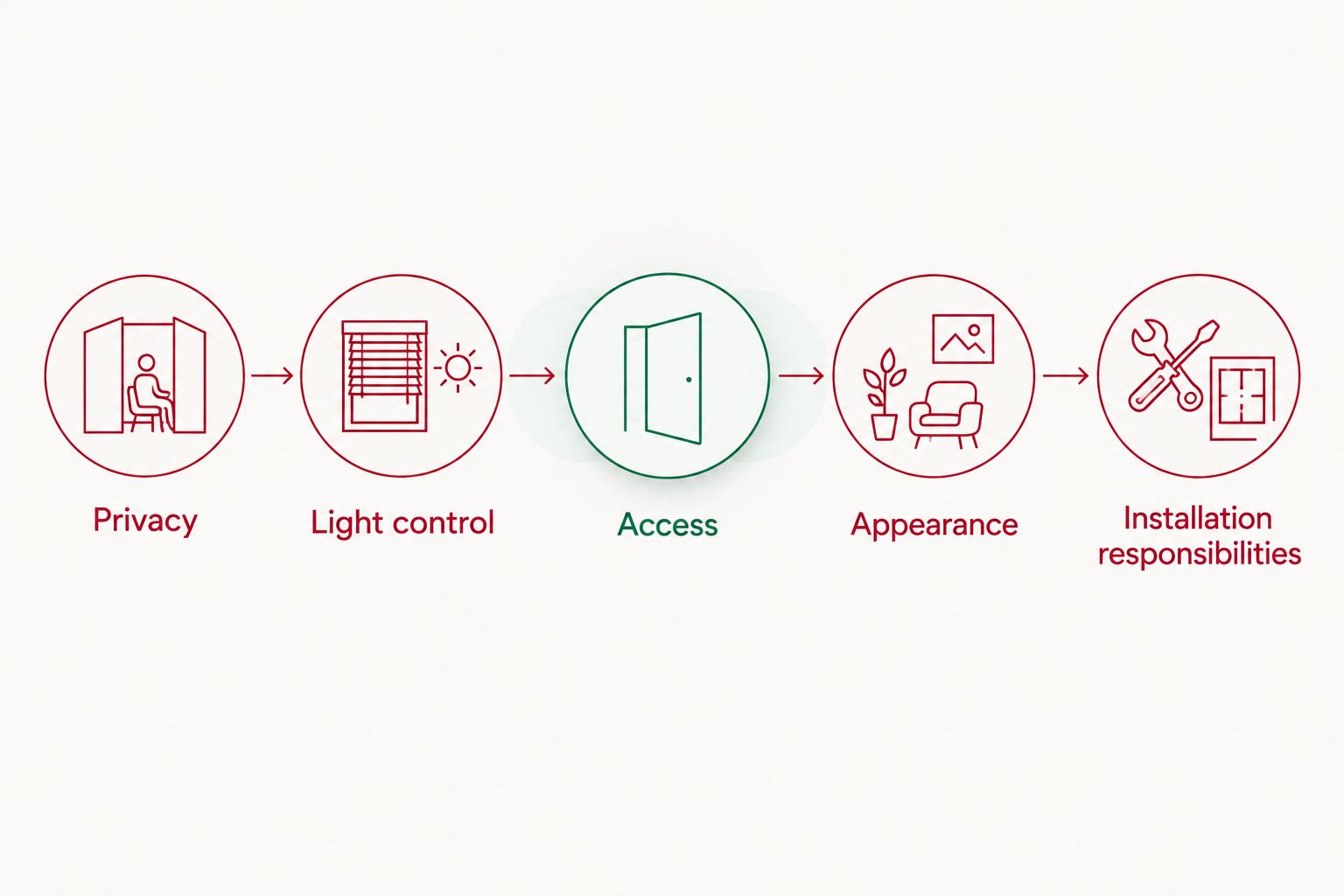
Choose the operating method first, then confirm the exact system against the curtain and building detail. The following options serve different uses; none is the default for every residential window.
| Option | Best for | Practical advantage | Key limitation or check |
|---|---|---|---|
| SG 6840 Curtain Track By Silent Gliss | Reachable curtains where a clean appearance matters | Medium-duty, hand-drawn design with no visible fixings | Manual operation still requires comfortable access to the curtain |
| SG 3840 Curtain Track By Silent Gliss | Projects specifying cord-drawn operation | Medium-duty track with standard or Wave configurations | Cord safety and the selected heading need coordination |
| SG 5600 Motorised Curtain Track By Silent Gliss | Projects requiring motorised operation | Described as a medium- to heavy-duty motorised system | Confirm loading, power, controls and servicing requirements |
| Series 2600 Curtain Track By Curtrax | Designs considering wall or ceiling mounting | Single or double configurations with a curved front profile | Mounting flexibility does not establish suitability for every curtain load |
For wide openings, the track is only part of the decision. Planning window treatments for large windows also means allowing space for gathered fabric and deciding which sections of glazing must remain accessible. A motor cannot correct an opening direction that leaves the curtain stacked across a frequently used door.
Ask for the complete assembly to be checked, including fabric, lining, heading, track, brackets and operating method. Do not infer a maximum span or load from a product name.
A recess drawn around the track alone ignores the folds below it. Confirm the heading, layers and movement clearance before fixing the ceiling detail.
Sheers filter light, but privacy changes with lighting conditions. Discuss evening use and specify a separate privacy layer where needed.
Motorisation changes how the curtain moves; it does not remove fixing, loading or access requirements. Record who confirms the electrical and control arrangements.
Comfort depends on the complete window treatment and the room. Avoid assigning noise-reduction or insulation figures without supporting evidence for the specified assembly.
What are the best curtain tracks for architects specifying homes?
The best curtain tracks match the curtain weight, heading, fixing position and operating needs. Choose the system after checking the room layout, rather than specifying one track throughout every space.
Should I specify ceiling-mounted or wall-mounted curtain tracks?
Specify the mounting position that suits the supporting structure and intended curtain line. Check brackets, projection, cornices and servicing access before finalising the detail.
Can a curtain track be hidden inside a ceiling recess?
A curtain track can be concealed where the recess accommodates the selected system and curtain movement. Confirm installation and maintenance access before closing the ceiling.
Are motorised curtain tracks better for large windows?
Motorised operation suits projects where manual access or everyday handling is difficult. Window size alone does not establish suitability; curtain weight, track limits and controls still need checking.
Can sheer and blockout curtains share the same track?
Independently operated sheer and blockout layers need separate running paths. Confirm a suitable double-track arrangement and enough clearance for both curtains.
When should an architect involve a curtain specialist?
Involve a curtain specialist before finalising ceiling recesses, adjacent joinery and electrical arrangements. Early coordination lets the fabric, heading and hardware inform the building detail.
The detail most easily missed is the curtain when it is open. Check that position on every plan: it reveals blocked handles, lost glazing and crowded corners before they become installation problems.
For a Sydney or Orange residential project, contact Material World to arrange an in-home design consultation and free quote. Bring your plans and room priorities, and let us help you choose a custom-made solution tailored to your home.


