Your cart (0)
Your cart is empty
Tax included and shipping calculated at checkout

Drawer menu
Tax included and shipping calculated at checkout

For interior designers, designer wallpaper is a wall finish that brings pattern, texture or colour into a room to support the overall design. If your client’s room feels flat or disconnected, start with the furniture, light and daily use—not just a striking wallpaper sample.
Wallpaper affects more than the wall behind a sofa. Its pattern sets a visual rhythm, its colour changes how neighbouring fabrics read, and its finish becomes part of the room’s character. For designers, those decisions also need to translate into a clear client approval and an installation brief.
Choose the wallpaper and its installation approach together. A beautiful sample is not a finished specification: you still need to resolve wall condition, pattern placement, corners and the relationship with joinery. The guide to choosing designer wallpaper with installation in mind explains that practical starting point.
Your client needs to understand what they are approving, too. A small swatch communicates colour and surface, but it cannot show the full effect of a large repeat across a wall. Pair physical samples with a simple wall elevation rather than asking a mood board to do both jobs.
Begin with the problem your client wants to solve. A bedroom might need a quieter backdrop; a dining room might need definition within an open-plan space. Write that purpose into the brief before discussing individual designs.
For a residential project, distinguish atmosphere from practical performance. Wallpaper contributes to the decorative scheme, but it does not replace the blockout, privacy or light control provided by suitable curtains and blinds.
A short brief also gives you a useful test later: does the favourite sample serve the room, or has the room started serving the sample?
Sketch the room yourself before requesting a detailed specification. Include windows, doors, joinery and furniture positions, then mark the walls visible from the entrance and the main seating position. You do not need a polished rendering to spot an awkward pattern interruption.
Choose where the eye should settle. A feature wall behind a bed has a different job from wallpaper wrapping a hallway, where several door openings interrupt the design. Consider the finished room rather than an empty wall.
Start with physical samples and the materials already selected. Hold wallpaper vertically beside curtain and upholstery samples rather than judging everything flat on a desk. Compare the combination in daylight and under the lighting your client uses in the evening.
Material World offers designer wallpaper supply and installation, a large premium fabric selection and expert in-home design consultations. That makes it a practical option when you want to bring the showroom to you and consider the wall finish alongside genuinely custom-made curtains and blinds, rather than factory mass-produced window furnishings.
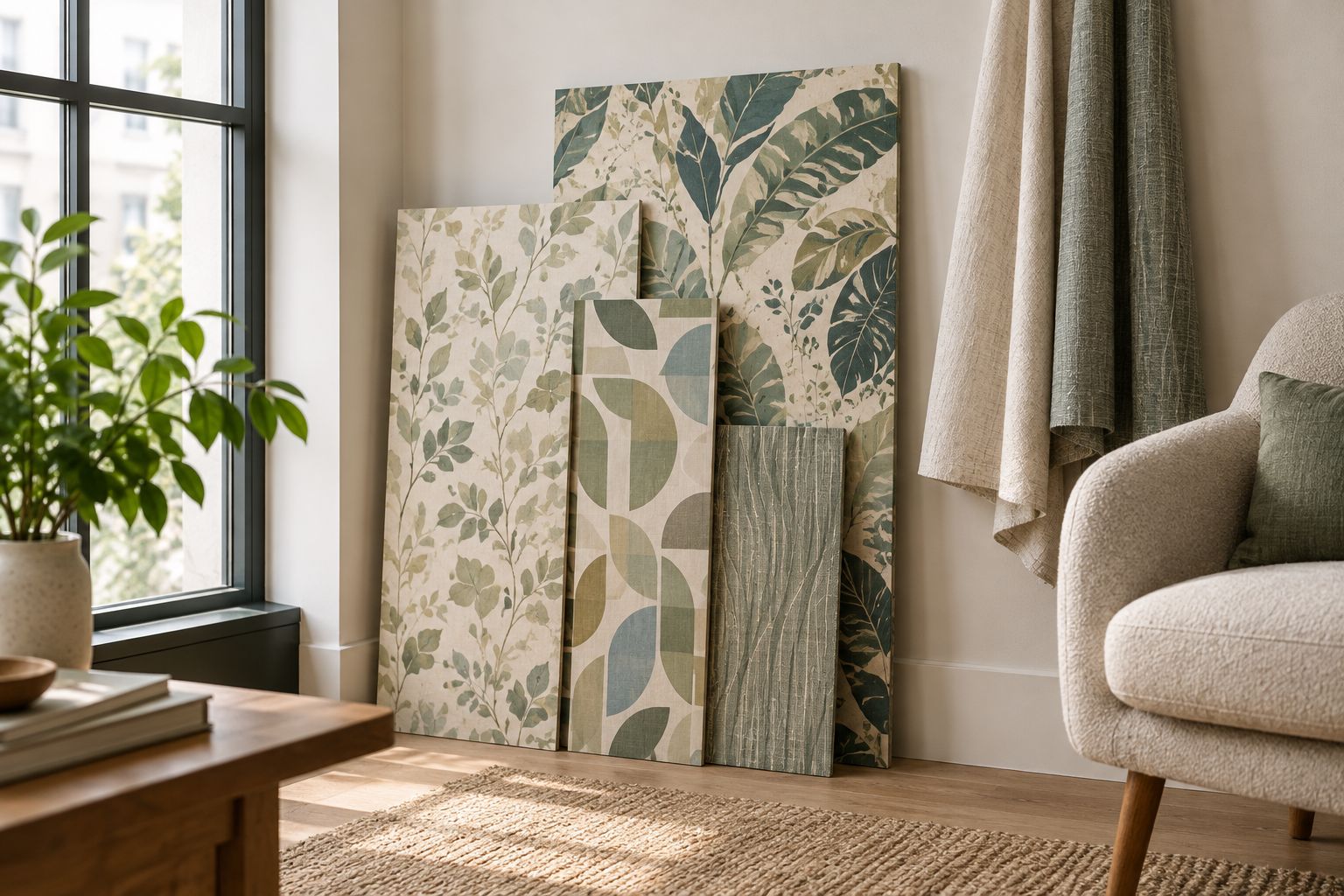
The benefit is a joined-up room scheme; the limitation is that small samples still cannot demonstrate every repeat or seam. Use them for material decisions, then use an elevation for placement.
Ask for the selected wallpaper’s care and installation instructions before approval. Check suitability for the actual room rather than assuming that every decorative wallcovering tolerates moisture, cleaning or everyday knocks equally well.
Have the proposed walls assessed before ordering. Damp, loose paint, cracks and uneven surfaces need attention; covering them is not the same as correcting them. Confirm which preparation tasks belong to the decorator, installer or another trade.
Keep those responsibilities visible in the project scope. Otherwise, a client can approve the decorative finish while essential preparation remains unassigned.
Prepare a simple elevation showing the main wall, openings and fixed furniture. Ask the installer to check quantities using the actual wall dimensions, supplied widths and pattern repeat. Wall area alone does not account for every matching or cutting requirement.
For a prominent motif, agree where it should sit relative to the bedhead, fireplace or joinery. Do not leave that decision until installation day. A deliberate starting point helps keep the composition tied to the room’s architecture.
Create 1 approved specification sheet that brings the decisions together. Include the exact wallpaper reference, colourway, wall locations, approved placement and preparation scope. Attach the client’s approval so the installer is not working from an earlier mood board.
Coordinate installation with painting, joinery and window furnishings. Confirm the sequence with the trades involved rather than treating wallpaper as an isolated finishing touch. Keep access requirements and responsibility for moving furniture clear.
The best approach follows the room’s focal point, not the size of the pattern alone. Use this comparison to explain the design choice to your client before narrowing the material shortlist.
| Option | Best for | Main benefit | Key limitation |
|---|---|---|---|
| Feature wall | A defined focal point behind a bed or seating area | Concentrates pattern where you want attention | Can feel disconnected if the remaining walls and fabrics are unresolved |
| Whole room | An enveloping bedroom, dining room or snug | Carries the decorative treatment around the space | Needs careful consideration at corners, openings and adjoining rooms |
| Textured finish | A quieter backdrop for artwork or patterned furnishings | Adds surface interest without relying on a bold motif | Surface appearance and cleaning suitability still need checking |
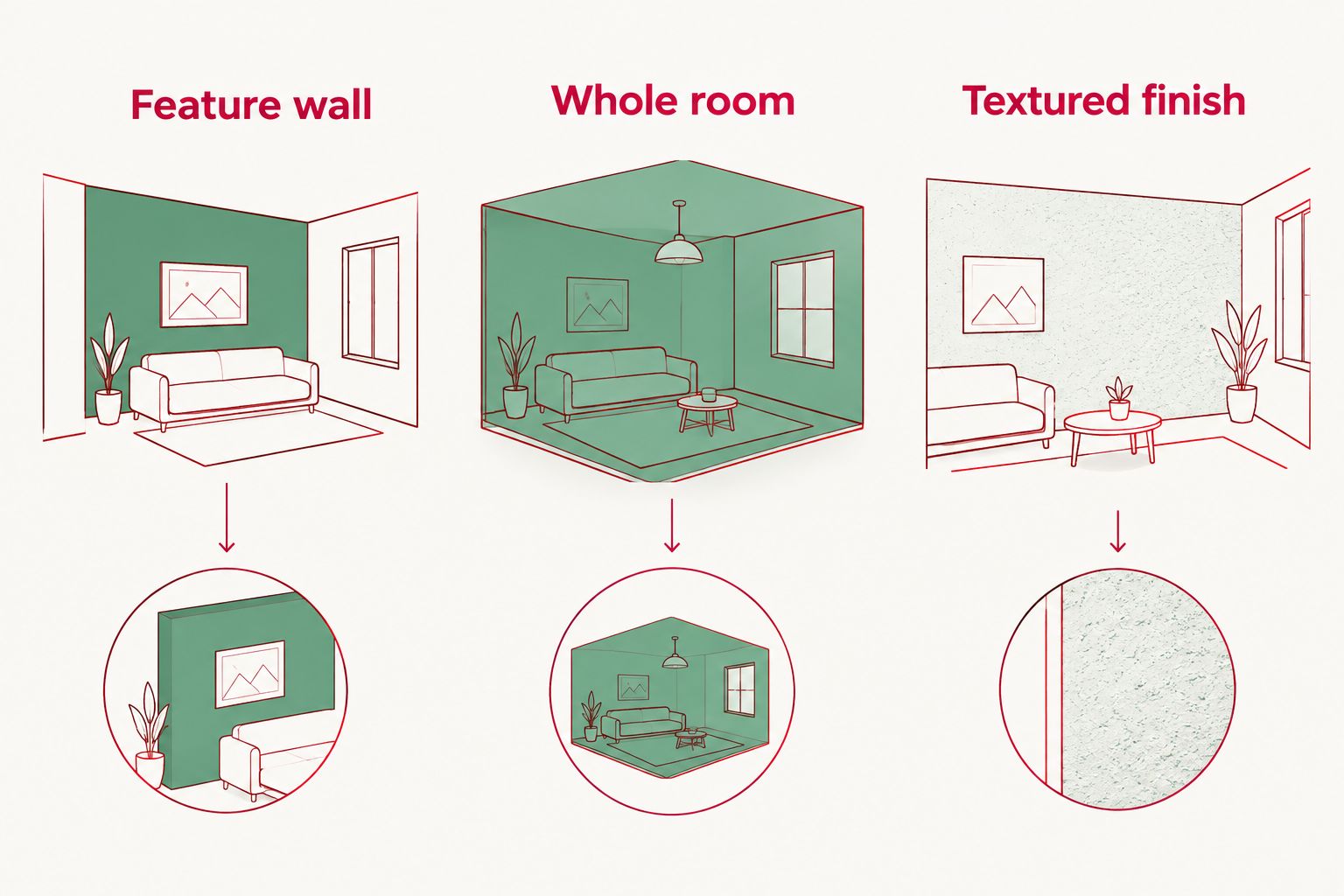
A textured finish can work on a feature wall or throughout a room; these choices are not mutually exclusive. Separate the extent of coverage from the character of the material when presenting options.
What’s the best designer wallpaper for interior designers to specify?
The best designer wallpaper suits the room’s use, approved scheme and installation conditions. Compare physical samples, check product-specific guidance and resolve placement before ordering.
Should I choose wallpaper before curtains and upholstery?
Choose the main visual element first, then review wallpaper, curtains and upholstery together. If the client is keeping a sofa or existing curtains, use those fixed materials to guide the wallpaper shortlist.
Is a feature wall better than wallpapering the whole room?
A feature wall is best for a concentrated focal point; whole-room wallpaper is best for an enveloping treatment. Check the architecture, openings and adjoining spaces before deciding.
Can I calculate wallpaper quantities from wall area alone?
Wall area alone is not a complete wallpaper order calculation. Ask the installer to account for the selected product’s dimensions, pattern repeat, matching requirements and cutting needs.
Does Material World offer designer wallpaper installation?
Material World offers designer wallpaper supply and installation. Confirm service coverage for the project address and agree the preparation and installation scope before proceeding.
Can designer wallpaper provide bedroom blockout?
Designer wallpaper does not provide window blockout. Specify suitable curtains or blinds for light control, then coordinate their fabric and colour with the wallpaper.
Check the wallpaper from where your client will actually sit or lie down, not only from the doorway. A motif that looks balanced on an elevation can disappear behind a bedhead or compete with artwork at eye level. Add that view to the approval presentation.
Ready to bring the scheme together? Contact Material World with your room photos, fabric shortlist and project address—let us help you choose a wallpaper solution tailored to your home and confirm supply-and-installation coverage.


