Your cart (0)
Your cart is empty
Tax included and shipping calculated at checkout

Drawer menu
Tax included and shipping calculated at checkout

Position patterned upholstery fabric by choosing a focal point on each main surface, keeping the design’s direction consistent, and planning how the pattern meets across cushions and seams before cutting. Start with the most visible part of the furniture, then allow for pattern matching when your upholsterer calculates the fabric quantity.
A beautiful pattern can look unsettled when a flower disappears into a seam or a stripe changes direction between cushions. Pattern placement matters as much as the fabric you choose. It determines which details you notice and whether the finished furniture feels balanced.
If you’re choosing fabric alongside curtains or blinds, Material World offers a wide fabric selection and expert in-home design consultations in Sydney and Orange. For the upholstery itself, agree on placement and suitability with your upholsterer before any fabric is cut.
Work from the furniture’s main viewing surface outwards. On an armchair, that is often the inside back; on a sofa, consider the back cushions and seats together rather than treating each cushion as a separate project.
Stand where you normally enter or sit in the room. Decide which surface should carry the strongest part of the design: the chair back, the centre seat cushion or the outside back of a sofa visible from the dining area.
Mark that priority on a photograph of the furniture. A freestanding chair needs attention from behind as well as from the front, while a sofa against a wall puts more emphasis on its seats, arms and inside back.
Look at the whole pattern repeat, not just a small sample. A large flower, bird or geometric shape can become the centrepiece, but the visual centre is not always the middle of that individual motif.
Drape an uncut length over the furniture and move it until the arrangement feels balanced. Check where the neighbouring motifs land, especially near the top edge, cushion corners and arm fronts.
Identify the top of any directional design and mark it on the proposed cutting layout. Keep flowers, birds and other recognisable motifs facing the intended way across adjoining pieces.
Do not rotate a cutting piece simply to make it fit into a leftover section. Fabric with a pile or directional sheen also needs a consistent orientation, even when the printed or woven pattern looks non-directional.
Map the seat, back, arms and cushion fronts before cutting anything. Decide where the design should continue across a join and where a deliberate break will look tidy.
Ask your upholsterer to check the layout against the actual cutting pieces, including seam allowances. The visible finished surface is smaller than the cut piece, so a motif placed neatly at the cutting edge can disappear into the seam.
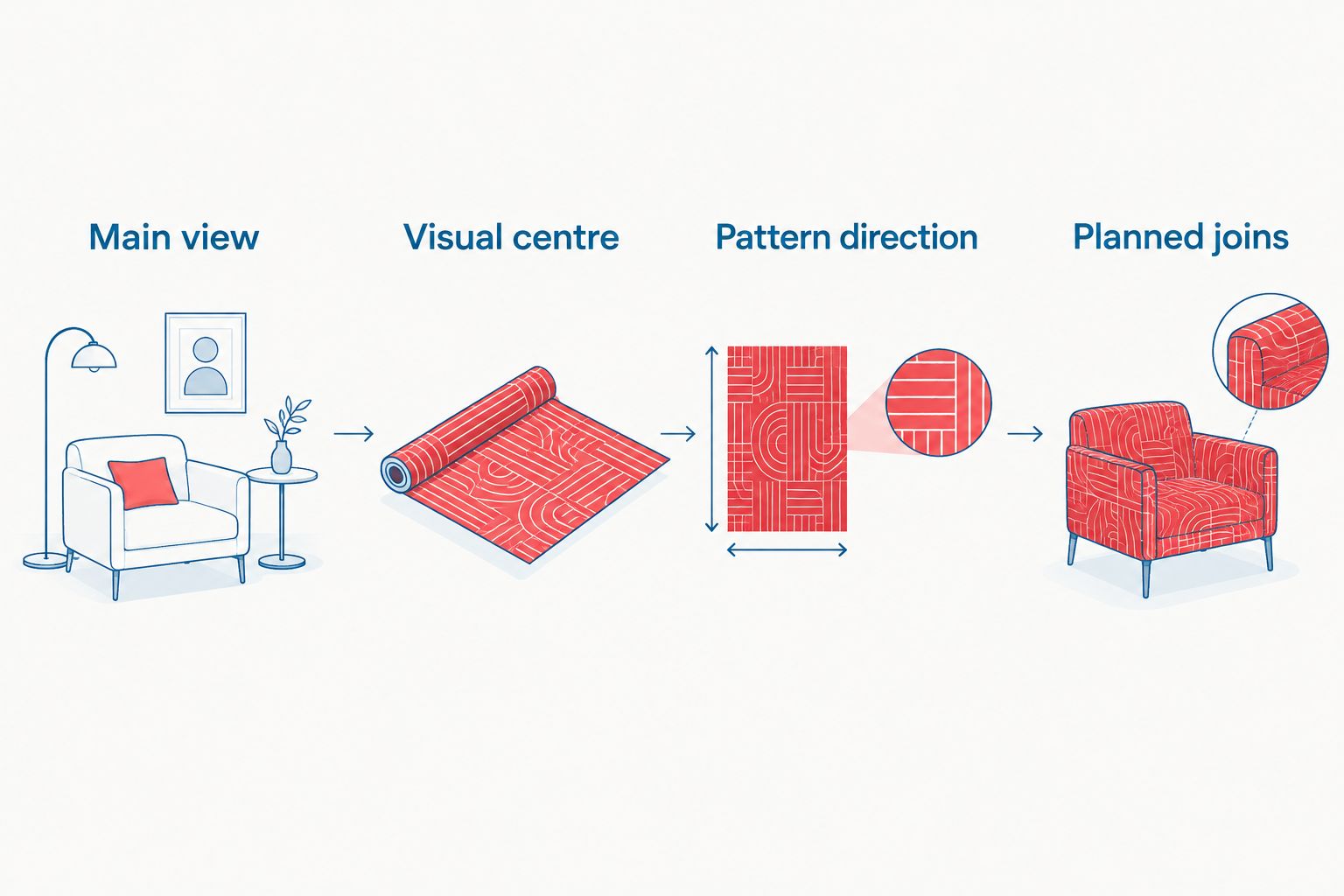
Once the main layout works, check the smaller surfaces. Arm fronts, cushion boxing and piping should support the overall design rather than introduce an accidental change of direction.
Different patterns need different decisions. Use this comparison to choose a starting approach, then assess it on the shape of your furniture.
| Pattern | Best for | Placement approach | What to watch |
|---|---|---|---|
| Large floral or scenic motif | A clear focal point on a chair back | Position the main motif first, then balance surrounding details | Important details can disappear over edges or into seams |
| Stripe | A strong, orderly line across seats and backs | Align stripes across adjoining surfaces where practical | A small mismatch is easy to notice |
| Geometric repeat | A structured, balanced finish | Centre a complete shape or a deliberate gap consistently | Partial shapes can look accidental at prominent edges |
| Small all-over pattern | An even spread of detail | Keep direction and visual density consistent | Small repeats still need checking at joins |
Choose the pattern for the furniture’s shape, not just the sample’s appearance. A broad chair back gives a large motif room to show; a narrow arm or deeply shaped back interrupts more of the design.
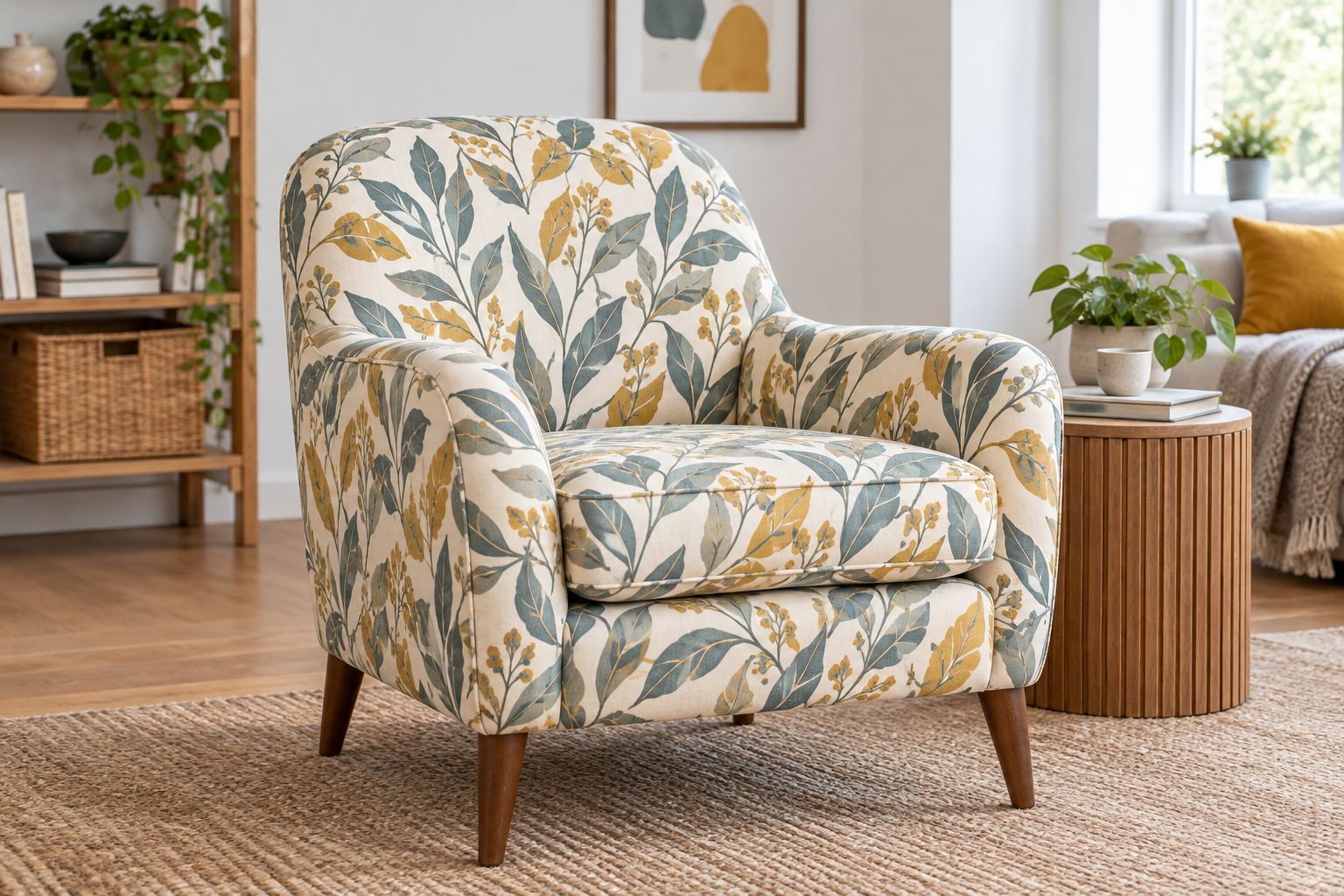
There is no single layout that suits every chair or sofa. These features determine where a design can sit comfortably:
Material World’s premium fabric selection gives you room to compare patterns with the other fabrics in your home. Bring photographs of the furniture and room, then have your upholsterer confirm that the chosen fabric is suitable for the piece and its everyday use.
Match the pattern across adjoining cushions when continuity is part of the design. Stripes and regular geometric repeats make alignment particularly noticeable, so review the cushions together rather than approving each cover separately.
A large floral can work with a centred motif on each cushion instead of a continuous picture. Choose deliberately: repeating the same focal motif creates rhythm, while joining the design across cushions creates a more connected surface.
For reversible cushions, ask how both faces will be positioned. Check that turning a cushion over does not leave a directional motif upside down in normal use.
Pattern matching can require additional fabric, because cutting pieces need to begin at selected points in the repeat rather than wherever they fit most tightly. Fabric width, repeat size, furniture shape and your chosen layout all affect the quantity.
Ask your upholsterer to calculate the requirement from the actual fabric details. Do not order from furniture dimensions alone, and do not assume a plain-fabric estimate will cover a large patterned design.
Turn upholstery fabric sideways only when its construction and design allow it. This approach is sometimes called railroading, but it is not suitable for every fabric.
A sideways layout can change the appearance of a directional motif or pile. Have your upholsterer confirm the permitted orientation before using it to avoid a seam or reduce cutting waste.
Where should I centre a large pattern on an armchair?
Centre the main motif on the armchair’s most visible surface, usually the inside back. Check the finished edges and seam positions so important details remain visible.
Should stripes line up between the sofa seat and back?
Align stripes between adjoining seat and back surfaces where the furniture’s construction allows. Agree on the main alignment points before cutting, particularly when separate cushions interrupt the lines.
Can I use a small fabric sample to plan upholstery placement?
A small sample is not enough to plan a pattern larger than the sample itself. View the full repeat and check its position against the furniture’s visible surfaces.
Do I need to match the pattern on the back of a sofa?
Plan the outside back carefully when the sofa is visible from elsewhere in the room. A sofa against a wall has a different viewing priority, but its pattern direction should still be intentional.
Should piping match the upholstery pattern?
Piping does not need to continue every motif, but its colour and direction should look deliberate. Review it beside the main fabric before choosing matching or contrasting piping.
Can any patterned fabric be used for upholstery?
No, a pattern’s appearance does not establish its suitability for upholstery. Ask your upholsterer to confirm the fabric’s intended use, care requirements and suitability for the furniture before ordering.
Photograph the agreed fabric layout before cutting. Include the seat, back and arms, and keep a note of the intended top edge; this gives you and your upholsterer a shared reference for the finished result.
For help coordinating upholstery fabric with custom-made curtains and blinds, let Material World bring the showroom to you with an in-home design consultation in Sydney or Orange.


