Your cart (0)
Your cart is empty
Tax included and shipping calculated at checkout

Drawer menu
Tax included and shipping calculated at checkout

If your windows feel bare but curtains would crowd the room, a linen-look blend is the best starting point for soft, tailored roman blinds; choose a smooth plain weave for a crisper finish or a small-scale pattern for character. The right choice depends on how the fabric folds, the privacy you need and the space above your window.
A fabric sample looks different lying flat on a table from the way it looks hanging across a window. Roman blinds show a broad fabric panel when lowered and gather into folds when raised, so both views deserve attention.
Choose the fabric for the room, then check how it works as a blind. Before your appointment, the guide to preparing for a custom curtain consultation in Sydney can help you organise room photographs and priorities for the discussion.
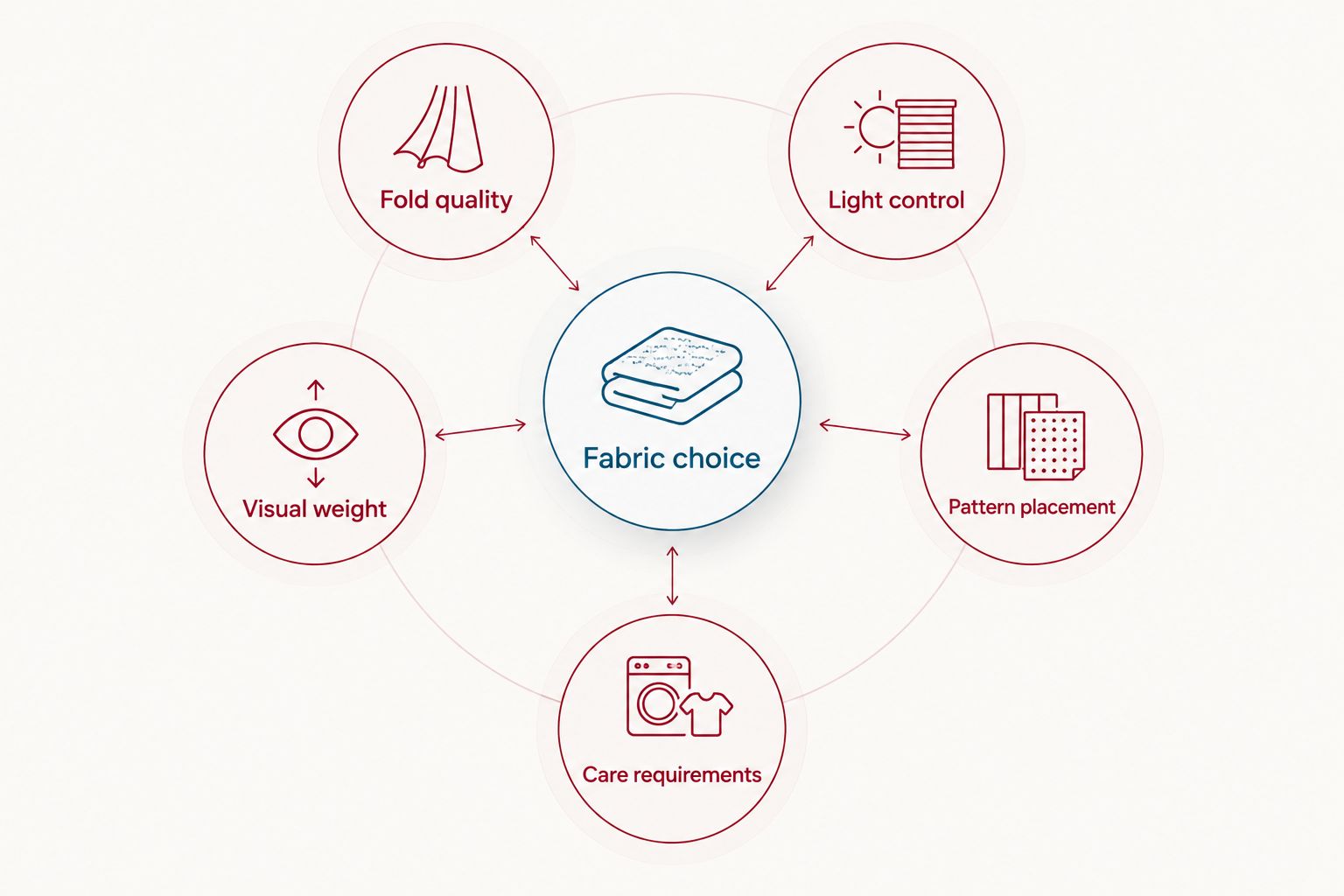
Look beyond the colour. These checks make a useful shortlist:
These choices work together. A decorative face fabric does not tell you everything about the finished blind’s privacy, light control or care.
These are fabric categories to discuss, not a claim that every fabric within them is suitable for roman blinds.
| Fabric category | Best for | Standout quality | Key limitation |
|---|---|---|---|
| Linen-look blend | Relaxed, everyday softness | A natural-looking surface | Composition alone does not establish folding or care requirements |
| Smooth plain weave | A crisp, understated finish | An uninterrupted field of colour | Offers less surface texture |
| Fine textured weave | Quiet depth in a neutral room | Detail without a strong motif | Texture can look different against daylight |
| Small-scale pattern | Character at the window | Decorative interest when lowered | Folds interrupt the pattern |
| Velvet | A richer, snug-room look | Pile and directional shading | Requires particular care with suitability and handling |
A linen-look blend is a useful starting point when you want softness without making the window feel heavily decorated. Look for a weave that sits comfortably with your sofa, timber finishes and existing curtains.
Do not assume every blend behaves alike. Ask to see how the specific fabric folds with the proposed lining.
Linen-look blend pros:
Linen-look blend cons:
Best for: Living rooms where the window needs a softer finish.
Verdict: Choose a blind-suitable linen-look blend as the default shortlist option.
A smooth plain weave keeps attention on the blind’s shape and colour. It is a useful option when patterned wallpaper, artwork or upholstery already gives the room enough detail.
For a bedroom, discuss the lining and installation rather than choosing by face fabric alone. Darkness depends on the whole window treatment.
Smooth plain weave pros:
Smooth plain weave cons:
Best for: Bedrooms and rooms with decorative finishes elsewhere.
Verdict: Choose a smooth plain weave when you want the window to sit quietly.
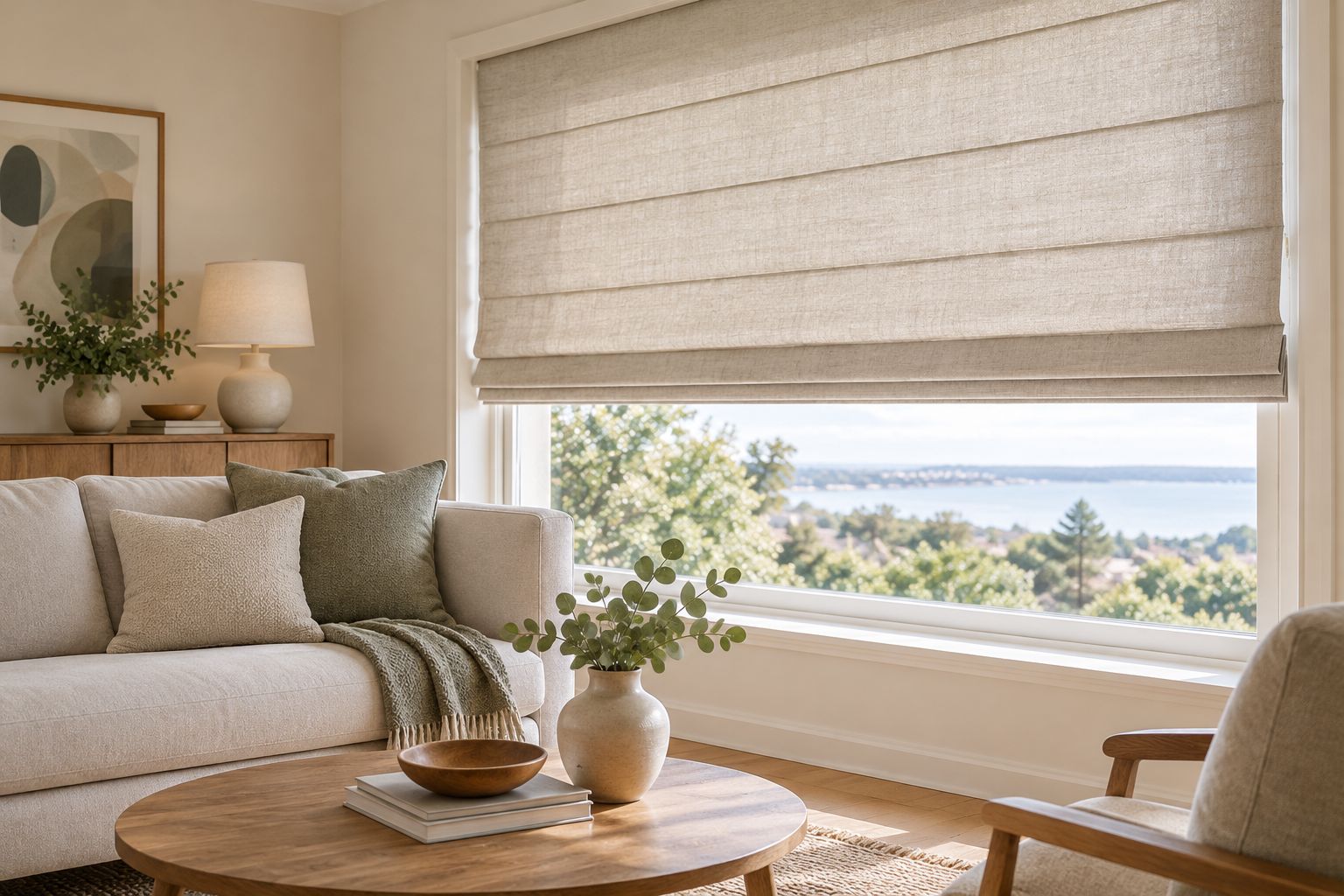
A fine textured weave adds detail to a neutral room without introducing an obvious motif. View it vertically at the window: backlighting can change how strongly you notice the weave.
Keep the surrounding finishes in view while comparing samples. A texture that looks subtle on its own can feel busy beside another pronounced weave.
Fine textured weave pros:
Fine textured weave cons:
Best for: Neutral living spaces needing a little more interest.
Verdict: Choose fine texture when colour alone feels too flat.
A small-scale pattern gives a roman blind personality while keeping the design contained within the window. Consider how the motif looks from the doorway, not just at arm’s length.
On adjacent windows, discuss alignment before making the blinds. The raised folds will interrupt the design, so you need to like both the open and closed appearance.
Small-scale pattern pros:
Small-scale pattern cons:
Best for: Rooms where the window is intended to draw attention.
Verdict: Choose a pattern only after viewing enough fabric to understand its repeat.
Velvet brings a different effect: its pile creates shading as the light and viewing angle change. That makes it a considered option for a room where you want a more enveloping finish.
Do not assume an upholstery velvet is suitable for roman blinds. Have the exact fabric assessed for construction, folding and care before including it in the final selection.
Velvet pros:
Velvet cons:
Best for: A snug sitting room where a richer finish is the priority.
Verdict: Hold until the maker confirms the velvet suits the proposed blind.
The order prioritises everyday softness, a tailored appearance and straightforward coordination with existing furnishings. It is not a durability or performance league table: those qualities depend on the exact fabric and finished construction.
Material World’s Soft Roman Blinds By Material World offer thousands of fabric options and lining choices. The useful next decision is which combination suits your window, rather than which fibre sounds best in isolation.
Fabric, lining and mounting solve different problems. Keep these distinctions clear during your consultation:
An inside fit and an outside fit also frame the fabric differently. The guide to roman blinds in Sydney: inside or outside fit explains the mounting decision to discuss alongside your fabric choice.
Start with a linen-look blend for softness; switch to a smooth plain weave if you prefer a crisper finish. Choose texture or pattern because the room needs it, not because the sample looks interesting on its own.
Material World’s custom-made roman blinds suit homeowners who want the fabric, lining and fit considered together. With 25+ years of experience, a large premium fabric selection and in-home design consultations, the service focuses on furnishings tailored to your home rather than factory mass production.
What is the best fabric for soft roman blinds?
A blind-suitable linen-look blend is a good starting point for a soft, relaxed finish. Confirm the exact fabric’s folding behaviour, lining and care requirements before choosing.
Can I use upholstery fabric for roman blinds?
Do not assume upholstery fabric is suitable for roman blinds. Ask the maker to assess the specific fabric for weight, folding, construction and care.
Do roman blinds need a lining?
Lining depends on the fabric and the privacy or light control you need. Discuss the face fabric and lining as a complete combination rather than choosing them separately.
Will blockout lining make my bedroom completely dark?
Blockout lining does not eliminate light entering around the edges of a blind. Mounting position and coverage also need attention.
Is a patterned fabric suitable for roman blinds?
A patterned fabric can suit roman blinds when its construction is appropriate. Check how the repeat looks across the lowered panel, within the folds and beside neighbouring windows.
Can velvet be made into roman blinds?
Velvet needs fabric-specific assessment before it is selected for roman blinds. Pile direction, handling and the proposed construction all need consideration.
Where can I get help choosing roman blinds in Sydney?
Material World offers custom-made roman blinds and in-home design consultations in Sydney, with local service also in Orange. Bring room photographs and explain your privacy, light-control and style priorities.
Judge the fabric with the blind raised as well as lowered. You live with both views, and a pattern you love as a flat panel can have a very different character in folds.
Struggling to visualise the finished room? Contact Material World to arrange an in-home design consultation and free quote—bring the showroom to you, and let us help you choose.


